A War @ The Ross

Screen Shot 2016-03-18 at 4.47.57 PM

“I am tired and sick of war. Its glory is all moonshine. It is only those who have neither fired a shot nor heard the shrieks and groans of the wounded who cry aloud for blood, for vengeance, for desolation. War is hell.”

~ William Tecumseh Sherman

I believe Danish writer-director Tobias Lindholm would agree with Sherman’s observations of war. His drama A War is a case in point of the catch-22s every soldier faces on the frontline of the battlefield. Lindholm masterfully moves through the vein of combat as his camera closes in on the emotions of the soldier and the enemy—people military personnel have been dispatched to kill. A War is an in-depth perspective on the perils of conflict, and the film paints a vivid picture of the moral dilemmas each soldier must grapple with; and the decisions a leader determines are in the best interest of the unit. Lindholm’s A War concludes that no matter the good intent, every decision comes a consequence, and these consequences affect those associated with you. Yes, war is hell.

Company commander Claus M. Pedersen, played by Pillow Asbeek, leads men who are fighting in an Afghan province to protect local farmers and their families from attacks from the Taliban. Back in Denmark, Pedersen’s wife Maria, played by Tuva Novotny, manages the home front with their three small children; the eldest suffers separation anxiety over the absence of his father. Back in Afghanistan, Pedersen and his company have been caught in crossfire, and the commander’s is forced to make a decision for the survival of his unit. Pedersen’s call results in heavy penalties.

As would a surgeon, Lindholm, cuts deep into the body of war to dig out and dig up its complexities and to showcase how warfare affects people and their families on and off the battlefield. There are the usual suspects … you know … guns, armored tanks, landmines, grenades, injury, and death; but through the Pedersen Family … Maria, Claus, and children … Lindholm prompts audiences to be aware that at the end of every piece of artillery used in war, there are human beings, and no matter the rules of engagement, at the end of the day, they are just that: human.

A War plays through March 3 at The Ross Media Arts Center in Lincoln.

The Ross logo

Also opening at The Ross is Son of Saul László Nemesh’s film about a Jewish worker at the Auschwitz concentration camp looking for a rabbi to give a child a proper burial.

What would you do if a someone asked to park her vehicle in your driveway … temporarily but then stayed parked for the next 15 years? Nicholas Hytner’s film Lady in a Van explores that question. Set in London, England, the incomparable Dame Maggie Smith plays Miss Shepard, who describes herself as a “sick woman looking for a last resting place”. She camps out in Alan Bennett’s driveway, first as a favor. Of course, if someone stays over 3 days, a relationship is bound to develop. See what happens.

Lady in a Van and another film 45 Years, continue through March 3 at the Ross.


Janis: Little Girl Blue @ The Ross

Screen Shot 2016-03-18 at 5.12.19 PM

I remember hearing Janis Joplin for the first time, and I did not know what to make of this voice that sounded like desperation screeching across a chalkboard. When I saw publicity stills of her, I wondered why she appeared so scraggly. Humph. Unkempt. Even more bizarre, she looked young but sounded old … and … loud! Her smile, however, invited me in to know some thing about her.

Filmmaker Amy J. Berg, summons us into the world of Janis Joplin, and Berg has outdone herself in the research of her subject. Her documentary Janis: Little Girl Blue is an awe-inspiring journey into the delicate but hardwearing but complicated heart and soul of Janis Joplin, a compelling force of nature on the landscape of rock n’ roll.

Narrated by singer/songwriter Cat Power, Janis chronicles the singer’s rise to power with commentary from her colleagues and friends. There’s Big Brother and the Holding Company—the band that featured her in the 1960s; Clive Davis, Dick Cavett, Melissa Etheridge, Paul Albin, and John Cooke. The one thing they all agree on: Janis Joplin pierced the veil of the male-dominated world of rock and roll but at a great cost.

Some of us are all too familiar with Joplin’s story: the little girl blue born into a conservative family from Texas who came of age as a singer during the psychedelic times of the 60s in San Francisco, and who died from a heroin overdose at the age of 27.

Berg’s storytelling is so raw so visceral that Joplin’s love for life, and her indomitable spirit that compelled her to take it all in feels like a science fiction movie in 3d. Just as did Joplin through her music, Berg’s documentary probes the singer’s heart, and you will hear it beat when old photographs of her family appear; when her letters to her family are read; when her siblings Laura and Michael Joplin speak; and when her voice sears through the archival footage of her interviews and concerts; The tremors are all too real. Janis: Little Girl Blue is soulful in its intimacy; touching in the details rendered by those who knew her; and, brilliant in its intensity.

The Ross logo

Janis: Little Girl Blue plays through January 28 at The Ross Media Arts Center in Lincoln.

Youth, starring Michael Caine and Harvey Keitel also plays through January 28 at the Ross.


Chi-Raq @ The Ross

Teyonah Parris as Lysistrata

Teyonah Parris as Lysistrata

Peace & Love … Afros & Rap … Feuds & Guns …
Young men & women
sportin’ colors
of purple and orange …
holding g r r r r u d g e s

Black mothers
shedding tears
holding posters
of the heads
of their slain
daughters & sons;

the spines of grown men
s h a t t e r e d from a bullet …
now ridin’ in wheelchairs on the concrete …

Chi-Raq

an insurance salesman
comin’ ‘round the ‘hood
confident of that signature on another policy
to cover the body of another baby boy … baby girl

What can the church give?
One thing is for sure: The undertaker
will have its due …

Put da Guns Down!
There’s blood flowin’
in the streets
in Chi-Raq

No Peace? No Piece!

Samuel L. Jackson as Dolmedes

Samuel L. Jackson as Dolmedes

Chi-Raq, the much-anticipated film by acclaimed director, Spike Lee, is powerful chaotic suspenseful raunchy bawdy and full of cussin’ n braggin’ — concern … all spoken in verse. Let me pause to give some background of the term. According to the Urban Dictionary, “Chiraq is a nickname given to America’s third largest city, Chicago . . . because there are more murders and violence that occur in Chicago than the war in Iraq.”

Chi-Raq …

The film is Lee’s adaption of the ancient Greek comedy, Lysistrata, written by Aristophenes. In that play, Lysistrata convinces the women of Greece to withhold sex until peace is negotiated between Athens and the Peloponnesian League led by Sparta.

In Chi-Raq, Lee sets the action in the city of Chicago’s southside, specifically in the neighborhood called Englewood. There, Lee dramatizes the everywhere presence of guns: in the club, on the street, in the house, in the bedroom, and the people who use them without caution …

Chi-Raq

Lysistrata (Parris) outlining her plan for No Peace? No Piece!

Lysistrata (Parris) outlining her plan for No Peace? No Piece!

Once a girl is hit by a bullet from a drive-by, Lysistrata, played with sass by Teyonah Parris, calls for the women in the community to shut down of sexual activity until peace is restored to the neighborhood. Nick Cannon plays Lysistrata’s boyfriend Chi-Raq, also known as Demetrius, a gun-totin’ but talented rapper who has to face his own truth and face the consequences. You will appreciate the performances by Wesley Snipes, Samuel L. Jackson, Angela Bassett, John Cusack, and Jennifer Hudson as they speak in verse to tell the story of lives in Chi-Raq.

Chi-Raq is ambitious and flawed, but Spike Lee shines when he demonstrates that gun violence is inherited by each generation to the next.

The Ross logo

Chi-Raq plays through January 21st at The Ross Media Arts Center in Lincoln.

Also opening at The Ross is The Wonders, Alice Rohrwacher’s story of beekeepers living in isolation in the Tuscan countryside.

A Poem is a Naked Person @ The Ross

Leon Russell

Leon Russell

I came of age swath in the music of the 1970s–rock & roll and rhythm & blues. The Rolling Stones Kiss The Jackson Five Aerosmith Abba Foreigner The Four Tops The Temptations … ah … I could go on and on; yet, in all of my coming of age, I never heard of American musician and songwriter Leon Russell. Curious. The Rock & Roll Hall of Fame notes him as being a Rock & Roll Renaissance man and a veritable superstar of the 1970s. Never heard of him; but, I did know Paul Revere & the Raiders Phil Specter Joe Cocker and the tender love song “A Song for you” sung by Ray Charles; but I did not know that Leon Russell wrote that song, and that he was a most respected and sought after session musician who worked with those groups and solo artists as well.

Les Blank’s documentary A Poem is a Naked Person brings to relief a kind of life & times of Leon Russell, the Oklahoma resident who made it big in the world of rock and roll. Blank, who died in 2013, documents Russell’s work in his studio in Oklahoma 1972-1974. The film, however, languished on the shelf for forty years due to creative differences and legalities. A Poem is a Naked Person finally receives its due thanks to Blank’s son, Harrod. To view the documentary is to witness unretouched performances that challenge our usual expectations of documentaries. They are to be slick, no matter how raw and visceral the subject matter. We anticipate interruptions from and interpretations by talking heads and/or a narrator. A Poem is a Naked Person is a flat-line of a documentary whose only intervals are footage from Russell’s concerts or practice sessions.

This is due in part because A Poem is a Naked Person reveals almost nothing about Russell, the person. As filmed, it is a documentary that requires knowledge of Russell’s socio-cultural imprint on Rock & Roll. Without that, you are searching for your own point of entry into the film. Yet, Blank’s project is a reminder that not everything will be handed to you. He pushes those of us without prior knowledge of Leon Russell to look him up, and that is exactly what I did. Have you heard Lady Blue? How about Roll Away the Stone? Listen to A Song for You. Nice!

The Ross logo

A Poem is a Naked Person plays through November 11 at The Ross Media Arts Center in Lincoln.

Watch for in-depth Film • Television • & More reviews & commentary.
In the meantime, Catch a film. Watch TV. Share the Popcorn. Feed Your Soul!

Best of Enemies @ The Ross

William F. Buckley and Gore Vidal

William F. Buckley and Gore Vidal

If you want an education on how to throw daggers at your enemy without serving jail time, then Robert Gordon and Morgan Neville’s film Best of Enemies is the documentary for you! Three networks: ABC NBC CBS – all fighting for ratings in the 1960s with ABC lagging behind. The Flying Nun could not save it. Batman could not rescue it. Not even the good old Doc Marcus Welby could bring it to health. And tell me just how could ABC compete with the likes of the vocal drones of Walter Cronkite on CBS or the powerhouse of the broadcast buddy team Chet Huntley and David Brinkley on NBC? Hmmm! What’s a station to do! Well, you put together two of the most incorrigible personalities in journalism: Gore Vidal and William F. Buckley! I don’t believe the devil would have wanted to contend with these two! Buckley is dubbed by Lee Edwards as “the Saint Paul of the Conservative Movement” and whom Vidal would call a “crypto-nazi” on national television; and, there’s Vidal whom Buckley claimed to be the devil incarnate.

ABC knew it hit gold when executives put these two privileged prep school graduates together in front of a camera AND during a most tumultuous time in our nation’s history: the civil rights movement with its eye on racial issues and poverty, the Vietnam war, identity politics–oh! It was something. They hated each other; you could see it in their eyes!

Filmmakers Gordon and Neville excel in piecing together the archival footage of this moment in broadcast journalism, and they are quite attentive to the biographical sketches of each man to give the context for their appeal. Best of Enemies is a good, solid documentary. Watch and Learn!

The Ross logo

Best of Enemies plays through October 29 at the Ross Media Arts Center in Lincoln.

Also showing at The Ross through the 29th is the post-cultural revolution Chinese film Coming Home, and the Austrian horror film Goodnight Mommy.

Meru @ The Ross

Screen Shot 2015-11-05 at 9.17.11 PM

Alrighty then, yet another movie on the joys and the perils of mountain climbing. But here’s some scuttlebutt: Conrad Anker, one of the subjects of the documentary Meru, found George Mallory’s body on Mount Everest in 1999! Meru, affectionately known as the Shark’s Fin or the anti-Everest is without any sherpas or anyone to facilitate the trek. You had better foster an unwavering trust in your teammates or risk being totally alone in negative 20 degree weather in an unforgiving natural environment. Anti-Everest. Anker, along with his fellow alpinists, Jimmy Chin, and Renan Ozturk, almost reached the top of that mountain in 2008 only to have to descend because that sun was going to set and their ability to camp would be compromised. Imagine that! You could touch the tip of your destination after taking the risk, going through the peril, beating any insecurity, mustering up the courage to trust your teammates, and finally, finally with only 100 meters to go … sigh … The three return home, nurse their wounded pride, and find ways to work the everyday ordinary. Well. Here comes that ego and in snow shoes and in the night: “let’s try it again,” it whispers, “you could be the first to reach the top of that mountain!” So, Anker, Chin, and Ozturk go back onto that ice and snow.

Meru is an engaging story! It really is because Anker, Chin, and Ozturk mark out the sheer love and passion for mountain climbing. Their narration is awe-inspiring as their courage shines through their talk of their efforts worked a team on that mountain. Of interest to audiences is how these mountain climbers make peace with failure but smile at the inevitability of the chance to reach for success—one more time!

The Ross logo

Watch for in-depth Film • Television • & More reviews & commentary.
In the meantime, catch a film, watch tv, and share the Popcorn. Feed Your Soul!

Grandma @ The Ross

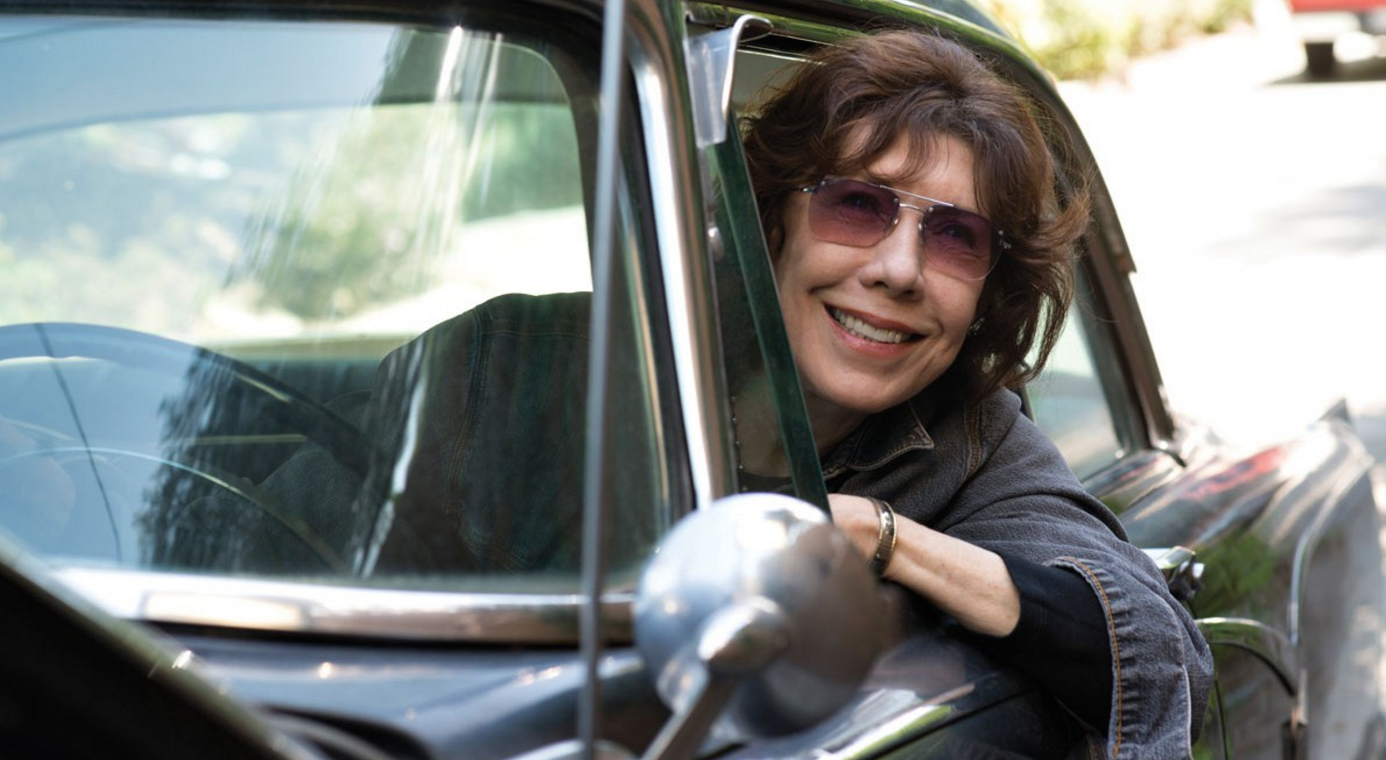
Lily Tomlin as Grandma

Lily Tomlin as Grandma

When I was in 7th grade, I asked Ghia, my grandmother, a seamstress, to make me a something different for class night. “Ghia, I no wanno wear white!” So my Ghia sewed up a dress from fabric full of flowers against a backdrop of pink. Imagine my mother’s shock when she had to plant her daughter within a garden of classmates wearing the required white dresses! This is what grandmothers do: they do undercover things for their granddaughters and keep secrets from mothers! What is more, they do not give a rat’s patooty for the consequences! No matter what they are called in any language, Nana, Abuela, Nai-Nai, Ba-whyee, or Ugogo, Grandma is special … yeah … in that way too. Be forewarned: Grandma can be fearless!

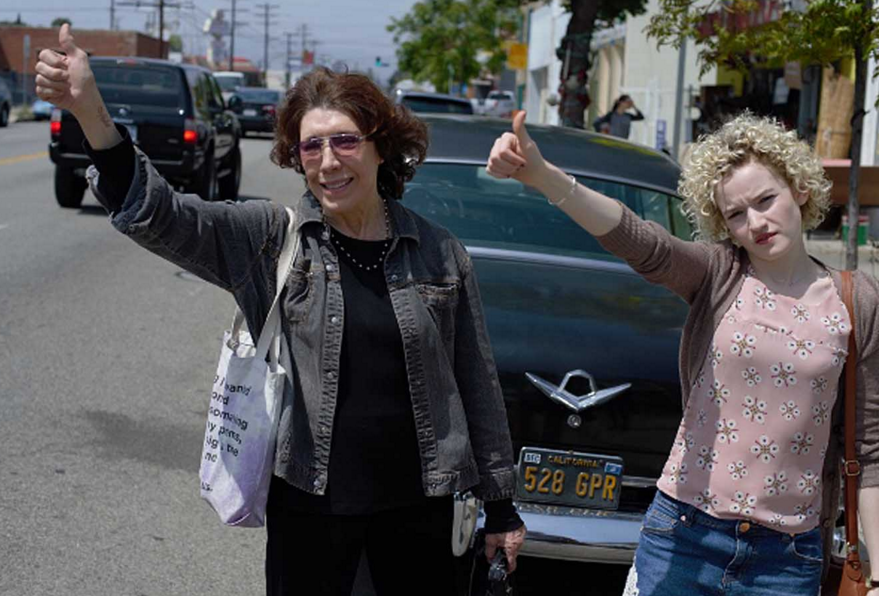
Grandma and Jade (Julia Garner) take to the road after car break down

Grandma and Jade (Julia Garner) take to the road after car break down

Lily Tomlin lives up to the tradition of grandmother in Paul Weitz’s sardonic but lovely film Grandma. Tomlin plays Elle, a poet who is moving through the grief from the loss of Vi, her lover of 30 years, and a self-imposed break-up with her younger lover, Olivia, played by Judy Greer. Enter her pregnant granddaughter, Sage (played by Julia Garner) with a request. Grandma is broke; what’s worse, she shredded all of her credit cards and turned them into wind chimes. Huh. Who cares? Grandma has friends who can loan her the money, and film director Weitz deploys the road trip to take us into the life of Grandma Elle. Oh, the scenarios we are privy to: the battle between Grandma and Sage’s boyfriend Cam, played by Nat Wolff. There’s the trip to a tattoo parlor ran by Deathy, played by Laverne Cox; a coffee house wherein Grandma expresses her loud displeasure that it used to be an abortion clinic. The proprietor is none-too-pleased!

Karl (Sam Elliott)

Karl (Sam Elliott)

The most poignant stop on the way, however, is the visit to Karl, Grandma’s former husband with whom she lived on a boat. Ahhhh …. The Halcyon days of the flower child 60s! Sam Elliott who plays Karl, delivers a touching performance as he forces Elle to deal with the decision she made about their child without consulting him.

A deeper analysis reveals that Grandma is a road trip through the women’s liberation movement and its socio-cultural and political meaning that may be lost on the millennial generation of young men and women. Weitz manages a safe distance from the “don’t you young people get it?” as he allows Tomlin to just be her brilliant idiosyncratic self! She does not disappoint as she lays within the vein of the strides women of her generation made that paved the way for granddaughters such as Sage to even make choices to serve them.

Grandma plays through October 8 at the Mary Riepma Ross Media Arts Center in Lincoln.

The Ross logo

Watch for film television & more reviews.

In the meantime, catch a film! Share the popcorn! Feed your soul!

Cartel Land @ The Ross

Dr. Jose Manuel Mireles, the charismatic leader of the Autodefensas

Dr. Jose Manuel Mireles, the charismatic leader of the Autodefensas

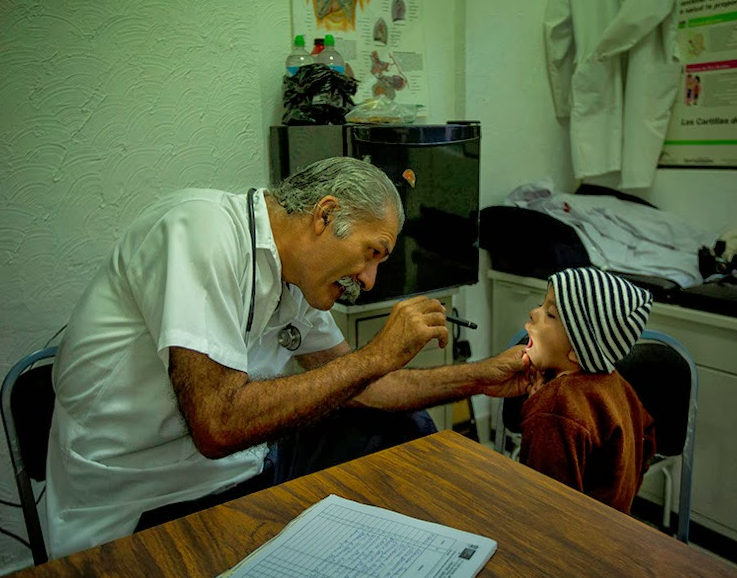
In Matthew Heineman’s documentary Cartel Land, Mexicans covered in bandannas take hold of a barrel filled with acetone, sulfuric acid, pseudoephedrine, and antifreeze or some of the toxic chemicals used to cook up the drug crystal meth. Nighttime cloaks this deadly but profitable activity. As Heineman’s hand-held camera turns our eyes on toxic liquids poured and stirred to concoct the crystal meth, it becomes apparent that we are in the belly of the drug business. One of the gun-toting chefs who cook the crystal meth explains in Spanish, “We know we do harm with all the drugs, but what are we going to do? We come from poverty.” Cut to Arizona, and we are taken into the mindset of Tim Nailer Foley, the self-appointed vigilante and head of border patrol in what is known as Cocaine Valley. Foley maintains, “technically we are vigilantes upholding the law where there is no law but the phrase vigilante has been given a bad name by the media”. Cut to Dr. Jose Manuel Mireles, a surgeon and grandfather, is the charismatic handsome leader of the Autodefensas, a paramilitary vigilante group in Mexico that has assumed the responsibility of protecting the city of Michoacán from drug cartels. Yes, there are many trains running through this very intense and superbly drawn dramatic thriller.

Tim Nailer Foley, vigilante and head of border patrol

Tim Nailer Foley, vigilante and head of border patrol

… and Heineman refuses to coddle our feelings; his camera pierces through every shootout in Mexico, and every trek made by Foley and his crew in Cocaine Valley. Hold on to your heart! Marie Antoinette nor the Roman Emperor Nero had nothing on the devastation wrought on Mexican citizens by the drug cartels. The blood from severed heads of victims stain the concrete; some of heads are perched on stakes in the city for viewing; there are poignant stories about babies and children being taken by the legs and bashed against stone; husbands set on fire as wives watch and hear their screams. Torture. Fear. Confusion. Betrayal. Assassination attempts all combine to make for a poignant 100 minute of information and discovery!

Dr. Mireles treats a member of his community

Dr. Mireles treats a member of his community

While Cartel Land visually goes where even angels fear to tread, Heineman emerges as the star of the show. The documentary delivers an up-close and personal view of all action that it has to remember to stop and allow the players to give their commentary! At times, it seems as if this director is trying to collect all of the information he can before time runs out! Heineman does manage to conclude that no matter a group’s good intention to protect people from the evils of the world, violence is durable and resilient. Any change of the guard will undermine the good will of a group. What also comes to focus is that vigilantism is fragile, and once its power and influence on communities are sniffed out by the government what becomes of that power and influence? This is the question Heineman answers in Cartel Land!

The Ross logo

Watch for in-depth Film • Television • & More reviews & commentary.

In the meantime:
Catch a film!
Share the Popcorn!
Watch TV!
Feed Your Soul!

The Wrecking Crew @ The Ross

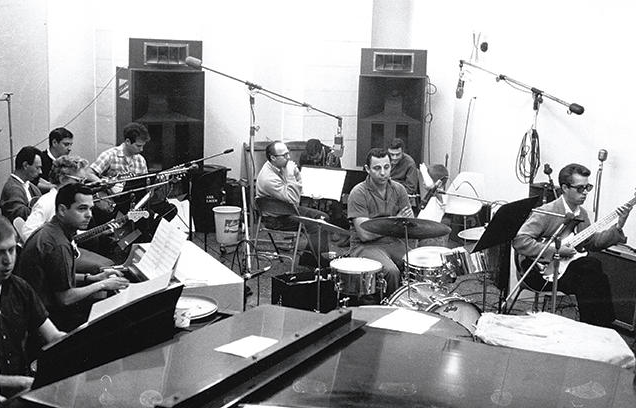
Screen Shot 2015-10-13 at 4.54.48 PM

It is good to take time out to honor one’s parents. It’s in the Bible, and practically everyone can recite the 5th commandment: honor thy father and thy mother then you will live a long, full life in the land. I have no doubt that documentary filmmaker Denny Tedesco will live long and prosper – ok, so I borrowed a line from another movie but you get my point.

Tommy Tedesco

Tommy Tedesco

Tedesco’s documentary The Wrecking Crew pays a heartfelt homage to guitarist Tommy Tedesco, his father and an honored member of the Wrecking Crew—a group of talented session musicians based out of California who made possible those riffs and lines and music chords that when heard played, we immediately recognize the artist and the song! Brian Wilson of the Beach Boys recalls, “They were the ones with all the spirit and know-how.”

Carol Kaye

Carol Kaye

Quiet as it is kept, the Wrecking Crew is so named because when these musicians arrived in Los Angeles, those talent already onboard thought the session musician would ruin the music business. Yes, Tedesco has pulled back the curtain to expose the skill, imagination, and genius behind the hits of the 1960s and 1970s that we know as the California sound. Remember Henry Mancini’s theme music for the “Pink Panther”? That’s saxophonist Plas Johnson from New Orleans; how about the drum beats in “Da Doo Ron Ron” the famous classic by The Crystals and “Be My Baby” by The Ronettes? That’s Hal Blaine! How about that soulful bass on hits such as “These Boots Are Made for Walkin’,” “California Girls,” “The Beat Goes On,” themes to Mission Impossible and Batman? That’s the legendary Carol Kaye on bass—the only woman in the group! Ok, one more: Remember Sam Cooke’s soul stirring “A Change is Gonna Come”? Guitarist Rene Hall arranged that song, and its socio-cultural import still rings true today.

Tony Plas

Tony Plas

It took seven years of fundraising to midwife this project but Tedesco successfully assembled a roundtable of the crew, and each one gives thoughtful testimonials on what it was like to be a part of music making history. There are narratives from heavy hitters in the music industry such as Cher, Herb Alpert, Nancy Sinatra, Brian Wilson, among others, who reveal their own profit from these session musicians but Tedesco always maintains a monogamous focus on the Wrecking Crew themselves and on those who can talk about them and the era of the 1960s and 1970s as well.

Hal Blaine

Hal Blaine

While Tedesco surely immerses the audience in the culture of the times, The Wrecking Crew is totally personal. These musicians talk of their discipline and their sheer dedication to their music—even if it meant not receiving credit on the album on which they worked. The fluff of The Monkees and the Patridge Family as well as respected bands as the Byrds and Simon and Garfunkel are just some of the bands the work of the Wrecking Crew goes uncredited. Tedesco does not stop there: the crew uncovers why!

The Wrecking Crew plays through July 2 at the Mary Riepma Ross Media Arts Center in Lincoln.

The Ross logo

Watch for film television & more!

In the meantime:
Catch a film!
Share the popcorn!
Watch TV!
Feed your soul!

Dior and I @ The Ross

Raf Simons examines one of his creations

Raf Simons examines one of his creations

I come from a family of women that worked with their hands. My Aunt Georgia crocheted dolls clothes that would make Scarlett O’Hara green with envy. My fraternal grandmother had only a third grade education but she could spin a piece of fabric into a creation that looked as if it came straight from the racks in the designer couture houses. My maternal grandmother’s artistry formed the warmest quilts. My mother taught me to sew by stitching doll clothes, and every summer, I would add to my wardrobe by sewing clothes for the fall and spring school year. Needless to say it was a daunting task because, as mom would say, “you’ve got to put your mind on it so that your sewing will come to you.”

... on the runway

… on the runway

Dior and I is a documentary that “puts its mind” onto the world of designer dressmaking, and the time and talent it takes to get that creation to come to trust that the designer will get it right. Written and directed by Frederic Chenge, the film Dior and I throws the audience into the haute couture world of the late French Fashion Designer Christian Dior whose name defines French couture. The film opens with footage of a shadow of a Dior model walking on concrete swirling in one of the designer’s creations. There are film clips of Dior, himself, surrounded by women advisors and models. Enter Belgian designer Raf Simon as the new creative director of the Dior house 55 years after the designer’s death.

seamstresses study a design

seamstresses study a design

Simons is a bland personality with hardly any demonstration of flair or panache, and one wonders how such a choice can pull off a fashion show of Dior standard in just eight weeks. When he arrives, however, he makes sure to introduce himself to the seamstresses who will be responsible for pulling together his designs. From there, the audience is thrown into the world of fabric, fashion design, high fashion models, and the fashion show—all produced for the benefit of the rich and famous, and Parisian fashion enthusiasts.

Chenge, however, fails to generate insight as to why Simons was chosen to head the House of Dior and at this specific moment in time. Much is left unexplained, most notable the blatant lack of racial diversity among Simons’s models. There is a dearth of interviews to fill in many of the gaps in the storyline.

putting it together

putting it together

The documentary’s pleasure, nevertheless, is found in the day-to-day work of the people who make all of that fashion magic possible! The camera focuses on the seamstresses in white coats who have to pin pieces of patterns together to bring about that Simons’s artistic vision. It is a joy to see their determination and their focus on the discipline of dressmaking. One seamstress reveals, “I started as an intern at Dior and decided to stay for a year or ten now it’s been 39 years. It has always been my wish.” These behind the scenes vignettes are refreshing as we witness their handling of the fabric with their hands and read the printed designs they are given to create. Along the way, we are up close and personal with those laborers whose handiwork create the stunning backdrops for the photo shoots which are walls and walls plastered from floor to ceiling with roses of red, apricot, pink, maroon, and yellow and white orchids. As one seamstress remarks, “it is beyond Alice in Wonderland. It is absolutely incredible!” The dialogue between Simon and his advisors over what is wrong and right with a dress fills the decision-making with intense moments. All of these elements produce a, well, so-so runway sequence of fashion design.

The Ross logo

Watch for in-depth Film • Television • & More reviews & commentary.
In the meantime:
Catch a film.
Share the popcorn.
Watch TV.
Feed Your Soul!