Far From the Madding Crowd @ The Ross

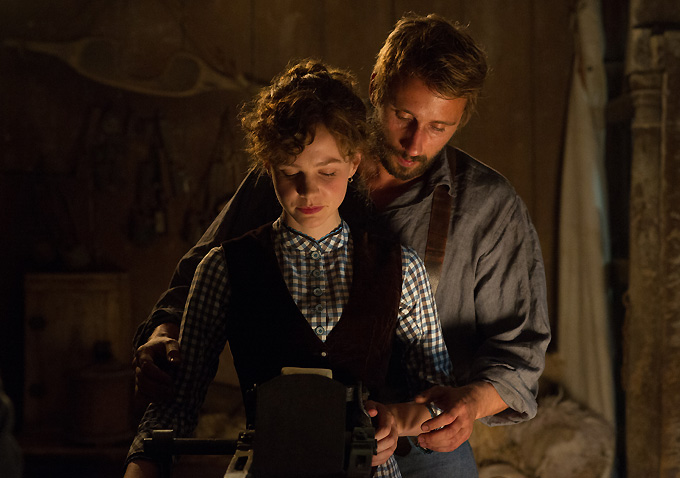
Bathsheba Everdene (Carey Mulligan) and Gabriel Oak (Matthias Schoenaerts)

Bathsheba Everdene (Carey Mulligan) and Gabriel Oak (Matthias Schoenaerts)

Thomas Vinterberg directs Far from the Madding Crowd, his film adaptation of Thomas Hardy’s novel of the same name. Set in 19th century Victorian England, the film centers on the friendship of sheep farmer Gabriel Oak, played by Matthew Shoenaerts, and the headstrong farmer Bathsheba Everdene played by Carey Mulligan. Mr. Oak (as Bathsheba calls him) trusts that his and Bathsheba’s friendship has matured and his economic station is firmly established. When he gathers some courage, he asks her to marry him. She politely declines, offering the excuse that she has no interest in marrying him nor any man. As fate would have it, however, each character’s fortune twists in ways that neither could have anticipated. Mr. Oak’s fortunes turn for the worse. His sheep dog drives all of his herd over the cliff and, thus, he has to give up his farm and seek work with Bathsheba, who, by contrast has inherited a vast acreage of farm land plus a mansion. She attracts three suitors: Sgt. Francis Troy, played by Tom Sturridge; William Boldwood, a monied landowner played by Michael Sheen; and, of course Mr. Oak. His admiration of and devotion to Bathsheba never wavers; and he admirably measures his feelings when asked by Bathsheba for his counsel on matters of the farm and the heart, even though some consultations are strained and do not work in his favor.

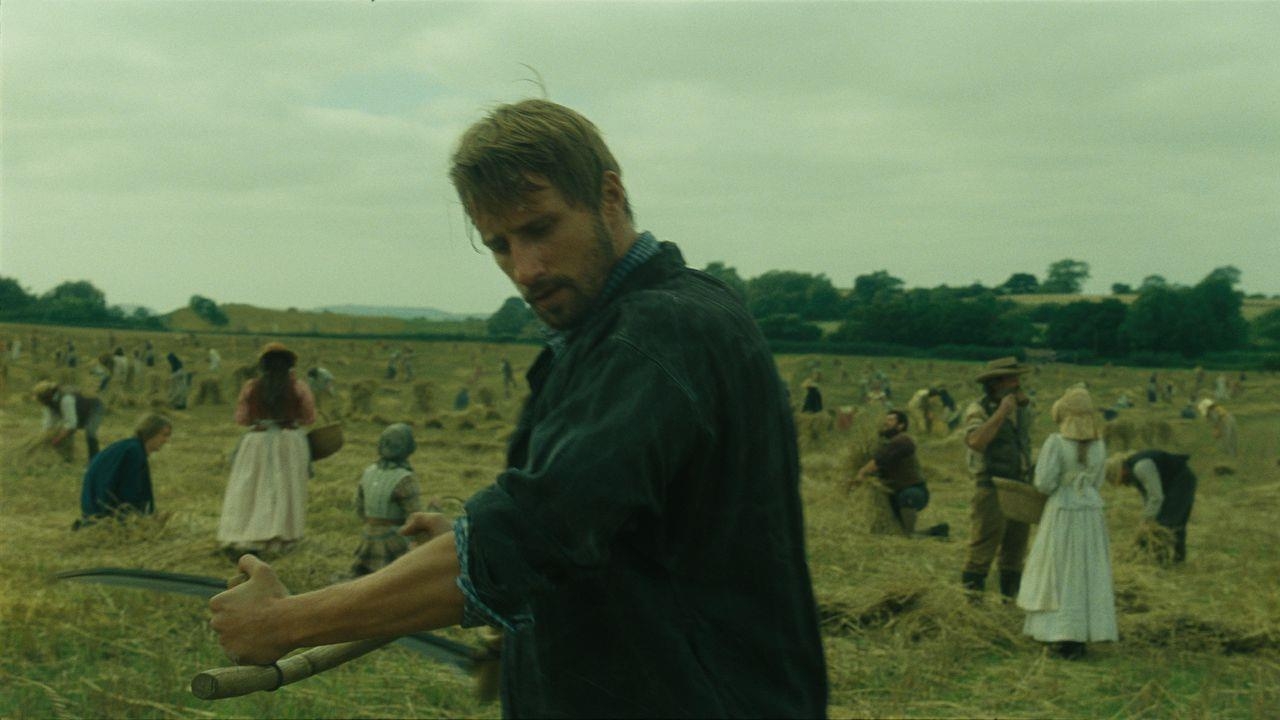
Mr. Oak works the land.

Mr. Oak works the land.

Charlotte Christensen’s cinematography is Oscar worthy. Her panoramic photographs will lull you to sleep as she sweeps across the English countryside. Her depth of field portray the expanse of the land; her character close-ups pull you into the intimacies of moment. You will feel the isolation from the madding crowd and you will sense the urgency of the management of the farm and people through her lens.

The performances by Shoenaerts and Mulligan make for stalwart bookends to Vinterberg’s project. Mulligan shines as she produces a very independent Bathsheba but is sure not to overplay her character’s strong will. Yes, she is financially independent; yes, she is a good manager of people and land. Yet Mulligan has her character recognize people and situations that she cannot control while still maintaining her self-respect AND her money.

Bathsheba surveys her land.

Bathsheba surveys her land.

Throughout ill-fortune and economic gain; nature’s wrath and smile on the land; and, love, marriage, and even murder, Mr. Oak remains as sturdy as his name implies. When he falls into financial ruin, Shoenaerts plays him as a dispirited yet confident sheep herder who, no matter the trial, has a healthy investment in his own worth. When Bathsheba sometimes acts out in arrogance, he dismisses her disrespect; one time he quits the farm rather to be subjected to Bathsheba’s unwarranted whims. No, he is not a man for whom to feel sorry; rather, Mr. Oak is so confident in his farming skills that he believes another place of employment awaits him without question no matter the circumstances. By the same token, Shoenaerts’s Mr. Oak carefully minds his station in the full realization that being gainfully employed brings about comfort in economic stability–not to mention self-satisfaction.

Far from the Madding Crowd is a well-orchestrated film that not only illustrates the intensity of love and desire; in addition, film director Vinterberg and cinematographer Christensen have delivered the beauty of the work ethic. We are given scenes of farmhands tilling the soil and loving it! We see those who work with their hands relish their work, and celebrate a good crop with a good drink and a song. Those were the times …

Far from the Madding Crowd plays through June 25 at The Mary Riepma Ross Media Arts Center.

Watch for in-depth Film • Television • & More reviews & commentary.

In the meantime,
Catch a film!
Share the Popcorn!
Watch TV!
Feed Your Soul!

Black Souls @ The Ross

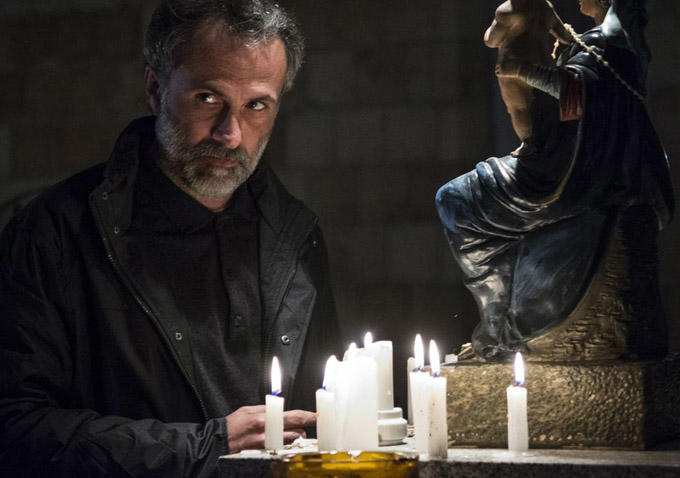
Luciano (Frabrizio Ferracane) seeks solace at the altar

Luciano (Frabrizio Ferracane) seeks solace at the altar

We all have relatives and friends who have chosen paths in life that would make angels fast and pray. We cannot help them nor their situation; some Bible scriptures command us to love them, and we do or at least we try to love them, but from afar. Yet, no matter how much we distance ourselves from them, there is something about the biological hook-up that will cause their life choices to interrupt, if not traumatize our own. Before we know it, we are swept up into a whirlpool of something or other. Life as we have known it never will be the same–ever.

Members from the mafia try to restrain Leo (Guiseppe Fumo)

Members from the mafia try to restrain Leo (Guiseppe Fumo)

Such is the tragic predicament of Luciano in Francesco Munzi’as dark and brooding film Black Souls. I’ll get the obvious out of the way: On its face, Black Souls is a gangster film but without all of the slick glitz we have experienced in Martin Scorsese’s Goodfellas and Francis Ford Coppola’s The Godfather. Munzi, still, carefully interlaces within Black Souls the usual gangster film elements: there is a Godfather Rocco, played with dark worry by Peppino Mazzotta; the good-natured brother Luigi, played by Marco Leonardi, and Leo, Luciano’s hot-headed son ready to come-of-age, played by newcomer Giuseppe Fumo.

The Funeral

The Funeral

Director Munzi makes a filmic turn by setting the story between two worlds: the cosmopolitan city of Milan and the mountainous more remote region of Africo. Luciano, played by Fabrizio Ferracane, is a humble goat farmer in Africo. He has painstakingly distanced himself and his family from life in an underworld whereby his brothers have built a lucrative drug business in Milan–or so he believes. His occupation pales by comparison, and Leo, his 20-year-old son whom he has raised among a herd of goats, rejects his father’s world and turns to the sleek and monied environment of his Uncle Rocco and Uncle Luigi. Thus begins the conflict; thus begins the sorrow; thus begins the torment–all wrapped up into a package delivered to Luciano’s threshold. When that package is unwrapped, there is a descent into madness; what is even worse, no one in the family places a hand on Luciano’s shoulder to help him move through his grief. And that, my friends, is the black in the soul of this film.

Black Souls is a tender story about the powerful force of family. That no matter if you move to heaven or to hell to be away from those who threaten your sense of the world, by some means … in some fashion … what they do or have done will find a way onto your own doorstep.

The Ross logo

Black Souls plays through May 21st at the Ross Media Arts Center in Lincoln.

Welcome to Me also plays thru May 21st at the Ross.

Watch for in-depth Film • Television • & More reviews & commentary.
In the meantime, catch a film, share the Popcorn, and feed your soul!

Matt Shepard is a Friend of Mine @ The Ross

Matthew Shepard

Matthew Shepard

I was in graduate school when I heard of Matthew Shepard. What struck me about his murder was that it occurred in isolation. I could imagine, only imagine, in between a swath of stars that dotted a midnight sky and the wide-open space of the Wyoming frontier, the dogged sounds of a pistol being whipped across Shepard’s skull by the perpetrators Aaron McKinney and Russell Henderson; the sounds of Shepard crying out in that wilderness with no one to hear him but his murderers; and, the echoes and hums of living things only heard in a rough country as they tied him to a fence and left him to die. When I saw his image in the newspaper, I shook my head and murmured, “Tch. He was but a boy … just a boy … who was he? Why?” His death galvanized the LGBTQ community given than he was gay. Later, Matthew Shepard became the symbol for hate crimes committed against those who are different.

Matt Shepard is a Friend of Mine answered those questions. Directed by Michelle Josue, this documentary delves into the story of Matthew Shepard, his life, his parents, and the town of Laramie, Wyoming. Josue and Shepard became friends while both were students at a Swiss boarding school. In her debut, Josue features Shepard’s family and friends who loved him and the teachers who believed in him. She says, “As his story became an international news event, my heartbreak and sense of loss only grew as my friend Matt was replaced by ‘Matthew Shepard,’ an historic figure and icon that will forever be associated with unspeakable violence and hate.” Every testimony, as well as the documentary, serves as post-eulogies for Shepard, and will leave you feeling as if his life has been given its just due outside of the bright lights of the media.

Josue, also, uncovers more than expected; at times, she moves us past our comfort zones. The fence where Shepard was tied up still stands, and its visual is haunting. She brings to the forefront the violent rape by a gang of men Shepard suffered while on a high school trip to Morocco. More poignant, and uncomfortable, is an interview with a Catholic Priest who counselled McKinney and Henderson; he challenges her to think about forgiveness and to consider that McKinney and Henderson are our brothers. Josue begins to sob because she cannot fathom that these men who beat and tortured her friend are worthy of forgiveness. Can you? Would you … forgive? Judy and Dennis Shepard, Matthew’s parents, might will generate some insight into forgiveness in this very personal and intimately raw documentary of Matthew Shepard.

Matthew Shepard is a Friend of Mine plays through April 23 at the Mary Riepma Ross Media Arts Center in Lincoln.

The Ross logo

Watch for in-depth Film • Television • & More reviews & commentary.

In the meantime:
Catch a film
Share the popcorn
Watch TV
Feed your soul!

The Hunting Ground @ The Ross

Screen Shot 2016-11-28 at 1.21.28 AM.png

Documentary filmmaker Kirby Dick could not have been more provocative nor insightful nor incisive in his documentary The Hunting Ground. I’ll just get to the point: The Hunting Ground explores the epidemic of on-campus rape, and colleges and universities should make this film a requirement for every student who enters their hallowed halls. What is heart-wrenching about The Hunting Ground is that Dick gives over his film to the young women who have experienced the trauma of rape, and the humiliation that attends the crime when administrators, students, and even the police dismiss the allegations and blame the victim. These young women are brave as the camera closes in on their every emotion.

Erica Kinsman, a Florida State student, for example, tells her story of rape by the college’s star quarterback Jameis Winston, who went on to become the youngest player to win the Heismann trophy in 2013. No charges were brought against him even though the DNA matched Kinsman’s rape kit. The net of protection around the athlete absolutely will floor you! Dick, however, cuts through that net, and each and every player responsible for this protective shield drops out framed by the copious footage of Winston on the field, post-game, and all of the celebrations around his victories on the field and his Heismann win.

The young women in this movie survived their trauma; however, Elizabeth “Lizzy” Seeberg, a St. Mary’s College Student, committed suicide after receiving a text “messing with Notre Dame football is a bad idea” when she reported her rape by an unnamed Notre Dame football player.

Screen Shot 2016-11-28 at 1.22.49 AM.png

Students Advocate for a Rape Free Campus

What is incisive about The Hunting Ground is that indicts the college and university administrator who turns a blind eye; Dick’s exposes their almost “hands off” response to the young women who come to them, and the University President, especially is exposed as a pretender of concern. But Kirby goes for the jugular when in a denouncement of on-campus fraternities whose members are accused of being the predators of female flesh at frat parties. Specifically, he attacks with a vengeance, and I mean with a vengeance–the Sigma Alpha Epsilon fraternity, better known as “Sexual Assault Expected.”— you know, that same fraternity who just has been expelled from the University of Oklahoma for its racist rant during an alcohol saturated party.

Go and see this documentary. It is necessary. You will feel so outraged that you will hard pressed not to draw up a placard and take to the streets the injustices that these young women have to endure once they drum up the courage to tell their stories.

The Ross logo

The Hunting Ground Plays through April 16 at The Ross Media Arts Center in Lincoln.

Also The Hunt for General Tso opens today and plays through April 9th at The Ross.

‘Dreamgirl: My Life As A Supreme’ ~ NET All About Books

Dreamgirl

At St. Martin de Porres, my elementary catholic school in Columbia, South Carolina, the playground served as a venue for a myriad of activities. Tucked into the corner, away from the noise of the playground, is an assembly of girls. With the right foot forward, one hand on the hip and the other stretched out in front of them, they demanded that somebody stop in the name of love. All the while in another little corner is a group singing about love and an unreachable scratch that keeps itchin’ the heart! as hips swing and heads bob, the nuns glide silently by. Lip-synching was the one activity they did not interrupt or keep in check. Their silence seemingly was a sign that they understood the itchin’ of the heart and heartbreak. I imagine now that perhaps in the quietness of their hours, they secretly watched The Supremes on Hullaballoo, The Ed Sullivan Show, The Red Skelton Show, Mike Douglas, or The Tonight Show, pledging to say 10 Hail Marys and Our Fathers afterwards. Whatever, the reason, The Supremes and their music captivated everyone, after all it was the 1960s.

Florence Ballard, Diana Ross, and Mary Wilson having some backstage fun.

Florence Ballard, Diana Ross, and Mary Wilson having some backstage fun.

In the 1970s, word spread about an impending break-up of The Supremes and Ross’s alleged ruthless campaign to become the lead singer of the sterling group before that. Soon, that group would be introduced as Diana Ross and The Supremes. Fast forward to 1986. Mary Wilson’s autobiography Dreamgirl: My Life As A Supreme hit bookstores, and, needless to say, I ate up every printed word like a bear coming out of hibernation. Wilson does not hold back in her writing about the alleged affair between Diana Ross and Motown Mogul Berry Gordy. Gossip about the House of Motown plays itself out within the text in every sordid detail along with stories of jealousies, and apparent career sabotage. Oh it was a joy!

The Supremes

The Supremes

Mary Wilson’s story of three Black teenagers from the Brewster Projects in Detroit, Michigan gave me an up-close-and-personal relationship with three Supreme women who exemplified ladyhood, fashion, and, most important, talent! Each young woman had a body type every teenager could identify with to boot. I leaned towards Diana Ross because she, like I, was no wider than a no.2 pencil. My sister loved Florence Ballard because she was voluptuous; and Mary Wilson was in between!

Mary Wilson

Mary Wilson

A closer look at Dreamgirl, however, revealed a curious twist. Carefully interwoven in Wilson’s autobiography are two threads of mini-biographies of the original Supremes: Diana Ross and the late Florence Ballard, and it is Ballard’s mini-bio that distressed me the most. To read how Ballard tried her best make The Supremes an equal partnership and that of her efforts were undermined by Gordy and Ross brought home for me that entertainers really have little, if any, control over their artistic expression. I still idolize The Supremes, but when I hear or read Diana Ross and The Supremes, I feel sorrow because Wilson’s autobiography makes known the back-handed truth behind that name change. The story also scared me since here were two best friends—Mary and Flo—who, after a talent contest decided to go for that Star together; but when Diane Ross entered the picture—to read Wilson tell it–that dream became compromised when Ross and Gordy align themselves with each other. Oh, the intense personal pain and suffering Mary and Flo experienced.

dancing

When I began to include autobiographies of celebrities in my book Dancing on the White Page: Black Women Entertainers Writing Autobiography, Mary Wilson’s Dreamgirl was at the top of that list. This autobiography, for sure, removed the scales from my eyes about entertainers and made me more knowledgeable about the entertainment corporate structure and the moguls who run it. What’s more, Dreamgirl outlined a history of Motown, Hitsville, USA—a house that just about every African American girl and teenager dreamed of entering one day! Looking back as an adult, I see that Wilson’s Dreamgirl was a caution: some houses are dysfunctional even though they appear to be healthy and normal.

netradioaablogo200

Listen to my commentary on NET All About Books http://netnebraska.org/interactive-multimedia/radio/all-about-books-kwakiutl-dreher-rethinking-music-your-past

Devil in a Blue Dress ~ NET All About Books

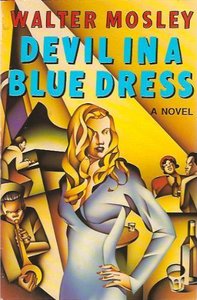
Devil_in_a_Blue_Dress_(Walter_Mosley_novel)

Elementary school was where I first learned of Florida and California; the two places where the sun showed her face practically every day of the year. Oh, how I longed to be in a place where winter had no place to hang around. When I read in a magazine that all of the beautiful stars and celebrities lived Los Angeles, California, Florida became a blur. Fast forward to 1996, when the scholarship came by way of the University of California-Riverside, I quit my well-paying job, packed my bags, and headed west to begin my graduate studies. I lived in Riverside, only an hour away from Los Angeles — well … that drive depended on which stretch of the freeway you travelled and … well … what time you left to travel on that freeway. In any event, the city of my dreams, Los Angeles, California was just around the corner.

Los Angeles is everything it markets itself to be, and the sprawling city showed off its pretty people, palm trees, beaches, Rodeo Drive, the film studios, and all of the usual suspects of sights and monuments peculiar to that city. It wasn’t until I read Devil in a Blue Dress by murder mystery writer Walter Mosley, however, that Los Angeles began to have a deeper broader meaning for me in terms of the history of African Americans and migration. Not just Los Angeles, but Watts, South Central, and Central Avenue—the Black Los Angeles. These are the places that housed Black Hollywood. Hattie McDaniel, the first African American to win the Academy Award for Best Actress for her portrayal of Mammy in Gone with the Wind in 1940; also entertainer Dorothy Dandridge, the first African American to be nominated for Best Actress in 1954, for her portrayal of Carmen Jones in the film of the same name. Eddie “Rochester” Anderson, the Nicholas Brothers, tap dancers extraordinaire, and Lincoln Theodore Monroe Andrew Perry, better known by his stage name Stepin’ Fetchit graced the sidewalks of Black Los Angeles as well.

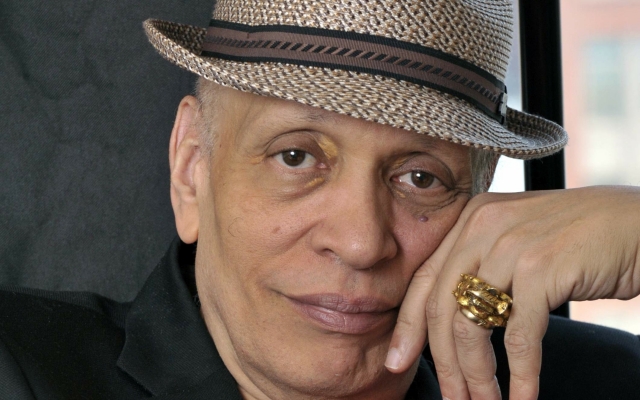
Walter Mosley

Walter Mosley

This is the world Mosley’s main character Easy Rawlins lived, and African Americans who migrated from the south to California during the great migration of the 1930s and 40s were his neighbors. Prior to Devil in a Blue Dress, my knowledge of this great migration largely centered to the migration of African Americans from the agrarian south to the industrial north. Several 20th Century African American fiction writers created stories around this social current, and uncovered the raucous and chaotic world of the concrete jungles of Chicago, Philadelphia, Cleveland, Kansas City, and Harlem, New York, long considered to be the Black Manhattan, to name a few. Harlem Renaissance writer Claude McKay, for example, explored the day-to-day life of African Americans who migrated to Harlem, New York in his novel Home to Harlem; Richard Wright drew upon the plight of the family of Bigger Thomas on the south side of Chicago in his critically acclaimed novel Native Son; and, Ann Petry, in her novel The Street delved into the life of Lutie Johnson, a single mother trying to make her way through the streets of Harlem in a world dominated by men. In her novel, Jazz, Toni Morrison continues this trend when she sets her novel Jazz in the jazz scene of Harlem, taking us into the lives of families who migrated from the south.

Los Angeles

Los Angeles

Walter Mosley illuminated for me the migration of African Americans from the south to the west. In Devil in a Blue Dress Mosley brings to relief the nuances of old Los Angeles and all of its beauty and dangers wrapped up in love and murder and dirty politics, and most interesting the issue of passing for white during a time when the country segregated by law its population. Devil in a Blue Dress is the first installment of the Easy Rawlins series. Easy, a native of Houston, Texas, moves to Watts after his service in World War II, and discovers racism on home shores still prevails as he is laid off from his job from an aircraft factory for no reason. He is hard-pressed to find employment, until his friend Joppy, a boxer during World War II refers him to DeWitt Albright, a shady white private detective who employs Easy to find a young woman by the name of Daphne Monet or the Devil in the Blue Dress.
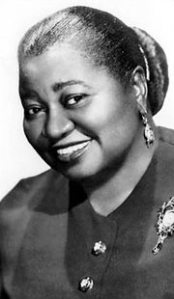
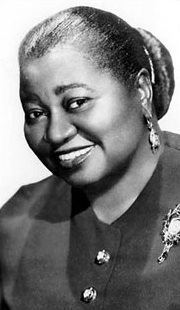
Hattie McDaniel

Hattie McDaniel

Now, I want to pause here to make mention to something else the novel did for me: Devil in a Blue Dress facilitated my understanding of what house and home and the caretaking of them meant to my parents. Easy decides to take the job offer from DeWitt Albright because he needs the money to pay the mortgage on his house, and his house serves as his sanctuary from a hard and cruel world.

Home ownership! That I understood all too well! When I told my mother that I had put down a deposit on an apartment when I landed a good paying job, she squinted her eyes and then unleashed her story of she and dad worked hard to purchase a home. It was the 1940s—the time of Mosley’s story. Fresh out of high school, dad had earned his certificate as a brick mason, and he immediately helped one of his buddies launch a very lucrative construction business. After he and mom married, mom would travel with him to different parts of the country when he received a contract to work with other construction companies. When they returned home to South Carolina, they immediately purchased a home. “We were not going to rent! No. Never!” she exclaimed. I stood there dumbfounded, and my pride was hurt but she didn’t care. She continued on, “I wanted a house—not a wood house—but one made of brick with a front porch and lots of rooms so the children could run around freely! Paying rent? Pshaw! It’s like giving money away, and for what?”
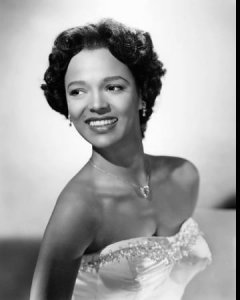
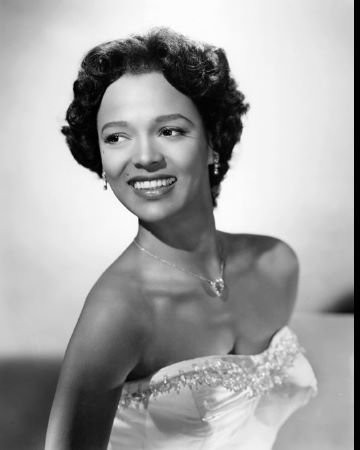
Dorothy Dandridge

Dorothy Dandridge

Easy Rawlins would have agreed with my mother, and in one patch of dialogue from Devil in a Blue Dress, my mother’s voice resounded through my mind as well as visions of my father’s own sense of home maintenance: Easy ruminates on his home after he takes the job offer from DeWitt Albright. He says,

“I drove back to my house thinking about money and how much I needed to have some. I loved going home. Maybe it was that I was raised on a sharecropper’s farm or that I never owned anything until I bought that house, but I loved my little home. There was an apple tree and an avocado in the front yard, surrounded by thick St. Augustine grass. At the side of the house I had a pomegranate tree that bore than thirty fruit every season and a banana tree that never produced a thing. There were dahlias and wild roses in beds around the fence and African Violets that I kept in a big jar on the front porch.

Easy continues to rhapsodize about his humble abode, he says,

“The house itself was small. Just a living room, a bedroom, and a kitchen. The bathroom didn’t even have a shower and the back yard was no larger than a child’s rubber pool. But that house meant more to me than any woman I ever knew. I loved her and I was jealous of her and if the bank sent the county marshal to take her from me I might have come at him with a rifle rather than to give her up.”

Pride in the home. I knew that all too well. My father felt he had made well on his duty as a husband and a father with the purchase of that house, and he intended to make sure she was presentable to those who saw her. At dusk, Dad changed into his casual clothes to water the azaleas he and mom planted in the front yard; the evergreens mom planted in the backyard; and the zinnias with which she lined the sides of the driveway. “You never water plants when the sun is up; otherwise the sun will suck up the water. Plants need water at dusk so their roots can soak up the water and be fed to grow.”

Yes, Devil in a Blue Dress gave me greater understanding if not a reverence for a nimiety of histories and images. Though alluded to in the novel, Black Hollywood was alive and well in Mosley’s setting in the bustling Central Avenue of the 1940s and 1950s. Central Avenue was the hub of Los Angeles Black Culture, and Black celebrities contributed to the vitality and joie de vivre of that place. And though Mosley moves Easy Rawlins through the multi-ethnic neighborhoods of Los Angeles, south Central, Watts, and the hustle bustle of Central Avenue were the worlds where Easy Rawlins lived. He cherished his little humble abode, and Easy tells the reader that houses are more than just shelters; they are the holy temples that provide refuge and safe havens from the whirlwind of life; and, when we love them, we will go to great lengths to protect them.

netradioaablogo200

Listen to my commentary on Mosley’s Devil In Blue Dress:
http://netnebraska.org/interactive-multimedia/radio/all-about-books-guest-reader-kwakiutl-dreher-home-and-hearth
She’s Beautiful When She’s Angry @ The Ross

Screen Shot 2015-11-05 at 8.22.12 PM

Mary Dore’s documentary She’s Beautiful when She’s Angry is an historical overview of one of the most influential movements in the history of women’s liberation, the founding of the National Organization for Women, better known as NOW. The documentary features the social engineers of that founding, and you will welcome the commentary from them: Susan Brownmiller, Jacqui Michot Ceballos, Rita Mae Brown, Linda Burnham, and Eleanor Holmes Norton are just a few of this stellar line-up of narrators.

These women form a cacophony of voices all rallying around the common cause of women’s liberation. One issue that groups grappled with was how do you integrate race, class, and gender when working within the movement? How do you interlace the difference of experience between women? For example, in an interview with Linda Burnham, the activist explains, “it was very difficult for middle class white women to have any conception about what was going on in communities of color […] and when the voice of one is used as the voice of all, you have a problem.” Eleanor Norton Holmes explained “Black women who have spent their lives working in other women’s kitchens have a different kind of handicap than women who have been oppressed for their sex and other ways.”

Screen Shot 2015-11-05 at 8.24.12 PM

Mary Dore, the director, deftly weaves in stock footage from the 1960s and 1970s of demonstrations, arrests of women activists, and the downright humiliating reactions from their male counterparts. What comes through She’s Beautiful when She’s Angry is the buzz words or the women issues that have been long associated with this movement, and they are sexual harassment, rape, homophobia, domestic violence, safe ad legal abortion, and economic equality. The rallying chants equally are significant, such as “The Personal is Political”; Roxanne Dunbar’s proclamation “I am a revolutionary … I am a feminist … there is no possibility for me to be liberated except that all women be liberated”; and Texas activist Virginia Whitehill’s missive, “You’re not allowed to retire from women’s issues.” The dialogue of the narrators is astounding, and when watching them, you see that the fiery commitment to these women issues burns brightly–still.

Screen Shot 2015-11-05 at 8.25.57 PM

Striking to the documentary are the juxtaposition of women burning bras and taking their voices to the streets with poetry and periodicals, pamphlets, and mission statements with the responses from men. One man, for example, President Richard Nixon, issued a tragic blow to the Comprehensive Child Care Act passed by the Senate in 1970. He countered, “we don’t want to make our women like soviet women. We want women to take care of their own children.” Surprisingly, men countered with their own banner “Husbands and Fathers for Women’s Liberation.”

If you want to see a well-documented history lesson on women and the struggle for equal rights, then Mary Dore’s She’s Beautiful when She’s Angry is the film for you.

The Ross logo

Watch for in-depth Film • Television • & More reviews & commentary.
In the meantime, Catch a film. Share the Popcorn. Feed Your Soul!

Happy Valley @ The Ross

Screen Shot 2016-03-18 at 5.26.18 PM

Happy Valley is a documentary every Nebraskan should see. Directed by Emmy Award-winning filmmaker Amir Bar-Lev, Happy Valley is an exploration of a community where football is a religion. Uh uh, do not try to deny it! We all know the depression that sets in this state when football season is over. You especially will appreciate Amir Bar-Lev’s subjects: Assistant Coach Jerry Sandusky at Pennsylvania State University, and the charges of child molestation for which he was convicted in November 2011.

Amir Bar-Lev’s camera is relentless as it probes the culture of hero worship, secrets, accusations, and tragedy in a city still recovering from an identity crisis. Happy Valley refuses to be a witch hunt of a documentary; let’s face it, the damage is done and now is rooted in the psyches of its residents. Instead, Amir Bar-Lev critiques our penchant to place humans on a pedestal when they bring to us fame and celebrity, especially when it comes from the arena of the athlete, that revered gladiator of sports.

The documentary opens with a long shot of the verdant land filled with tailgaters pitching tents and organizing food in preparation for the game. Coach Joe Paterno begins the dialogue, “You know, it’s a tough life, and to be able to get away and go someplace where you meet friends that you only see once and a while; each stupid food; drink more than you should drink; can get excited about going to a game, and just get it all together and have 100,000 people doing the same dumb things makes you feel that you’re not as dumb as you think you are. College football is something special, and hopefully we will never lose sight of that or screw it up!”

Screen Shot 2016-03-18 at 5.30.37 PM.png

Matthew Sandusky

In November 2011, things screwed up, and Amir Bar-Lev exposes all the elements that went into causing the tragedy that catapulted the state into confusion, shame, and grief. The interview with Sandusky’s adoptive son, Matt, who grew up in a house with no running water, no toilets, and no sinks, among his relatives that numbered 30, will cause your heart to shudder. Remembering his impression of Sandusky when he joined the Assistant coach’s summer camps as a child, Matt says, “to be right next to him, and to understand that he chose you, I felt powerful. I felt like people looked at me and envied me instead of people looking down on me.”

Happy Valley Plays through March 8 at The Ross in Lincoln.

The Ross logo

What We Do In the Shadows @ The Ross

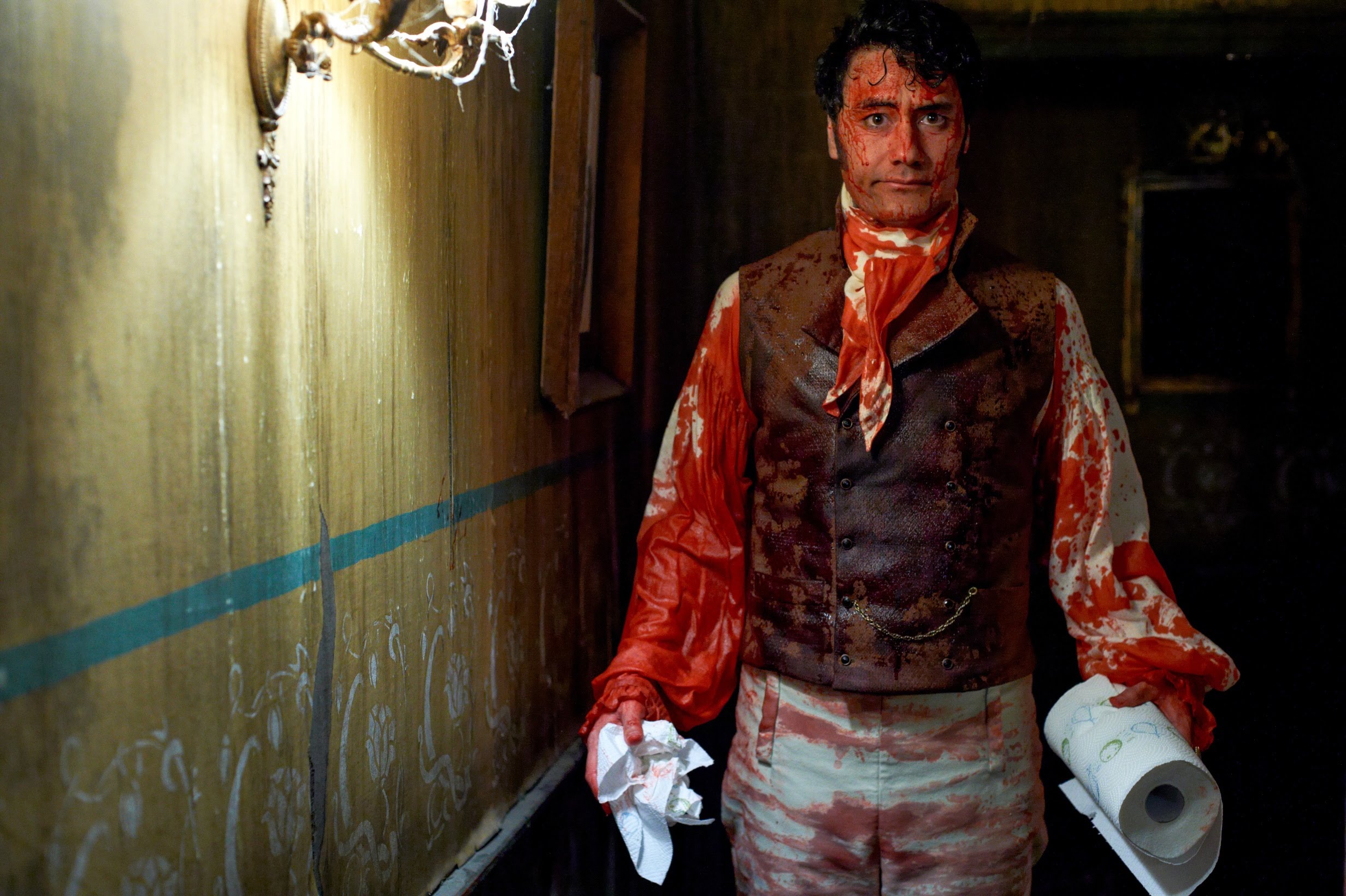
Viago (Taika Waititi)

Viago (Taika Waititi)

Who cannot forget the dark and brooding Count Dracula played by the very handsome Frank Langella in John Badham’s 1979 film Dracula? Or the dashing forever young George Hamilton as Count Vladimir Dracula in Stan Dragoti’s film Love at First Bite also released in 1979? Yes, that’s when Vampires were handsome, sexy, and seductive. Given the right circumstances, you would be hard pressed not to offer your neck to them for a midnight snack. Well, if you come into contact with the vampires in What We Do in the Shadows, an absurd documentary about vampires written and directed by Jemaine Clement and Taika Waititi, you might want to stock up on those turtlenecks and scarves.

Vladislov (Jermaine Clement), Deacon (Jonathan Brugh), and Viago (Jemaine Clement)

Vladislov (Jermaine Clement), Deacon (Jonathan Brugh), and Viago (Jemaine Clement)

Yes, these vampires are outrageous in their antics, and you will love them and all of the unholy ways; I’m not so sure, however, you would want them around when the sun goes down. You never know what they might do in the shadows. Vampires have been running through the night of our popular culture for ages, and Clement and Waititi keeps going our interest in them. Set in New Zealand, the film features a house of four zany vampires. Just to name them would be an injustice so here goes their descriptions. There is Petry, played by Ben Fransham, who is a mute in dire need of a dentist; Deacon, played by Jonathan Brugh refuses to inhabit his age, and he is old; Vladislav, played by co-director Jemaine Clement, is the introspective one who believes in vampire traditions; and, Viago, the leader, played by co-director Taika Waititi adds his own flair to the bunch. These directors explore the night-to-night activities of these dysfunctional creatures from howling and hissing at rival werewolf gangs to house cleaning to coming out as a vampire to friends to discussions about the difference between humans and vampires–you know … the everyday ordinary struggles of life. Along the way, these vampires try to decipher modern day technologies such as skype, cell phones, and computers.

Clement and Waititi have sucked out the seduction and sexy, and even the ugly and repulsive (remember Boris Karloff’s and Gary Oldman’s Draculas?) along with all of our popular notions accorded to vampires to portray regular unadorned people who just happen to be vampires. Threaded within the film is a heartfelt theme: We all have our differences so let us at least try to live peacefully among each other. Just be careful when you come out at night.

What We Do In The Shadows plays through March 12 at the Mary Riepma Ross Media Arts Center in Lincoln.

The Ross logo

Watch for in-depth Film • Television • & More reviews & commentary.

In the meantime,
Catch a film!
Watch an episode!
Share the Popcorn … Feed Your Soul!

Cicely Tyson and Viola Davis ~ The Skinny

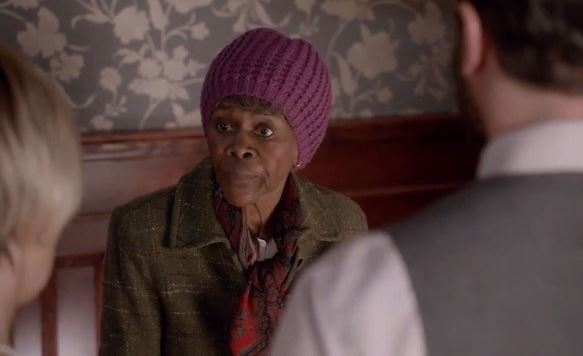
Ophelia (Cicely Tyson) runs the comb through Annalise's hair (Viola Davis)

Ophelia (Cicely Tyson) runs the comb through Annalise’s hair (Viola Davis)

How to Get Away With Murder
ABC 9/8 CST ~ “Mama Here Now”

It was a most intimate moment on primetime television last Thursday night: daughter-between-momma’s-legs getting her hair parted, her scalp scratched, and her hair combed. Annalise Keating, Esq. (Viola Davis), the fierce instructor of criminal law, dresses to the nines and leads a cadre of bright students who sit at her feet in Shonda Rhimes’s drama How to Get Away With Murder. Then, there is Anna Mae, the abused child who never received an acknowledgement from her momma that something went wrong that night when the uncle came to stay. So Anna Mae grows up and transforms herself into Annalise, and hides under a wig the hair that the uncle touched when something went wrong that night. Momma Ophelia (Cicely Tyson) knows the truth; so, Anna Mae can come out now, and let her hair be.

Momma Ophelia went for Anna Mae’s natural as she observed (and I paraphrase), “come here let me get at your hair; your kitchen is tight.” That gesture accompanied by a gentle command was all too familiar (as well as the ‘kitchen’ code) because it reminded me of my mother’s call for me to sit in the chair to let her “run the comb” through my hair when I came home for a visit. Not one thing was wrong with my hair, but I intuited as I answered her call that mom wished to keep going the ritual of dressing the hair of her eldest daughter as she had done for her three girls from the time we came out of her womb.

Yes, it was a ritual. Every night, mother sat on her bed and called us one-by-one to sit between her legs on the floor. There, she would part our hair, apply Ultra Sheen or Royal Crown to the scalp, brush and comb our tresses, patiently plait our hair, and wrap up her handi-work to make sure each plait stayed in place. In the morning, she untied our wrap, brushed our edges, accentuated the plaits with barrettes or ribbons, and prepared us for school or church. When we grew into teenagers, the time came for us to wear our hair down and in curls. In other words, we were ready for the press and curl. My sisters and I would wash our hair on Friday night, plait it up, and then loosen the tresses early Saturday morning for them to air dry as we did our chores. That’s right: no hair dryer nor blow dryer. Then, Saturday night, mom parted our hair into sections. As she gently glided the hot comb through our hair, she told stories of something or someone or other, and we would nod, or laugh, or attend with “really?” “you’ve got that right”, and so on and so forth. The result? A fresh press we would roll up with pink Goody sponge rollers. It never was a painful process as most women with these memories often posit; momma had a gentle hand, and this home salon ritual made possible a kind of bonding between my mother and her daughters.

"Don't ya'll know a VIP when you see one?" Momma Ophelia

“Don’t ya’ll know a VIP when you see one?” Momma Ophelia

My heart saddens–almost breaks–as I imagine what mother must have felt when we, in our young adult years with a little money in our pockets from our first jobs, released her hands from our hair in favor of a hair salon and a beautician–a stranger–who applied the Revlon mild perm to our scalp, shampooed then wet set our tresses, and put us under the dryer for the heat to make our curls. I guess that is why I obliged her every command to let her “run the comb through it” on my treks home when I began to let my hair grow into its natural state.

The sound of Momma Ophelia’s comb through her daughter’s hair sent me. It did, just as hearing the sound of the comb made from wood Sethe (Oprah Winfrey) pulled through Denver’s (Kimberley Elise) hair in front of a cackling fire in the movie Beloved moved me; or, the memory of the scene in Zora Neale Hurston’s Their Eyes Were Watching God when Teacake scratches the dandruff from the scalp of Janie’s head made my heart sing. It wasn’t just the combing of Anna Mae’s hair. No. The storytelling Momma Ophelia brought along with it added depth and substance to the Annalise’s onscreen presence. Even more significant, her revelation released her daughter from the night terrors brought on by an abusive relative her little girl experienced that only a “long match and a very flammable hooch” could handle. That Annalise, a grown and well-accomplished woman, allowed her mother to be momma initiated the process for Anna Mae’s healing, as only a momma’s validation of her little girl’s pain could do–all of this the night she dropped down in between her momma’s legs on the floor in her house.

Last Thursday night brought that intimate moment and, in that moment, I missed my momma calling for me to run the comb and her hands through my hair.

Watch for in-depth Film • Television • & More reviews & commentary.

In the meantime,
Catch a film …
Share the Popcorn …
Feed Your Soul!