Magic in the Moonlight @ The Ross

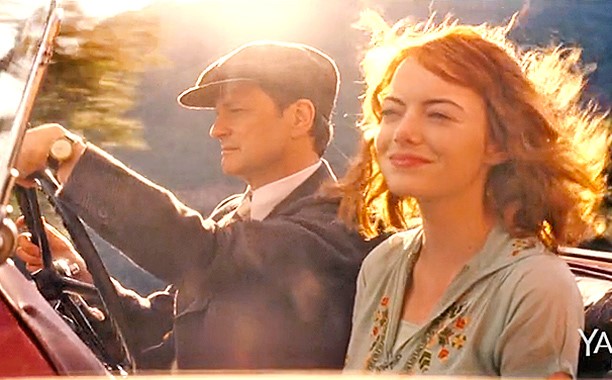
Stanley (Colin Firth) and Sophie (Emma Stone)

Stanley (Colin Firth) and Sophie (Emma Stone)

Whether or not we want to admit it, fall is releasing its slumber. The summer is nearing its end no matter how warm it may feel outside. Teachers have made their lesson plans. The children are in school; students are preparing the dorm rooms, and parents either are lamenting yet another absence of their young adult from the fold or are rejoicing over one more year of peace and tranquility. Whatever the emotion or event, before fall fully awakens and pokes winter in the eye, celebrate this annual change in seasons with a trip to The Ross to see Magic in the Moonlight directed by none other than Woody Allen. It’s a sweet heart of a film, sprinkled with the confection of fine acting by Colin Firth, Emma Stone, Marcia Gay Harden, and Simon McBurney.

Howard (Simon McBurney), Aunt Vanessa (Eileen Atkins) and Stanley (Colin Firth)

Howard (Simon McBurney), Aunt Vanessa (Eileen Atkins) and Stanley (Colin Firth)

Set in the gay 1920s, Firth plays Stanley Crawford, a very bah-humbug Englishman, who parlays a persona as a celebrated Chinese magician named Wei Ling Soo. His friend, Howard Burkan (played by the lovable Simon McBurney), invites him to the fabulous Côte d’Azur mansion owned by the Catledge family. His mission: to expose Sophie as a charlatan. Played by Emma Stone, Sophie is an American who claims to be clairvoyant and that she can have conversations with the deceased. Stanley jumps at the chance given that he has no tolerance for that sort of poppycock, and thus, has made a reputation of being the most famous debunker of spiritualists. Upon his arrival, we meet Aunt Vanessa, played by the beloved English actress Eileen Atkins of Upstairs, Downstairs fame, as well as members of the Catledge family. What follows is a series of provocative conversations and meditations on evidence and proof vs. feelings and intuition between Stanley and Sophie. There is an amusing séance whereby Grace Catledge (played by Jacki Weaver) finds out if her husband Henry answers from over yonder if he was faithful to her over the entire course of their marriage. Hamish Linklater is superb as Brice, Sophie’s ukulele playing star-struck fiancé. Brice is rich, but after he sings a few bars of a song, you realize that’s just about all there is to him.

Visual 9

Woody Allen’s signature pulses throughout as the writer-director features a thickset of conversations —an art that is practically going the way of texting and checking facebook posts while in the company of others. Cinematographer Darius Khondji, who photographed Michael Haneke’s Amour, fine tunes the story with fabulous tight spaces and the glorious wide-open outdoors of the Cote d’Azur seen from a 1925 Alfa Romeo driven by Stanley. The interiors are made scrumptious by set designer Jille Azis. Sonia Grande’s costume designs are ethereal with characters dressed up in flapper glory with linens, cottons, furs, sequined headbands, and gowns. These film elements cast their own spell, and seduce you into what feels like Sunday twilight in a hammock.

But there is no ‘poof’ in the magic, and Stanley’s and Sophie’s interactions come off as this old curmudgeon trying to catch a child in a lie. Allen, however, settles on the usual romantic comedy cliché, and this turn in the end really undermined the story.

Mrs. Baker (Marcia Gay Harden) and Grace (Emma Stone) arrive at the mansion

Mrs. Baker (Marcia Gay Harden) and Grace (Emma Stone) arrive at the mansion

Still, viewing Magic in the Moonlight is worth closing out and welcoming the inevitable: the change in seasons, the empty nest, back-to-school, the start/end of romance, the completion of a project; the end of one; happiness, joy, a new job …

The Ross logo

Magic in the Moonlight plays through September 4 at the Ross Media Arts Center in Lincoln.

Watch for in-depth Film • Television • & More reviews & commentary.

In the meantime, Catch a film … Share the Popcorn … Feed Your Soul!

Boyhood @ The Ross

Mason (Ellar Coltraine)

Mason (Ellar Coltraine)

Richard Linklater’s Boyhood charts the days in the life of a family as they manage a kaleidosope of life’s daily dramas. In 2002, he cast Patricia Arquette as Mom, Ethan Hawke as Dad, Ellar Coltrane as Mason, and Lorelei Linklater as Samantha, and in 2013 completed the film with the same cast. That’s right. Mason, at 6 years old in 2002 along with his big sister Samantha grow up right before our very eyes in this award-winning film. Set in Houston, Texas, for 2 hours and 45 minutes we are taken on the usual suspects of all things family drama, outings, and rituals: camping trips and s’mores; birthdays; bullying; marriages and divorces—3 to be exact—domestic violence, adolescent angst to young adulthood, first loves, sibling rivalry, then college.

Mom (Patricia Arquette)

Mom (Patricia Arquette)

All characters are well-drawn, and Arquette and Hawke carefully handle their parts as they serve as the parental bookends to the story. Sprinkled throughout the narrative are the trappings of technology—cell phones, Gameboys, Gamecubes, The Wii, among others, and Linklater implements each as a skilled juggler in a park. By the time Mason has turned 18, Linklater has given the audience strong doses of dramatic elements of life that all of us have experienced. In other words, we can identify with each minute as the narrative unfolds.

Yes, Boyhood is pleasant!
It is appealing!
It is delightful! …

And these descriptions are what had me on edge the entire time.

Dad (Ethan Hawke) with Mason and Samantha (Lorelei Linklater)

Dad (Ethan Hawke) with Mason and Samantha (Lorelei Linklater)

Boyhood is Linklater’s utopian fantasy that suggest this is what life is like without multi-ethnic interactions and all of the attendant political conundrums. What’s the political term—oh—Boyhood is his vision of a post-racial community? This family, throughout the story, is sheltered from inter-racial interaction, except for a member of Mom’s social gathering, an African American woman who makes a play for an 18 year old Mason at his graduation party. Stereotype, yes, and we are not to notice it because it comes in the final moments of the film; and it is supposed to be … funny. But it is not.

The Ross logo

Boyhood plays through September 4 at the Ross Media Arts Center in Lincoln.

Watch for in-depth Film • Television • & More reviews & commentary.

In the meantime, Catch a film … Share the Popcorn … Feed Your Soul!

I, Origins @ The Ross

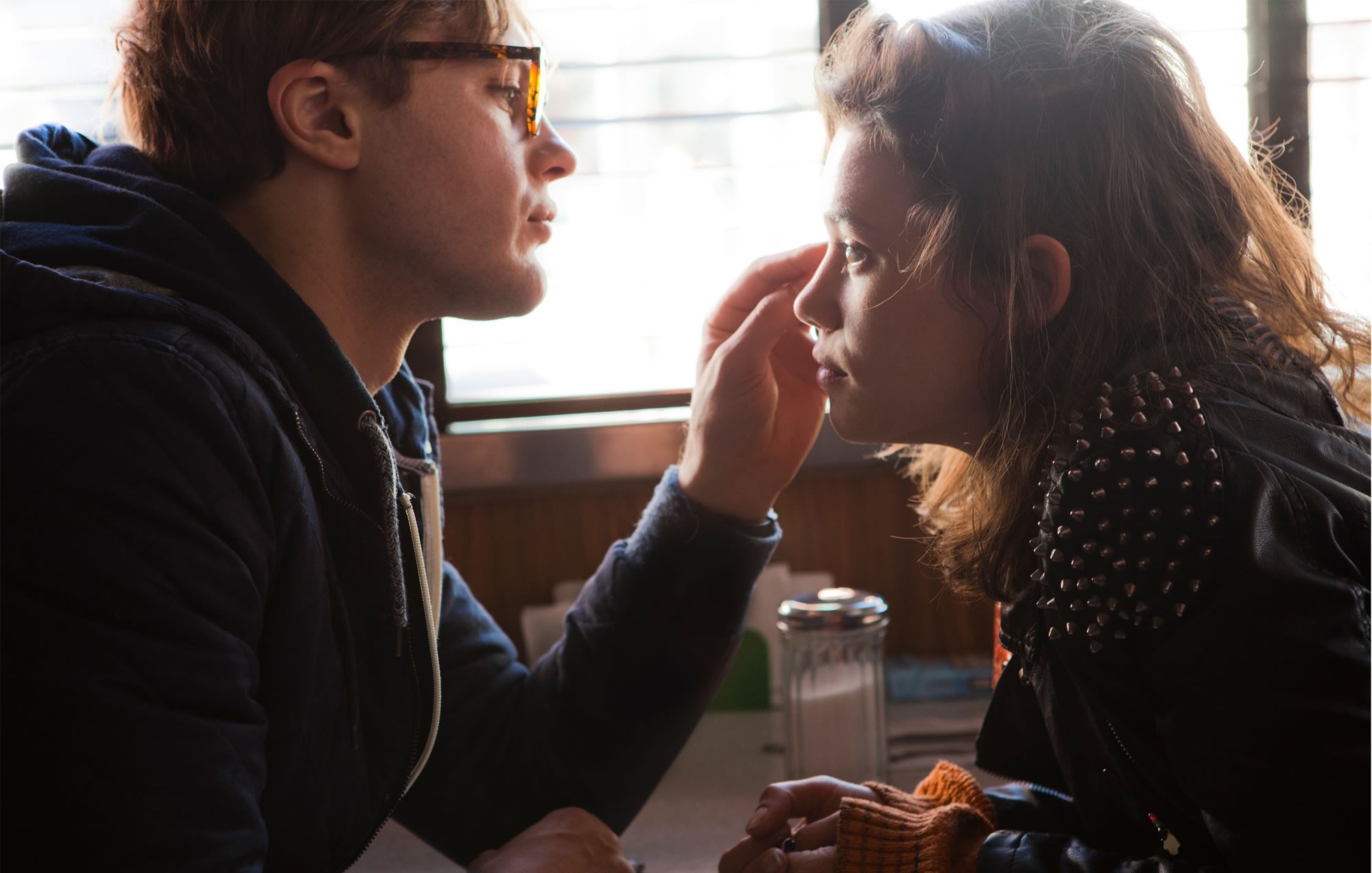
Sofi's Eyes (Astrid Bergès-Frisbey)

Sofi’s Eyes (Astrid Bergès-Frisbey)

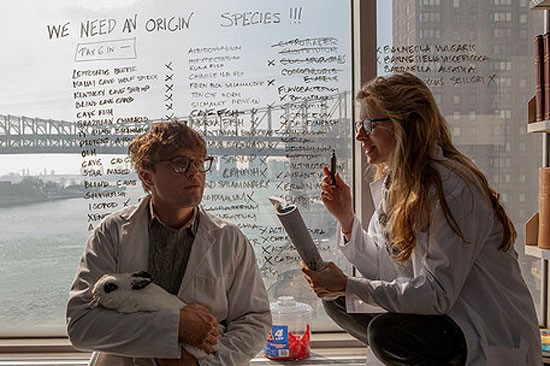
Michael Pitt commendably plays Dr. Ian Gray, a brooding molecular biologist who researches the eye; more specific the iris and its one-of-a-kind design. He is so mesmerized by the eye, that he photographs those of his family and random people on the street. Science proves that no two persons have the same eye until Karen (Brit Marling), his eager but introspective research assistant, arrives and when he meets and photographs the eyes of Sofi (Astrid Bergès-Frisbey) his irritating and childlike new-age spiritual love interest.

Ian (Michael Pitt) and Karen (Brit Marling) discuss a theory

Ian (Michael Pitt) and Karen (Brit Marling) discuss a theory

Karen and Sofi are like a pair of eyes, each viewing life in different shades and tones. Sofi sees the world through her own take on spirituality; this view shakes up Ian’s world … almost causing an identity crisis. In New York, they are all over each other in the hustle and bustle of the city so much that they get carried away into the courthouse intent on marrying. But they have to wait 24 hours. At that time, Karen interrupts with a scientific discovery, and in the lab, Karen meets Sofi, and each woman rightly sizes the other up. The marriage between the spiritual (Sofi) and the scientific (Ian) does not happen as tragedy strikes Sofi. Karen and Ian or “science and science” marry and start a family. It is a well-delivered pairing, and one that provides the shift from romance to a relationship of scientific inquiry: what if another person has the same set of eyes someone where out there? Is it possible? Ian travels to New Delhi, India to uncover the truth. What he finds will warm your heart.

Ian (Pitt) and Sofi (Astrid Bergès-Frisbey) on their first date

Ian (Pitt) and Sofi (Astrid Bergès-Frisbey) on their first date

Cahill’s I, Origins is an interesting tale, but Astrid Berges-Frisbey’s appearance is like hearing nails on a chalkboard; it was nice when she was offscreen. Brit Marling’s performance is like a spa treatment on a balmy Saturday morning as she inhabits a character who is grounded in her own confidence. The feeling of the movie, itself? Well, think of pouring molasses over a biscuit as you sit in an outside café in the winter … yes! It’s that slow!

The Ross logo

I, Origins plays through August 14 at The Ross Media Arts Center in Lincoln.

Watch for in-depth Film • Television • & More reviews & commentary.

In the meantime, Catch a film … Share the Popcorn … Feed Your Soul!

Snowpiercer @ The Ross

Snowpiercer, the train

Snowpiercer, the train

Snowpiercer is the latest venture into dystopian society from South Korean film director Joon-ho Bong. Set in the near future, Snowpiercer pierces through the vein of consciousness with rapid speed. It is brutal. It is gruesome. It is cold; difficult to watch. The earth has frozen over destroying all life after a disastrous global warming experiment. Billows and dunes of snow cover the earth; it is the dead of winter–every day … always. Those humans who survived board a train whose engine is designed by Wilford (Ed Harris) to travel around the globe for all eternity. Eighteen years! Eighteen years in an iron box with 1,000 people, and you had better know your place!

Tanya (Octavia Spencer)

Tanya (Octavia Spencer)

Imagine that. Living and having your being on a train; coming of age on a train; dying on a train. Imagine a society set up in long narrow confines where bunk beds abound. Bong depicts the constellation of hierarchies formed within that space without so much as a blink of an eye. The upper crust enjoy lavish living, fine dining, and socializing in the front of the train. The poor, packed in like sardines in the tail end of the train, are tyrannized by Wilford’s minions–and they abuse the children too! Rebellions have occurred; all but one, however, have been quashed by Minister Mason, played with exquisite evil by Tilda Swinton.

Curtis (Chris Evans) fearless leader of the revolt

Curtis (Chris Evans) fearless leader of the revolt

Chris Evans stars as Curtis, the passenger tapped to lead the revolt, and hope for freedom abides not only in him but in the valiant revolutionaries aboard the train who arm themselves to fight with him. The revolutionaries exhibit an indomitable spirit, and even though you know the majority will die, their heroics are worth going through the well-rehearsed visual punishment. The fight scenes are awe-inspiring as each illustrates what the oppressed will do to gain their freedom with the knowledge they may not come back alive from the war. Evans exudes trust through his character Curtis; you know he will make it even though the odds are stacked against him and his crew.

Minister Mason (Tilda Swinton)

Minister Mason (Tilda Swinton)

Make no mistake: The Train, or the snowpiercer is the devil in film. Art director Stefan Kovacik imagines an ominous iron horse that, through Kyung-pyo Hong’s cinematography, pierces all ice it encounters on the track; it is disheartening to know it never will stop–never. Hong takes us underneath the train and lets the audience feel the wheels on the steel track; to feel the relentless speed of the demon; to see the depths of the drop if it derails. No one will hear them scream.

The Ross logo

Snowpiercer plays through July 24th at the Ross Media Arts Center in Lincoln.

bm_header

Also playing through July 24th is Big Men, Rachel Boynton’s very impressive documentary on the discovery of oil in the country of Ghana, Africa.

Watch for film television & more. In the meantime,
Catch a Movie …
Share the popcorn …
Feed your soul!

Only Lovers Left Alive @ The Ross

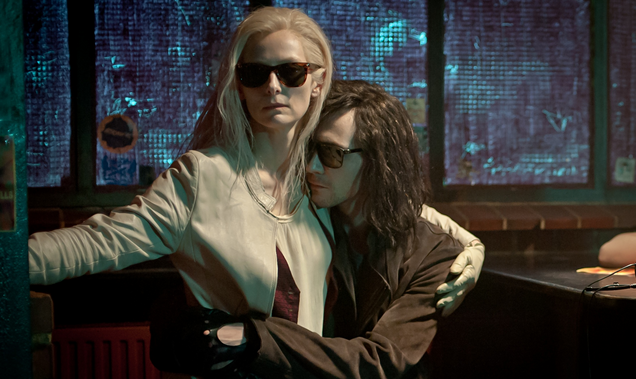
Eve (Tilda Swinton) and Adam (Tom Hiddleston)

Eve (Tilda Swinton) and Adam (Tom Hiddleston)

Only Lovers Left Alive is Jim Jarmusch’s latest film endeavor, and it is like watching acute depression in motion; and it is very very slow … slow as molasses in winter. It is a melancholic wallow in angst on the one hand; and anxiety on the other; and there’s blood, too, and it is thick and rich! Tilda Swinton and Tom Hiddleston play Adam and Eve, two somber vampires who are in the vein of a mysterious space that would cause Edgar Allan Poe to shiver. Adam is a reclusive rock musician holed up in a gothic-like mansion on the outskirts of Detroit, Michigan. That was his music you just heard. He is a pack-rat

Adam poses as Dr. Faust on his way to get his supply.

Adam poses as Dr. Faust on his way to get his supply.

enveloped in obsolete technology such as a tube television and an 8-track tape player; he collects vintage guitars, one is a Gretsch Chet Atkins, supplied to him by Ian (Anton Yelchin), an unsuspecting lad in the music business. Eve lives in Tangiers, Morocco where she gets her precious supply of blood from another comrade in the Vampire fold, Christopher Marlowe—yes the Christopher Marlowe, Shakespeare’s nemesis (played by a wizened John Hurt). Jeffrey Wright plays Dr. Watson, from whom Adam buys a fresh supply of the deep red liquid jewel. Adam and Eve are reunited when Eve returns to the U.S. What unfolds thereafter is a set of the moody blues plucked from a piano in a smoky café packed back up the way, and the only entry to it is to amble down a one-lane hard-scrabble road!

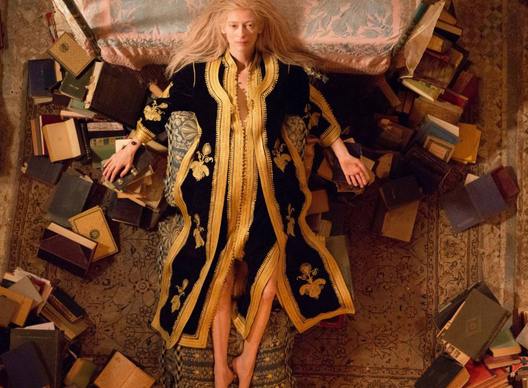
Eva after her 'fix' of the deep red jewel

Eva after her ‘fix’ of the deep red jewel

The filmmaker could not have chosen a place more complementary to the style and mood of the film than the city of Detroit. The visual of the city is filmed in the twilight hours, and through that lens, Yorick Le Saux’s cinematography produces a city that languishes in its mistreatment but awaits as does the phoenix to rise from the ashes. On a drive in the wee hours of the morning, Adam asks Eve if she would like to see the Motown museum but cautions her that there is nothing left of it really. He then takes her to the once glorious movie theater developed on the site of Henry Ford’s first automobile workshop in 1925, and it is heartbreaking to see its French-renaissance style décor having faded away and being used for a parking lot. It is a hollow grave of memory! But Eve, in all of her vampire wisdom, looks into the future and declares, and I paraphrase: “While the south burns, Detroit will rise again!”

Adam

Adam

Only Lovers Left Alive is also a story swathed in old world romance. What Jarmusch manages to reveal through Adam and Eve, these vampires in love is a weariness over what humans have become. They’ve lived for centuries; they’ve seen it all but their knowledge of the world has left them fragile. They really are the only lovers left alive. Adam laments the present that, in spite of all of its advances in technology, has produced humans whom Adam calls the Zombies.

Jarmusch’s film is a stylistic visual pleasure that, ironically, will leave you craving for more as do Adam and Eve lust after pure uncontaminated blood.

The Ross logo

Only Lovers Left Alive plays through June 19 at the Ross Media Arts Center in Lincoln.

Also playing through June 19 is Nymphomaniac Volumes 1 and 2 directed by Lars van Trier and starring Charlotte Gainsburg, Uma Thurman, and Christian Slater and Shia La Beouf.

Cold in July @ The Ross

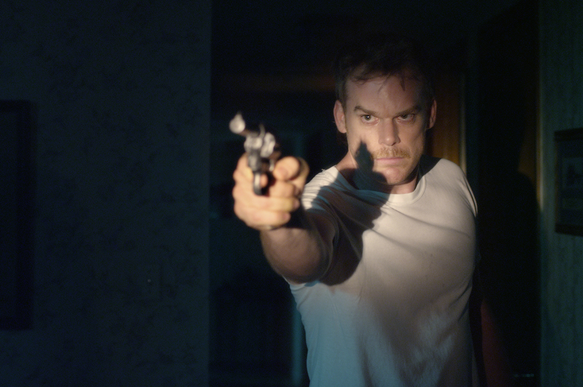
Richard Dane (Michael C. Hall)

Richard Dane (Michael C. Hall)

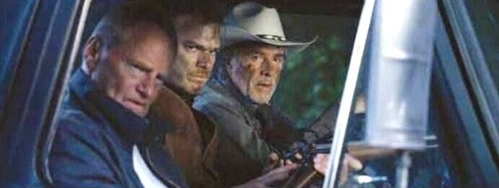
It is a shot in the dark made in an ordinary night in an ordinary town and the bullet hit its target. Jim Mickle’s film Cold in July is an engaging mystery that lends itself to the film noir genre. It works as Mickle weaves an intricate tale of suspense around the ordinary life of a husband and father named Richard Dane who reluctantly releases the shot in the dark on an intruder in his house. It’s 1989 in suburbia of East Texas, inhabited by law-abiding citizens with steady jobs who mind their business and find community at the local diner, but that murder, though carried out in self-defense, will turn Richard’s life upside down. Why? The intruder’s father returns to ask some questions. The answers will surprise even him!

Unlikely Heroes (fr left to right) Russell (Sam Shepard), Richard (Michael C. Hall), and Jim Bob (Don Johnson)

Unlikely Heroes (fr left to right) Russell (Sam Shepard), Richard (Michael C. Hall), and Jim Bob (Don Johnson)

The jewel of Cold in July is the lighting, and Cinematographer Ryan Samul selects cold and warm prisms to convey pain, dispassion, and confusion; and desaturated colors to establish firmly the time period. The performances by well-seasoned actors are forceful. Sam Shephard playing Russell, evokes how deep a father’s angst falls even though the son is wanted by the police; Michael C. Hall who so easily plays Richard Dane, walks the line between the man who yearns for the return of everyday routine and a husband/ father who has to protect his family. You will appreciate Vinessa Shaw as Anne Dane as she drives her character through the burden that has been thrown on her shoulders. Oh, I have to mention the suave Don Johnson, who is Jim Bob. He makes a pair of cowboy boots speak a foreign language! Yes, he is that good!

The Ross logo

Cold in July plays through June 5 at The Ross.

Watch for in-depth Film • Television • & More reviews & commentary.

In the meantime
Catch a film …
Share the Popcorn …
Feed Your Soul!

Belle @ The Ross

Dido Elizabeth Belle (Gugu Mbatha-Raw)

Dido Elizabeth Belle (Gugu Mbatha-Raw)

We all have found ourselves in the most insufferable circumstances wherein we hope against all hope that the fates will take pity on us mere mortals and make the way for an escape. We also have been in situations where we were made to feel unwelcomed, and thus we develop a yearning to belong. British film director Amma Asante’s Belle is a film inspired by the 1779 oil portrait of Dido Elizabeth Belle and Lady Elizabeth Murray. The portrait hangs at the Earl of Manchester’s ancestral home, Scone Palace in Scotland. Assante imagines the process of escape and belonging or, specifically, the methods a family uses to include a relative in the household all the while restricted by the socio-cultural mores of the time—that time is when the Atlantic slave trade was in full force … in Britain … in the eighteenth century.

The route of the Atlantic Slave Trade

The route of the Atlantic Slave Trade

Dido, played with unsettling restraint by British actress Gugu Mbatha-Raw, is a mulatto whose British father, Sir John Lindsay, (played by Matthew Goode) searches for then rescues her from the possibility of the auction block when Belle’s mother, Maria Belle, an enslaved woman from a plantation in the West Indies, dies.

Sir John sends Belle to live with her great Uncle, William Murray, The Earl of Manchester (played by Tom Wilkinson) and her great Aunt, Lady Murray played by Emily Watson. Dido grows up with her sister/cousin Lady Elizabeth (played by Sarah Gordon), and is indulged with almost every privilege accorded a young woman of English aristocracy. What follows are the usual performances of the strictest notions of gentility and social manners that govern the behavior of the British aristocracy—all elements of a Jane Austen novel; but when race is added to that setting of opulence and grandeur at Kenwood House in Hampstead, London, you can cut the tension with a knife!

18th Century Portrait of Dido Elizabeth Belle and Lady Elizabeth Murray

18th Century Portrait of Dido Elizabeth Belle and Lady Elizabeth Murray

What is lovely about Amma Asante’s characterization of Dido, is not only the young woman’s confidence; also, Asante’s Belle showcases the Belle’s indirect association with Mabel, an African female domestic servant (played by Beth-Ann Mary James), who waits on her when she travels with the family away from Kenwood. These silent interactions via eye contact and smiles suggest Dido Belle never forgets her own heritage even as she swims in the pleasure of affluence.

Belle is a gracious movie and 18th century England is well-attended by its costumes and landscapes. Yet, Amma Asante’s film refrains from an emotional depth; Dido does not ache for her mother, for example. Instead, Asante focuses on the strong cross-currents of change about to occur in England, the country that abolished slavery in 1807.

The Ross logo

Belle plays through June 5 at the Ross Media Arts Center in Lincoln.

Watch for in-depth Film • Television • & More reviews & commentary.

In the meantime
Catch a film …
Share the Popcorn …
Feed Your Soul!
Jodorowsky’s Dune @ The Ross

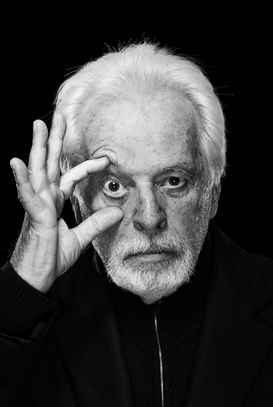
Alejandro Jodorowsky

Alejandro Jodorowsky

Harlem Renaissance Poet Langston Hughes asks in his poem of the same name, what happens to a dream deferred? Film Director Frank Pavich offers one answer in his documentary Jodorowsky’s Dune.

In his film, Pavich uncovers the sheer pleasure and excitement in going for our dreams. His interview with cult filmmaker Alejandro Jodorowsky who made films such as El Topo in 1970 followed by his irreverent film The Holy Mountain in 1973, brings to relief what we will do to stretch our artistic muscle not for glory nor capital gain but for the sheer wonder in where our imaginations can take us.

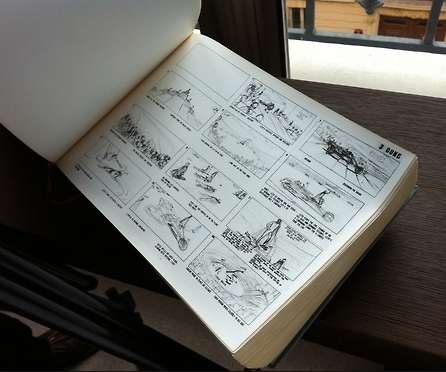
Jodorowsky's Colossal Storyboard Book

Jodorowsky’s Colossal Storyboard Book

Without cinematic restraint Pavich curries patience in his exploration of Jodorowsky’s dream to bring to the big screen Frank Herbert’s sci-fi novel Dune in the turbulent times of the 1970s. Oh, it was a grand endeavor! The cast and technicians and illustrators made up a magnificent roster of talent Jodorowsky named “spiritual warriors”: We know them all: David Carradine, Mick Jagger, Orson Welles, and Salvador Dali; screenwriter Dan O’Bannon, sci-fi paperback artist Chris Foss, and the artist genius of the late H.R. Giger of Alien fame. Brontis, Jodorowsky’s son, trained for two years in martial arts to prepare for his role.

Jodorowsky assembled all of his storyboard illustrations and bound them into what became a collossal book of source material! In the film Pavich animates those images to give audiences a glimpse of what could have been. Jodorowsky left no stone unturned to realize his dream.

'Dune' The Film that Jodorowsky never made

‘Dune’ The Film that Jodorowsky never made

Jodorowsky, of course is the star of the show, and at 84 years old, he still conveys his intense passion for Dune via a most engaging and entertaining personality. “I wanted to make the most important picture in the history of humanity […] one that would connect to God!” Jodorowsky proclaims! His fervor, even today, still hovers over this most ambitious venture, and he is not alone! Pavich’s interviews with Michel Seydoux, Jodorowsky’s director and producer tapped for Dune; H.R. Giger; Diane, Dan O’Bannon’s widow, among others, all coalesce to reflect on a project that attracted the best talents in Hollywood! Yes, it was a grand endeavor!

… and Hollywood looked at all that he had created and said it was not good. So what happened to the dream deferred? Hmmmm …

The Ross logo

Jodorowsky’s Dune plays through May 22 at the Ross Media Arts Center in Lincoln.

Watch for film television & more. In the meantime,
Catch a film …
Share the popcorn …
Feed your soul!

God’s Pocket @ The Ross

Mickey (Philip Seymour Hoffman) and Bird (John Turturro) in contemplation

Mickey (Philip Seymour Hoffman) and Bird (John Turturro) in contemplation

We rejoice in small towns! We love the ease in getting around places and living in neighborhoods where everybody knows your name; those neighborhoods where locking your doors is an insult to those in the community. The safety. The familiarity. All of these features of the small town will relax and calm you.

Unless there is a murder around the corner or was it an accident? John Slattery makes his directorial debut in this well-rehearsed deep dark dramedy God’s Pocket.

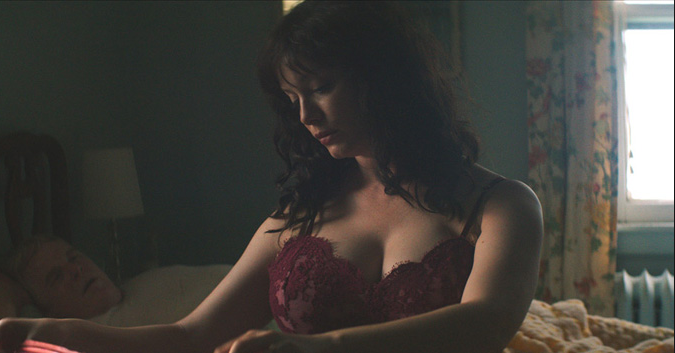
Jeanie (Christina Hendricks) and Mickey

Jeanie (Christina Hendricks) and Mickey

Set in south Philadelphia, Slattery works hard to tease out the subtleties of living in a working class town called God’s Pocket that is inhabited by … well … let’s just say you would not want to be caught on the street after dark–alone.

The late Philip Seymour Hoffman stars as Mickey Scarpato, a luckless outsider who topples over into the life in the Pocket by marriage to his wife Jeannie (played by Christina Hendricks of Mad Men fame). Jeannie’s son Leon, the town’s crime element, has been taken out by one of his co-workers, and everyone swears it was an accident. Mom refuses to accept the verdict, so Mickey has to scrounge around town to find the real story! You will appreciate Slattery’s skill in playing with our common sense notions about the working class town; and, when he disrupts them, you will want to lock your doors.

The Ross logo

God’s Pocket plays through May 22 at The Ross.

Watch for film television & more. In the meantime,
Catch a Movie …
Share the popcorn …
Feed your soul!

Finding Vivian Maier @ The Ross

Vivian Maier

Vivian Maier

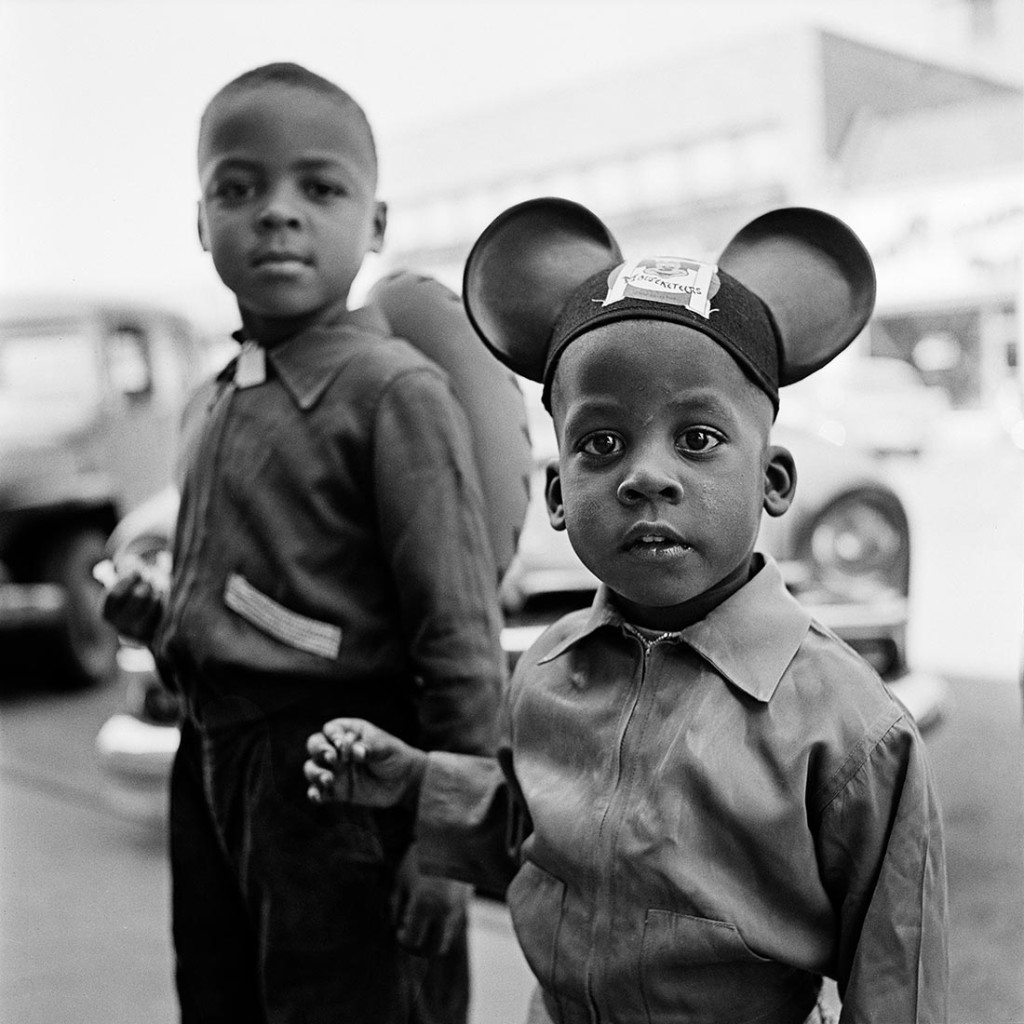
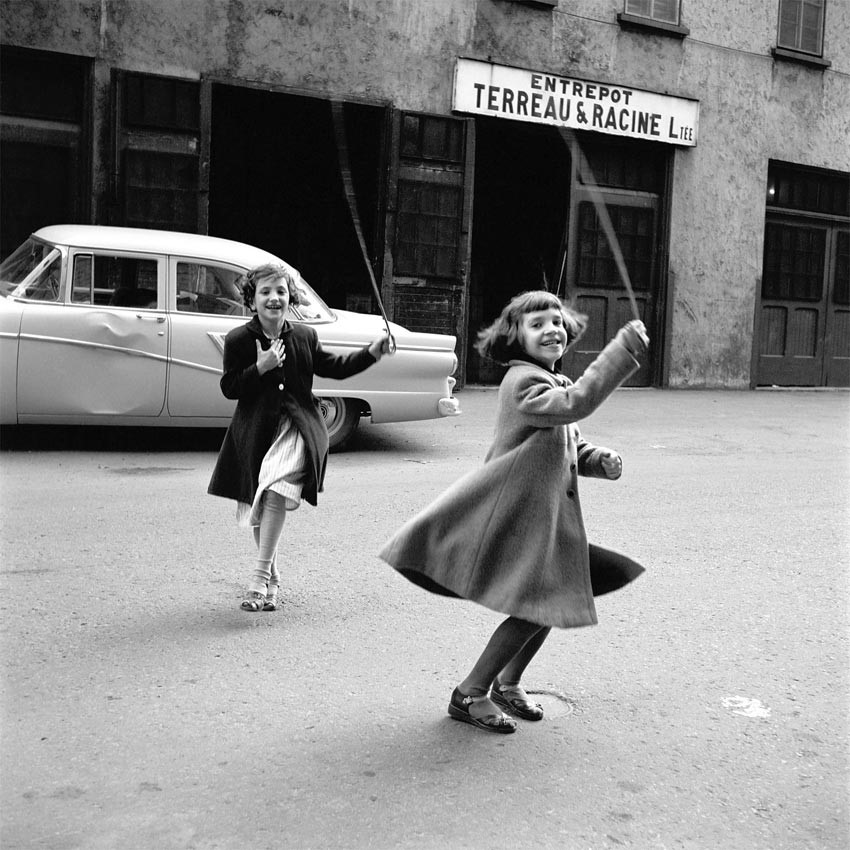
What’s in your attic? What’s in your basement? Things you no longer care about? Or things you don’t want people to see? Well, let me ask you this: what would you do with those intimate artifacts? Chicago historian and photographer John Maloof explores the world of American street photographer and Nanny Vivian Maier in his documentary Finding Vivian Maier.

pix2

Vivian Maier was born in 1926 in New York city and died in a nursing home in Chicago in 2009 at the age of 83 after a slip and fall on the ice. She hid things in her bathroom—a space she turned into a dark room wherein she developed many of her photographs; she dared any of her charges or employers to step foot therein. In another home, she told her employers “I come with my life, and my life is in boxes,” and those boxes filled up their garage. Those are the boxes Maloof bought for $400.00 at an auction in 2007, and what he found were 30,000 negatives he began to scan onto his computer. During this process, Maloof realizes that he has come across pictures of artistic value that document street life from the 1950s-1970s. He went back bought the remaining boxes, which totaled some 100,000 negatives.

pix of two boys

For all of the sensationalism about the new discovery of a natural talent, the exhibitions in London, Chicago, Los Angeles, or Maier’s spectacular photographs she took with her Rolleiflex twin-lens reflex camera—Maloof has that too—or opinions that she was eccentric, Finding Vivian Maier is a story about privacy and the extreme lengths a woman will go to keep it.

Maier photographed the world around her, but declined to let anyone see the product from her efforts, except for one family with whom she was employed. She refused to satisfy the curiosity of her employers by declining to answer any questions about her life nor did she offer any information about same. Those interviewed, then, could only offer to the public their observations of her.

pix4

The documentary, however, goes a step further. What seeps out is a tale about a woman who felt her business—her life–belonged only to her, and she kept that business in boxes and boxes of things in the attic or in the basement. Perhaps, in such a rapidly changing world, the rolls of film and negatives in her boxes let her know she existed, and she did not seek the world out to affirm that for her.

The Ross logo

Watch for in-depth Film • Television • & More reviews & commentary.

In the meantime, catch a film, and share the popcorn. Watch television, and feed your soul!