Darla Davenport-Powell, doll maker ~ An Interview

Darla Davenport-Powell, Doll maker

Darla Davenport-Powell, Doll maker

In 1991, Darla Davenport-Powell created a doll and named her Niya in the full awareness of the influence that dolls have on African American children who play with them. Such is the toy’s significance that in the 1940s, African American sociologists Drs. Kenneth and Mamie Clark chose the doll when they conducted a test to determine the psychological effects of segregation on African American and white children.

Davenport-Powell joins a chorus of enterprising African American doll makers whose models of toy culture renew the spirit of childhood playtime and, more important, child advocacy. In this spirit, Davenport-Powell is a keeper of the doll making tradition as practiced by men and women throughout history: from the crude designs crafted by slave mothers to the papier-mâché dolls with the signature teardrop handmade by 19th century black doll maker Leo Moss.
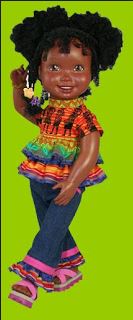
Niya

Niya

When Davenport-Powell designed Niya, a dynamic multi-lingual doll, her creation made a place for her on the continuum of African American artistic expression. The doll maker connects with her contemporary African American doll makers, whose dolls nourish self-esteem, self-pride, and self-acceptance, including the cloth and vinyl creations by Patricia Green; the sophisticated designs of VonZetta Gant and Daisy Carr; the soft-sculptures of Patricia Coleman Cobb; the expressions of Mari Morris; and, the lush extravagant vision of Byron Lars. As are her current toy “siblings,” Niya is a doll that fosters diversity; her make and style attract collectors, parents, and children from across lines of race and ethnicity. As Niya says on her website Niyakids.com, she “spreads the message of love and cultural awareness through music, songs and languages [and] is today’s multi-cultural voice celebrating the magic of children across the globe.”

… all children deserve to see themselves in the books they read, the toys they play with, and on they shows they watch.

The Niya doll generated a robust interest through mail order, specialty shops, and trade shows. This interest led her creator to seek wider distribution. As a result, ABC’s American Inventor chose Davenport-Powell as a contestant during its 2005-2006 season; she was one of the 12 finalists who received $50,000 to advance their product to the next level. Davenport-Powell, however, did not stop at imagining Niya, the doll; in addition, she has written two children’s books, Here Comes Niya! and her latest, entitled We Are Friends, Niya’s community of interracial playmates and produced its audiobook.

I interviewed Davenport-Powell, and spoke with her about the importance of producing African American artistic cultural artifacts that uplift our children during playtime. Of particular note, we talked about her desire to move into the genre of literature and the audiobook to spread Niya’s message of diversity.
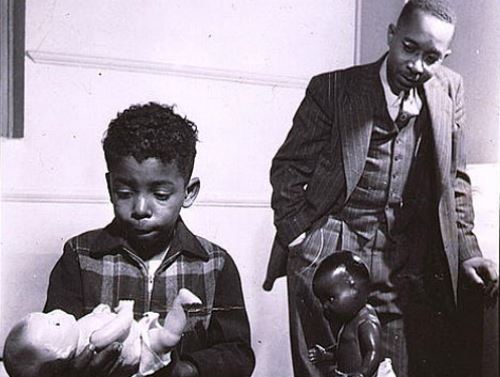
Dr. Kenneth Clark

Dr. Kenneth Clark

Why literature?
Early on I had books that opened up the world to me and allowed me to travel outside of the confines of (my hometown) Columbia, South Carolina. I would daydream about being in different places with different people in different time periods. Books allowed me to go beyond what society expected of a little black girl. I placed myself in the fiction that I read.

What was the one children’s book that really inspired you to dream and to move beyond communal boundaries?
The Little Engine That Could was my favorite. I identified with that “Little Engine” because there was something about the power of belief that resonated with me. I was encouraged early on by my parents and the people in my community to believe in myself and to be persistent in achieving my goals. I can remember repeating, “I think I can! I think I can! I think I can!” when facing many challenges.

We are familiar with the Dick and Jane books, a line of children’s literature used to teach children how to read from the 1930s through the 1970s. In the 1960s, Richard Wiley included the African American family in the series. How does We Are Friends follow in this tradition of teachable texts?
The very basic concept is about accepting one’s self (flaws and all) and celebrating the differences in others. We Are Friends teaches children and adults about the beauty of acceptance, diversity and inclusion. The book is dedicated to children who have been bullied, teased or called names. It’s like Dick and Jane in that the structure is short and simple.

Niya and her Friends model healthy self-acceptance and convey to the world the value of diversity–which is about embracing differences and similarities.
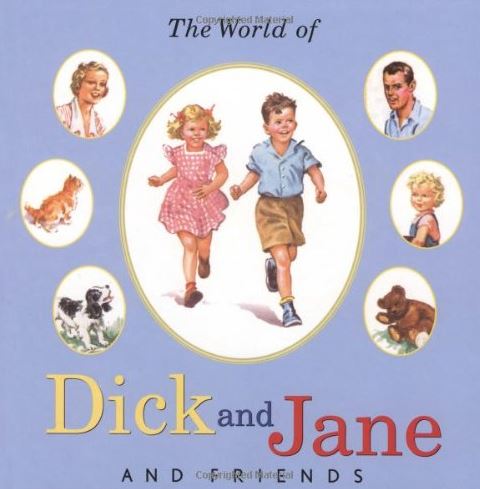
dickjane

So in what ways does the We Are Friends picture book differ?
The Dick and Jane books that I read as a child did not have friends that looked like myself. I felt left out, and lost interest very quickly. The We Are Friends picture book features a rainbow of characters of different races, ethnicities, learning styles, cultures, gender and special needs. It’s a book where children can see the humanity in characters that don’t look, talk, act, learn or think as they do. It is a lesson for adults as well.

So some children’s literature you found lacking. Were there any images on television that did not fit the bill?
Yes, absolutely. I remember the excitement of waking up early Saturday morning to watch my favorite cartoons and kid shows—Captain Kangaroo, Kukla, Fran & Ollie, Mr. Rodgers, Shari Lewis & Lamb Chop, the Mickey Mouse Club, Romper Room and others. At the end of Romper Room, for instance, I became very sad. Miss Nancy would look through her magic mirror and never call my name. Each Saturday I would sit in front of the television hoping to hear my name. I felt invisible. That made an imprint on my life, and I vowed to change the game when I became an adult. That’s why on the last page of the We Are Friends book, Niya stretches out her hand with a mirror attended by the words “and the only friend missing is you!”

As a community, what exactly does Niya and her Friends convey to the listeners, readers, and children who play with the dolls?
Niya and her Friends model healthy self-acceptance and convey to the world the value of diversity—which is about embracing differences and similarities. The book, We Are Friends encourages children to learn, to grow, and to live together. It teaches them to accept their unique individuality and to be comfortable in the skin that they are in, flaws and all. It’s a challenge because we live in a society that generally does not tolerate those who do not fit its created “norm.” Niya and her friends are tools to help children to be proud of who they are and to understand, that which makes them different, makes them special.

we are friends
Can children do this by themselves?
No! Dr. Dorothy Law Nolte, says it best in her poem, “Children Learn What They Live”: If children live with hostility, they learn to fight / If children live with acceptance, they learn to love / If children live with approval, they learn to like themselves”. Adults are conduits for teaching children respect, love, acceptance and everything else they learn—positive and negative.

You dedicate We Are Friends to “every child who has been bullied, teased or called names” yet, there are no instances of bullying in the text. In what ways would Niya and her friends handle bullying?
Bullying is not present in the storyline because my main focus is on the positive interaction between children. I so believe in that. The book, the characters, the audiobook project present a world that showcases collaboration in the production of positive and joyful outcomes. It says to the child who bullies, “I don’t have to do that because just like my classmates, I have my differences too and I want people to accept me for who I am.” So there are visuals that this particular kid notices, and he or she can figure out that Niya and her friends are not threatened by each other. They communicate, play together, work together, and have fun. The story is well illustrated.

We Are Friends encourages children to … accept their unique individuality and to be comfortable in the skin that they are in, flaws and all.

Talk about the illustrator. Every child is drawn as happy and vibrant beings.
The illustrations were done by Dynamic Designworks, Inc., the same company that designed the Niya and Friend prototypes that were on the ABC American Inventor show. The team created the illustrations from the dolls. Niya and her friends are our children, literally. It was shared midway through the project that the artist who did a great deal of work on our special needs character ‘Jake’ infused her own experience into the illustration. Her son Jake has a disability and lives life in a wheelchair. These characters are real!

I noticed while reading the book that there are no Native American nor Jewish children in Niya’s community of friends—just Asian, Caucasian, Latino, and African.
Stay tuned! We Are Friends is the first offering in the series. New friends will be introduced in the books to come. Our Native American character, Alopay will move into the neighborhood along with others. As Niya travels, she will meet new pals all around the world and her family of friends will expand. This is just the beginning.

niya1
What are some of your final thoughts?
First of all, thank you for the opportunity to share my passion and life’s work with your audience. I wish to leave readers with my belief that all children deserve to see themselves in the books they read, the toys they play with, and on they shows they watch. I want children to know that they matter and have value, and that their power is in being an ‘original’ and not a ‘carbon copy’. I want children to become voracious readers and to dream beyond boundaries—knowing that the sky has no limit.

Darla Davenport-Powell is a native of Columbia, S.C. where she and her husband currently reside. She is the founder of the I AM ENUF Foundation, a non-profit mentoring organization that equips youth with leadership skills and tools that foster positive identity development. She is presently developing a Niya and Friends animated cartoon and will soon launch a Kickstarter campaign to raise funds to manufacture the Niya dolls. For more information on the Niya project, visit niyakids.com or contact Darla Davenport-Powell at Greaterworksllc@gmail.com.’Like’ Niya on facebook.com/niyakids or tweet us @niyakids.com.

Notes:
For full article of Darla Davenport-Powell and American Inventor go to: tinyurl.com/86fp9d8.
For more Information on The Clarks and their Dolls Test go to: Interview with Dr. Kenneth Clark, conducted by Blackside, Inc. on November 4, 1985, for Eyes on the Prize: America’s Civil Rights Years (1954-1965). Washington University Libraries, Film and Media Archive, Henry Hampton Collection. These transcripts contain material that did not appear in the final program. Only text appearing in bold italics was used in the final version of Eyes on the Prize.
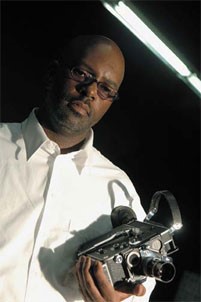
Narcel Reedus ~ An Interview

Reedus

“Everybody has their thing. And everything and everybody has a story. Digging deep to find and tell that story is my thing.”

~ Narcel Reedus

… and film is the medium writer-director Narcel Reedus reaches for to tell his stories. In his feature film project One Day in June, Reedus directs his attention to Father’s Day, that one day in June when fathers are recognized as special. Be they biological, step-dad, or guardian, that third Sunday in June is designated as the time when those for whom he has cared are to offer gifts of appreciation. Just check the Hallmark card aisle. Praises range from the serious to the comical—all singing glory to that one man whom we deemed did his job right for yet another year.

Reedus is developing this project and plans to bring to the screen the conundrum of the fatherless child juggling the emotional and psychological remains of anger, shame, and guilt over the father who chose, for whatever reason, to let go of his family. As its bookend is the trek taken by one man named Russ, a musician, who finds the courage to search for the children he left behind.

Poster

Yes, Reedus reaches deep to bring to our minds those strands of life that more often than not are taken for granted or simply overlooked. His digging for the depth, however, is informed by his observations of the socio-cultural dynamics within the African American community. I spoke with the filmmaker, who talked about his love for film and how this medium is a powerful tool for storytelling. Along the way, we discussed the poignant matters of manhood and fatherhood, and their cultural import in today’s society.

TDR: Why did you choose film as your tool for storytelling?

REEDUS: My first introduction to film–certainly in my past as a child–planted the seed and facilitated my development as a storyteller later in life. I remember seeing The Learning Tree in Chicago when I was 5 or 6 years old. For sure, that experience shaped me. I watched a lot of the older black & white films that came on WGN … they held my attention.

TDR: In what ways did film inspire you to tell stories?

REEDUS: My mother and I watched films together, and what I realize now but did not then is that my mother and I were building unconsciously a foundation for the art of storytelling.

TDR: You mentioned your mother and watching films with her. I remember how my mother and I bonded over watching soap operas, affectionately known as “my stories”. Talk more about your mother and how she influenced you.

REEDUS: All in retrospect—I was the youngest of 6, a mother’s boy. My mom and father were older when they had me so I did not get the discipline my brothers and sisters got. I do remember really enjoying that experience of having my little snack and watching a movie on channel 9 on this little black and white TV with my mom. That experience certainly instilled in me an underlying beat–a foundation for filmmaking, storytelling … those sorts of things.

I anticipate communities getting together to talk about growing up without a father. I want One Day in June to be that tool or healing mechanism that enables children, mothers, and families to understand why is it difficult for fathers to step up and to be present.

TDR: The story of focus here is your feature, One Day in June that has to do with Father’s day. How was that concept developed?

REEDUS: Angela Washington and a former student of mine Ms. Pruitt were thinking of a title from a script Ms. Pruitt wrote. It needed more work, and I pushed her towards a bigger concept. We were bouncing around ideas for a movie. I thought June is the month for father’s day—that one day where we recognize fathers. Father’s Day doesn’t get the merit that mom’s day gets; but that collaboration laid the foundation for me to consider the importance in the title as it connects to Father’s Day and to the overall idea of what is a father in our society.

TDR: Your target audiences are African American males and female adults 18-35. Why not children who right now are experiencing the “remains” after a father leaves?

REEDUS: I think that in terms of me developing this story, I came up with people, with characters that I wanted to make it rich and dynamic. If this man is going to find his children, I had to place him in a time where he could do that. So how old is he? When did he start? We made him mid-50s and a horn player who performed with the popular Funk bands of the 1970s. That means that he was a teenager who traveled with band members who would trade off horn players from one concert tour to another.

TDR: I remember the funk bands, and how some of my classmates had formed their own groups…

REEDUS: In my neighborhood and around town posters for Con Funk Shun coming to town would go up; none of them printed the year, just the day and date. They reused those posters from city to city because they were on the road and he traveled a lot. They met women and had kids and thus became biological fathers.

Con Funk Shun

Con Funk Shun

TDR: … and this is where your character Russ, who is a musician, enters. What are the other threads running through this feature film about children and fatherhood?

REEDUS: Sometimes we have men who choose to not to be in their child’s life and, of course, we have men who, because of circumstances beyond their control, cannot be in the home. In the film, we had to have iconic characters to communicate these situations. For example, there is this unspoken mythology that strippers grew up without a father. Mercedes, an exotic dancer, has a father, Jamal, who is in prison. So, I asked the question through this familial set-up “What does it look like to be an exotic dancer and to have a father in prison?” Little Man is Mercedes’s son growing up without his father. By virtue of not having a father he is asked to step up and to become the man of the house … to take on this responsibility.

TDR: How do women / mothers figure into your project?

REEDUS: More recently we had a Transmedia Storytelling fundraising event. Our target audience with this film is really going to be single parent mothers—those black women who grew up without their fathers. They are the force that is going to be most interested in this. Some men certainly will gravitate towards it; others are going to be turned off by it.

TDR: To what do you attribute the resistance?

REEDUS: There is some hurt and defensiveness from men, and there is this question, “why don’t you talk about those men who ARE present in the home?” that they will ask. ….

Russ Campbell, the father (Chip Hammond)

Russ Campbell, the father (Chip Hammond)

TDR: In what ways to you see One Day In June instigating dialogue about Black fatherhood?

REEDUS: It’s going to be a movement. I anticipate communities getting together to talk about growing up without a father. I want One Day in June to be that tool or healing mechanism that enables children, mothers, and families to understand why is it difficult for fathers to step up and to be present. Once we show this on the screen where we see a man decide “I’m going to seek ways to find my children” it will create a national dialogue.

Something definitely happened to the Black male that trended from the New Negro out of black empowerment into this divide of corporate America. These trends, I believe, left some black men without a badge of honor and without a sense of being.

TDR: Why do you feel it is so difficult to ‘step up’ into that role as father?

REEDUS: I really believe that promiscuity is the new masculinity. Some men are having as many kids that their seed can produce. One Day in June can be a message to them: It is not too late to step up! I strongly feel that we need to move beyond finger pointing and the deadbeat dad syndrome. This film will answer the question, “ok how do I step up? How do I face what I have done?”

Mercedez (Ida Weldesus), granddaughter

Mercedez (Ida Weldesus), granddaughter

TDR: The “promiscuity is the new masculinity.” When do you think this happened?

REEDUS: I think the shift happened when the tangible effects of the Civil Rights movement netted visible changes in the black community in terms of housing and education. There was this attitude of taking every material advantage that economics could bring. There certainly was a swift and sharp divide. Reagonomics played the part … economics … Rap culture and its music.

TDR: In what ways to do you believe Rap culture and its music contributed to these attitudes?

Reedus: Something definitely happened to the Black male that trended from the New Negro out of black empowerment into this divide of corporate America. These trends, I believe, left some black men without a badge of honor and without a sense of being. So, they were left with a sub-culture that became glorified in Rap music. During this time “I am Bad. I have a lot of women. I have a lot of money and respect and gold chains, and I overcompensate for the lack of education, a job, or a career!” became the mantras of the day. The culture emphasized this “me” maleness, and embraced the athletic body: look how bad I am; how violent I can be; I’m a player… I’m a pimp! Blaxploitation … all of these elements moved into the 1980s and nested in Rap culture. They even are present in this present day.

Lisa (Erin Monet), youngest daughter

Lisa (Erin Monet), youngest daughter

TDR: How do women figure into this trend?

Reedus: The glorification of the idea of multiple women and masculine virility all combined together attributed to this epidemic of fatherless children … multiple children with multiple women … “These are my claims to fame, and this is the movement that I have made in my community! I don’t need the upper middle class badges of education and corporate agility to get the house, land, cars, and access to people places and things.”

Jamal (Dennis Scottbey), oldest son

Jamal (Dennis Scottbey), oldest son

TDR: One day in June obviously deals with angst, regret, and memory; how our actions through memory will hold us accountable, so we have to move to satisfy their desire to be reconciled. All of these happen that ‘one day’ in June. Talk about that moment when Russ is in a room, sitting on a bed alone with a TV dinner tray.

Reedus: “In the quietness of everything there is time to reflect on addressing my fatherless child” is the spirit of that scene. When we first opened up the movie, Russ is in his apartment with a little Hispanic boy with smudges on his face; he lives next door. There was a fire, and Russ rescued that little boy and stayed with him for the night. Later Child Protective Services picked up the boy; but that fire burned something in Russ, and sets in motion this desire to search for his own children: Chris, Lisa, Jamal, and Keisha.

TDR: So, the fire serves as a metaphor …

Reedus: Russ felt he had to stop ignoring his shame and go into the fire– the burning building of memory. The house that is burning is his shame—a shame he could not face before then. After that fire, Russ realizes he will not die; it will not kill him. He also realizes that this particular journey will be very difficult but in spite of the difficulty he has to walk that road. He has to. There is no turning back from it. There are very few times in our lives do we have those moments. We can count them on one hand.

Keisha (Vedra Grant), oldest daughter

Keisha (Vedra Grant), oldest daughter

NPR: What do you feel is the value of taking those journeys?

Reedus: There was an honor in saying “this is what I am going to do: be it going to school, get my freedom, marry, fatherhood.” It was divine because we truly believe that we had the perseverance to ride through the storm. There is something about the decision and the process that makes us who we are. Generally, we make deliberate choices about marriage or education or living arrangements. We used to be very thoughtful in making decisions about our children. We did not go back on them, either. … something to the effect of: I have decided that I am going to marry you. I am not going to change my mind. We are going to have children, and we are going to be together NO MATTER WHAT!

I am postulating now how often do we make those decisions that we do not go back on? We are living in society where we can go from Keisha, Valerie, Shenia, and back home to momma—even grandmomma–then move back in with Keisha. It is so transient! There are folks who are afraid of commitment; and, even more tragic there are men who feel living in the ‘big house’ ain’t a bad deal. I have to believe, however, that there are others out there who are going to die trying to live up to the core of who they are.

TDR: If Russ had been famous or had a solid paying gig in the city surrounded by friends, do you think Russ would have had this prompt from memory to move?

Reedus: If he were in New York in a part of the musician’s union and had a gig, I think there still would have been a fire next door; whatever he was doing there would have been a fire …

Chris (Charles Easley), youngest son

Chris (Charles Easley), youngest son

TDR: I am concerned about the character depiction of Chris – the Gay character. Why burden him with any kind of sickness? Why not a healthy gay male?

Reedus: Chris is someone who is trying to come to terms with who he is and how he is trying to live his life. He is speculative, and living off of his sexuality, his good looks, and his gayness. He is processing a bad break-up. The first place that Russ goes to is to Chris. Father and son take do take some time together which results in Chris going to rehab as he tries to get his life together.

TDR: Why not have Russ contact the mothers to get to the children?

Reedus: We did not want Russ to have to try to get through the kids through the mothers because contact would have undone completely what he is trying to do. The children are grown. The mother does not play a part in there. We do have some backstory that we are going to do on Russ … how did he get to be a horn player, his education …

TDR: Does this story of fatherhood come out of some of your experiences as a son?

Reedus: I come to One Day in June purely as an artist able to write for someone who is not me. I don’t have any children so I am not a father, nor did I not grow up without my father. I had a very solid relationship with him, so I don’t fall into those notions of what would motivate me to tell this story. If I call myself a storyteller I can tell anything. My motivation for this is not necessarily personal in terms of my life but it is personal in terms of me being a griot and understanding that this is just one of the stories in my community that needs to be told.

Film Screenings of One Day in June to be announced soon!

Watch for more in-depth Film • Television • & More Reviews & Commentary!

In the meantime …
Catch a film …
Share the Popcorn …
Feed Your Soul!