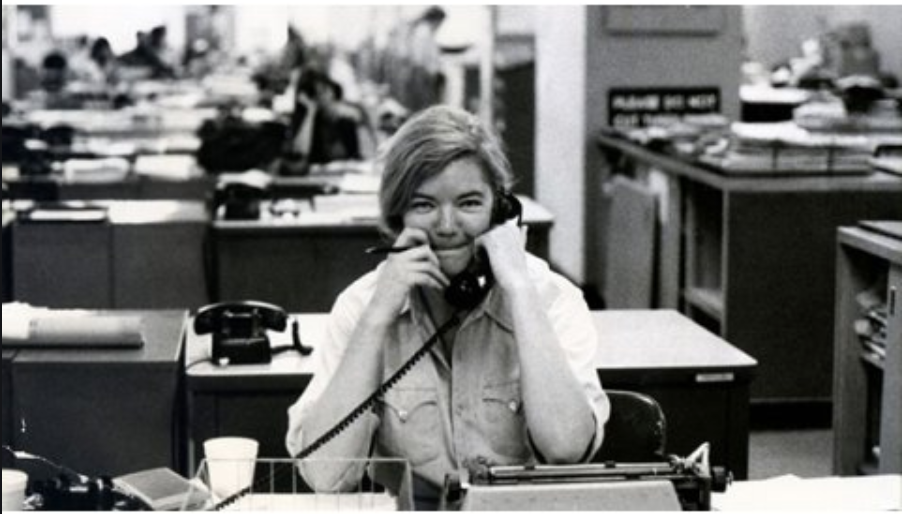
Raise Hell: The Life and times of Molly Ivins @ The Ross

Listen Here @ 1:09:56

Screen Shot 2019-10-21 at 4.38.31 PM.png

I’m a Texan. I drive a pick-up truck. I drink beer. I hunt. I’m a liberal. So What?

Let’s have fun, do good, raise some hell! Dance with them what brung you! That’s what Molly Ivins demanded.

Directed by Janice Engle, Raise Hell: The Life and Times of Molly Ivins, documents the life of the late outspoken journalist, activist, and columnist, and author of her New York Times best selling collection of essays Molly Ivins Can’t Say That, Can She?; and, Shrub: The Short but Happy Political Life of George W. Bush, Bushwhacked: Life in George W. Bush’s America; and, You Got to Dance with Them What Brung You, another collection of essays.

There is no narrator to guide our thoughts in Raise Hell. We feast on her interviews and speeches and the voices of her friends, family, and colleagues. She is a fellow southerner with a booming southern accent; a maverick and outsider as she describes herself. Engles makes known that this 6 foot Texan carried the heart and soul of journalism into political moments what with her witty and raucous insights, especially on the former President George W. Bush whom she affectionately named Shrub.

I accidentally became an authority on George W. Bush. Like the guy who climbed Everest, it was there.

Over the course of her career Molly Ivins, navigated the waters of journalism during the time when men dominated the papers. A fast paced documentary, Engles backs up and allows Ivins to delve onto the landscape of Texas Politics

Texas has always been the national laboratory for bad government.

and, later, into the terrain of national politics

We keep pretending that the political spectrum runs from right to left; it doesn’t. It runs from top to bottom. It’s not those people in Washington; It’s not those people in your state capital. This country is run by us.

Political digs and insults aside, Raise Hell showcases a woman—a privileged southern white woman–born into a staunch Republican family. Her political views tantalized her father, General Jim Ivins the authoritative gas and oil executive because, as one friend revealed, General Jim could control his family and those who worked for him but he could not control his liberal-minded daughter. To add such insult to his psyche, Molly dared to bring an African American man to the Ivins home and, get this, General Jim arrived to find him swimming in the pool! – this in the heat of America’s civil unrest. Oh yes she did, too. Even The New York Times could not control her.

They wanted Molly for the unique voice, for the iconoclast, but they wanted her to fit into the times, but as we say in Texas, that dog don’t bark.

~ Linda Jann Lewis, Oral Historian

Through an objective lens, Engles brings to us a journalist who found her calling, and as did the late Nobel Prize winner Toni Morrison, Ivins realized words have power, and Ivins squeezed from them the juices of their influence.

Screen Shot 2018-03-09 at 6.30.01 PM

Her friends boasted that she could drink any man under the table; and drinking with the good ol’ boys gave her power and access into circles closed off to women. But that power and access had a price, and Ivins paid dearly for it with bouts of alcoholism. Later, she was diagnosed with breast cancer. But she kept on living. She kept on talking until the last edition of her spark and wit. In 2007, Mary Tyler “Molly Ivins” passed away of breast cancer at the age of 62 in her beloved Austin, Texas.


The Last Black Man in San Francisco @ The Ross

Listen Here @ 28:52

Screen Shot 2019-07-28 at 1.54.50 AM

Jimmie Fails

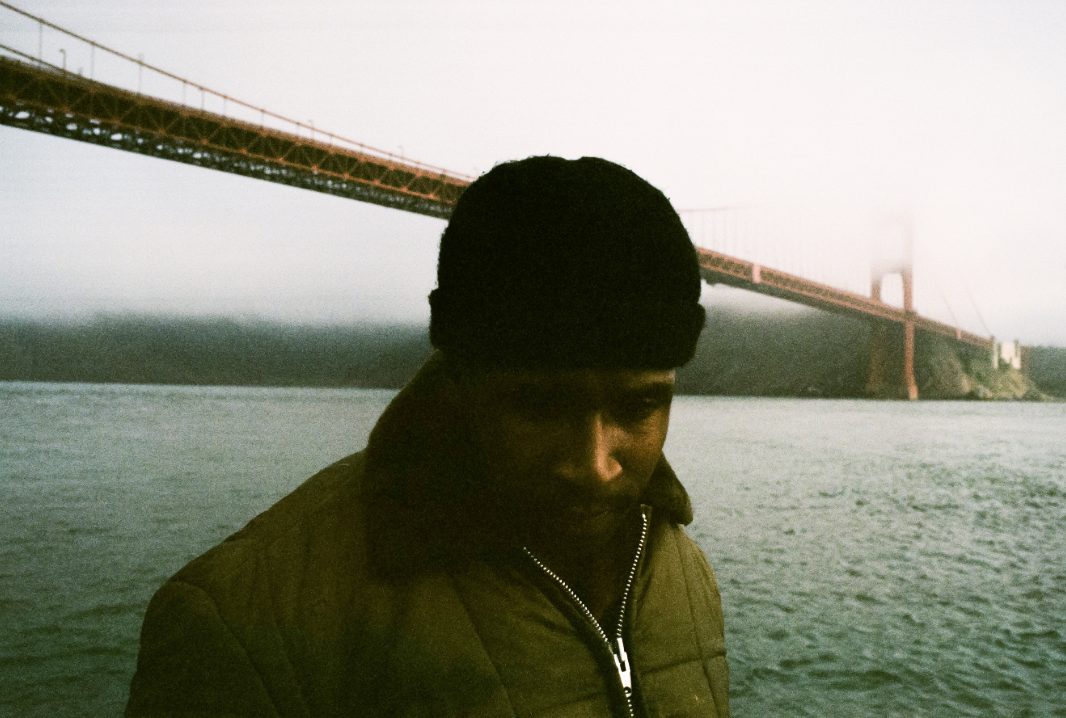
Danny Glover’s narration sets the tone for The Last Black Man Standing. Directed by Joe Talbot, The Last Black Man Standing is a haunting story about holding on to the past and stories one has been told about the past to manage day-to-day living especially in the wake of loss. Jimmie Fails stars as himself, a young black man who has come of age in the city of San Francisco. His family has lost a magnificent Victorian home in the Fillmore district, and this loss, or shall I write, death, has affected Jimmie to such an extent that he returns from time-to-time to give it a facelift much to the consternation of its newest inhabitants. His only consolation is an anecdote handed down to him by his father, James Sr. Jimmie’s grandfather built the house with his bare hands in the 1940s, and it is this history that endears him to the house. When the new inhabitants vacate, Jimmie considers reclaiming the house.

Screen Shot 2019-07-28 at 1.53.53 AMBut his father, James Sr., lacerates his ideas with a disturbing reality check.  In spite of his father’s warning, Jimmie and his best friend, Montgomery, takeover the house. The interior is fabulous. Adam Newport-Berry, cinematographer, ensures a full sweep of its grandeur accentuated by high ceilings and wood floors, a sauna, staircase, and a hidden room. Once moved in, Jimmie and Montgomery just … Be …

On the whole, The Last Man in San Francisco is a heartwarming film about a Black man’s love for his city and how an iconic architectural structure shaped and molded him. Talbot deftly enfolds within the film issues of housing, gentrification, and displacement in San Francisco that challenge Jimmie’s every emotion. Questions of the African American energies that went into the building of the city, and it is the history of their blood, sweat, and toil that makes it difficult for Jimmie to wrestle his heart away from San Francisco.

Screen Shot 2019-07-28 at 1.51.32 AM.png

With every stage in life, we must move on or else remain stagnant as has Montgomery, who lives and takes care of his grandfather in a house overlooking a contaminated bay. Ironically, it is Montgomery who challenges his friend to explore the horizon waiting for him after he learns the truth about why Jimmie and his family lost their home.

What Montgomery does with the information sets Jimmie on an entirely different course.

The Last Black Man in San Francisco plays through August 8 at the Ross Media Arts Center in Lincoln.

Also playing through August 8 is Wild Rose, a film by Tom Harper about a rebellious country singer in Glasgow who dreams of stardom in Nashville, Tennessee.

Listen to the Review @29:01

http://netnebraska.org/interactive-multimedia/other/friday-live-bone-creek-chautauqua-norfolk-literature-festival-and-more


Screen Shot 2018-03-09 at 6.30.01 PM

Watch for in-depth Film • Television • & More Reviews & Commentary.

In the meantime,

Catch a film … Share the Popcorn … Feed Your Soul!


AK-47 – A Comment

Screen Shot 2019-08-04 at 10.30.20 PM.png

Patrick Crusius

Patrick Crusius. You are only 20 years old, and you choose to come of age with an AK-47 in and death on your hands. Such is the noise of your racism, that even you can’t stand it, thus the earmuffs. Upon being caught, you were arrested, and arrested all too gingerly. Not one policeman drew his gun on you. Not a bullet nor chokehold you endured. You are alive. I hope you enjoy your Burger King Whopper.

A True Crime ~ A Review

Screen Shot 2019-07-30 at 4.14.01 PM.png

Filmmaker Marques Green has a watchful eye on the travails of young Black men in his newest short film A True Crime. Donte (Tireni Oyenusi) is a 14-year-old in search of his own current in the flow of his community. In his search, Donte becomes entangled in an all too familiar situation we are witnessing at present in our socio-political climate: he is coerced to confess to a crime he did not commit.

I wanted to show his [Donte’s] sense of betrayal by the cops he thought were his friends but now are full on enemies. All of this in the middle of the night, and he is all by himself.

~ Tireni Oyenusi

Green’s inspiration for A True Crime comes from an actual crime that happened to a developmentally challenged black teenager named Davontae Sanford in Detroit, Michigan. Sanford was tried as an adult and convicted of four murders in 2007. When professional hitman Vincent Smothers confessed to the murders, Sanford was exonerated of the crimes in 2016. “I thought it was an interesting and layered story all the way around,” says Green, “It sparked so many questions for me like why would he make up a story and admit to something he didn’t do? How could the police violate him so willingly? How could this happen? What can we learn from it and, ultimately, what will bring change?”
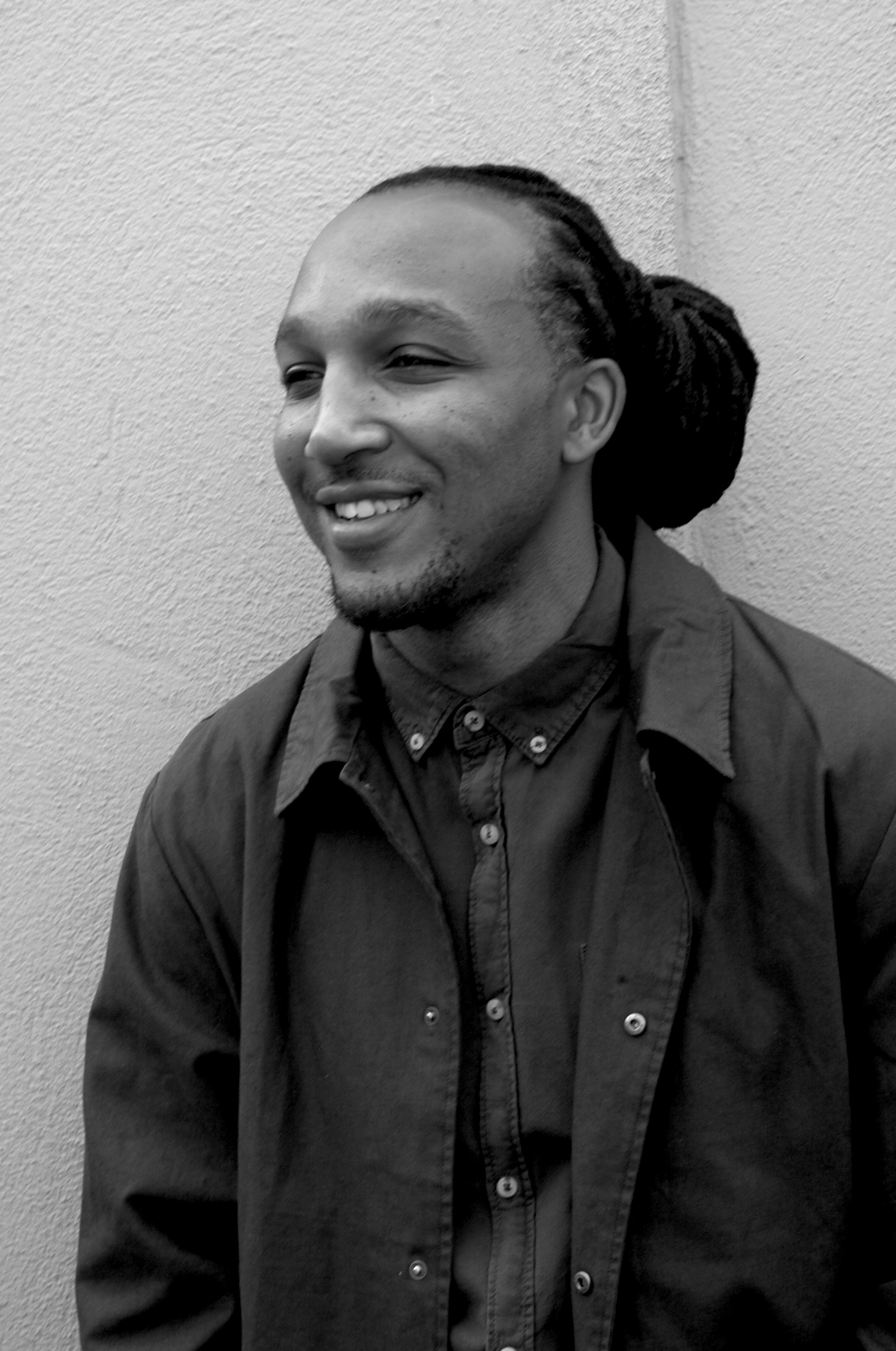
Marques Green Portrait Nov 2017 B&W

Marques Green, Director

We first meet Donte walking alone idly on a sunny day among discarded items on the sidewalk. The ice cream truck arrives. Children gather around Phil (Christian Henley), a gang member, as he passes out money to them to buy ice cream. Phil’s generosity encourages Donte to ask for his share to purchase ice cream as well. Phil pushes him away. Clay (Freddie Gibbs), Phil’s partner, arrives in a shiny red car with his girlfriend (Veranique Basquez). As Clay enters the car, Donte asks to hang out with them. Phil replies, “Are you crazy? Yo’ slow ass ain’t fit to be part of this!” Later, when Donte awakens his mother to advise her that something has happened, she tells him “mind your business and take yo’ ass back to bed. Go!”

Donte, for certain, is in a precarious space: too old to belong with the kids and too young to cruise with the grown up Old G’s. In this vortex of confusion, Donte unwittingly begins his journey for inclusion. “He’s coming of age and navigating manhood,” explains Green, “and I wanted to know exactly how that happens for Donte in a community that has made him invisible. I wanted us to look at ourselves and these situations, to really see how the community has failed him, to show how alone he is.”

Tirini Oyenusi.jpg

Tireni Oyenusi as Donte

Oyenusi caught the character’s isolation within his community when he read the script. “The first thing that hit me was how much struggle he goes through. On top of having emotional and behavioral disabilities, he just wants to fit in. He wants so badly to be a part of the community. Nobody wants to hang around him. I saw all of that struggle.”

Donte indeed finds acceptance but it is in the back seat of a squad car with Detective Brown (Hector Bustamante) and Detective Myers (Michael Cognata), two “friendly” policemen who have been called to the murder scene of the four people in the neighborhood. Detective Myers “befriends” Donte but with an ulterior motive. Cognata analyzed the role to discover other dimensions to his character. He reveals, “Detective Myers is a part of an evil scheme but I wanted to make sure to bring some sympathy, some humanity to him. He’s under pressure to solve the crime. People don’t always intend to harm. Myers was in a position to help that kid but his choices in this situation were for his own protection. It was his inability to stand up when the moment was right.” Green agrees,

the dynamic between the cops – the pressure they feel in trying to solve this quadruple murder–works against Donte. Both interrogate him without his parent; he has no protection in that room. One cop knows what they are doing is wrong but works with his superior officer to create the downfall of Donte. To make matters worse, Donte doesn’t understand the weight or gravity of the situation he is in.

A True Crime, then, is a story of violation: a violation of rights, a violation of space, and a violation of trust. Derek Whitacre’s music score strikes the haunting realities Donte has to face in his desperation to fit in. Cinematographer Bruce Francis Cole deftly uses warm and cold hues of gold, blue, and white lighting to create the tone and ambiance of these public and private disruptions.

Screen Shot 2019-07-28 at 12.41.52 PM.png

Donte and Clay take a dream ride

The flashing lights from the police car violate not only public space of the neighborhood,  also, the violation occurs in the private space of the home. There is no rest. There is no privacy. Lights pierce through Donte’s bedroom awakening him from sleep; they sweep through the living room; and, beams of red pound against the outer walls of houses. When the white beam from the police’s light flashes on Donte in the yard, Donte reacts as if a sword has impaled his body. The only peace to be found is in Donte’s head as he imagines hanging out with Clay and Phil in that shiny red car. 

People don’t always intend to harm. Myers was in a position to help that kid but his choices in this situation were for his own protection.

~ Michael Cognata

There are several angles to the story, and Shayar Bhansali’s seamless editing makes fluid each narrative intersection. Cognata notes how pressure plays out in the film. He says, “everyone is under pressure to make a decision. Donte’s mother, for example, whom we briefly hear from, probably works a lot so she’s tired and has to sleep through the majority of time with her son, so there is a lack of leadership there.” Oyenusi marks out Donte’s distress throughout the story. The particular choice the actor makes in his final close-up signifies the character’s desperation. “At that point, I really tried to feel what Donte was feeling as he was among strangers,” Oyenusi says, “I wanted to show his sense of betrayal by the cops he thought were his friends but now are full on enemies. All of this in the middle of the night, and he is all by himself.”

Screen Shot 2019-07-30 at 4.46.32 PM

Donte and Detective Myers (Michael Cognata)

Green’s overarching angle in A True Crime is the exploration of the justice system, a system he believes, “needs a lot of work, and there are different ways those who work within that system try to get us caught up in it. That could have been me in the back of that squad car or my brother or any Black youth. I wanted to place the audience in Donte’s position to feel the pressure he was forced to deal with. The whole situation is a crime, really.”

In the final analysis, Green is motivated to tell not just stories, but stories that investigate the moeurs of every day life. “I have to create. Real stories inspire me, and  A True Crime embodies all of the elements I see Black men having to navigate on a daily basis.”

Diego Nájera and Katherine Fisher, producers; Sheri Bradford, Executive Producer; Valerie Castillo Martinez, Francisco Velasquez, and Angel Kristi Williams, Executive Producers-Film Independent; Roxy Hua, Production Design; Robyn Owen Silvestri, CSA, and Michael Sanford, Casting.  

A True Crime  premieres at Philadelphia’s BlackStar Film Festival in August 2019.

For more information on Marques Green, visit http://www.quefilms.com

A True Crime is a project of Film Independent Future Filmmakers’ Project Involve. For more information, visit https://www.filmindependent.org/programs/project-involve.
 

In the Comfort of Joy ~ A Commentary

Screen Shot 2019-07-29 at 12.13.45 PM.png

Got Me back January 17, 2019 when my knee injury happened on the opening night of the show I directed, Who Will Sing for Lena. It was one of the coldest days of the year in Lincoln, Nebraska. For about three years, I had received the call to stop. To just stop. teaching Zumba x3 wk practicing choreo staff meetings teaching lit/film classes x2 wk semesters and summers writing editing performing travel and more travel meetings upon meetings grading papers office hours vocal coaching practice guest singing Stop! Please Stop! All of this, that, and the other–what my father would call ‘rippin’ & runnin’–took me out. I was devastated over the possibility that I may no longer be able to teach my beloved Zumba–this I learned in the emergency room after the outstanding performance at the Haymarket Theater. I wept well into the night. The Goddess, in all of her generosity, hastened Joy to me that next morning. In the comfort of Joy, I saw me. Right there. In that Holy silence.

Watch for film television & more on The Dreher Report.

On Harriet ~ A Commentary

Screen Shot 2019-07-26 at 7.38.17 PMI am excited for what stands to be a most poignant biopic of Harriet Tubman but I hold reservation. The last Harriet Tubman movie I saw, A Woman Called Moses, I felt emasculated the Black men who followed her. The film portrayed them cowering and having to be convinced to embrace freedom.
I love Black men. I do. I think they are the most beautiful and the most courageous creatures on earth. I have/had beautiful beautiful Black men in my family and community to prove it, beginning with Ulysses William Dreher, my father, right on down to the wine-o drinking from the paper bag crouched somewhere over there in the cut.

The portrayal of Black men in A Woman Called Moses broke my heart. Not one historical marker in my ancestral heritage mirrored their onscreen representation. Not one Black male in my community embodied their characterization.

I get it. Freedom-making was an ambitious endeavor; one misstep meant dire consequences. Freedom-making, in addition, challenged inhumane beliefs held by plantation owners and passed down to generations of enslaved people: you and your offspring are nothing but chattel–beasts, wenches, and brutes. 

History tell us, however, that the fervor for freedom took over, and those enslaved who heard the clarion call had no alternative but answer it no matter the consequences. The first step an enslaved person made toward freedom antagonized the plantocracy’s hateful notions circulated about them. That first step initiated psychic healing. 

I hope I see the Black men who dared to believe in Harriet Tubman and join her on the underground railroad portrayed in this manner in Harriet. They haven’t to deserve. It’s theirs!

Watch for Film . Television . & More on The Dreher Report.


The Fall of the American Empire

Money has its own power. What will you do when it talks to you?

A Review

Listen Here @ 1:02:32

The Fall of the American Empire. Don’t the let the title fool you. The film is set not in America but in Montreal, Canada. Based on a true crime that happened in Old Montreal in 2010, film director Denys Arcand explores issues of class and race framed by two duffel bags filled with $12 million dollars. The Fall of the American Empire opens with a couple assessing their relationship in a diner. The mood is somber. Linda cannot understand why her boyfriend Pierre-Paul works as a deliveryman, especially since he earned an advanced degree in philosophy. “If you’re so smart,” she begins, “why aren’t you president of a bank?” He answers, “I’m too intelligent.” From there, he commences to critique some of the great writers philosophers whom he deems were “dumb as mules” even though they hold the distinction of “genius” in the academy. “Hemingway, the novelist, thought he could box … Louis Althusser strangled his wife!” he uses as examples to convince her. In certain scenes, though, Pierre-Jean flexes his philosophical knowledge. Given the circumstances, he quotes Artistotle, Kant, Socrates, and Ludwig Wittenstein.

Denys directs a charming ensemble of characters who make unlikely turns in their life once the duffel bags of money are dropped into the picture. Now how did THAT happen? A botched robbery. Two young black men contracted by the mafia to rob a retail shop called The Hollywood. It just so happens that Pierre-Jean arrives at The Hollywood to make a delivery while the robbery is taking place. The robbery is foiled by the store’s security guard. Dead bodies are sprawled everywhere, and as luck would have it, one of the perpetrators drops the bag of money at the feet of Pierre-Jean in his escape. The other perpetrator stumbles outside of the store with his bag and falls face down in the parking lot. Interesting. Pierre-Jean does not call for an ambulance nor the police; rather he scans for witnesses. The area is quiet—real quiet. Pierre-Jean’s next move sets in motion a charming cat-and-mouse adventure between Pierre-Jean, his team, and the police.

By happenstance, Pierre-Jean assembles a company of a high class prostitute, an ex-money launderer, and a corporate executive to aid him in laundering the money. Pierre-Jean and Company elude the police and the crime syndicate. It’s a tense but delightful game as they get to move in and out of Montreal society with just a modicum of detection.

But Denys Arcand makes a subtle statement: the cat-and-mouse cunning of Pierre-Jean and comrades happens only for them, the white members. Remember the Black perpetrator who survives? His name is Jacmel Rosabert. He pays for the crime in a most grueling way. The torture scene is gratuitous – really, all too much to bear, especially when Jacmel is thereafter tossed out like a Hefty gallon plastic bag on a trash heap by the mob. To add insult to my viewing injury, Vladimir Francois, the Black businessman who masterminded the robbery—and of in his own store nonetheless, comes to a gruesome fate leaving his wife and two children in what surely will upend their lives. After all is said and done, Arcand decides to pay homage to those citizens who awaken every day out of their sleeping bags, from their folded packs of clothes; those who have spent the night in a store’s entrance or under a bridge; those who are the homeless. Strange. I had to ask myself, why am I feeling this is too little too late?

Watch for in-depth Film • Television • & More reviews & commentary.

In the meantime, Catch a film … Share the Popcorn … Feed Your Soul!

Her Smell @ The Ross

Screen Shot 2019-05-06 at 2.36.03 PM

Elizabeth Moss as Becky Something

Director Alex Ross Perry brings to the screen frenetic energy swaddled in pain, delusion, and despair in his film Her Smell. Starring Elizabeth Moss of The Handmaiden’s Tale, Her Smell charts in five acts the rise and fall and rise of an all-girl punk band called Something She. Becky Something, played by Moss with chaotic intensity, is the leader of the band.

Her Smell is noisy and cantankerous and messy, to the point of viewer exhaustion. The usual suspects that plague these bands? They’re all there: Drug abuse, verbal abuse physical abuse, member betrayals; the manager who wants to throw himself off a cliff; the self-destruction, the distressed child, the unsung ex-husband who patiently waits for his ex-wife’s recovery, the “OMG where is she? Is she ready to go on?” moments; then the full mental breakdown and … recovery – if you could call it that.

The film unfolds in the 1990s, when the punk rock scene was all the rage. Something She is well-received by the patrons at the club called Her Smell. At times the story breaks into cinematic pieces, and cinematographer Sean Price Williams gracefully moves to put them all back together. Moss interprets Becky Something as an abrasive raptorial bird who opens her wings to isolate herself from bandmates. The band members of Something She hang on by a thread to keep the band going in spite of their fear of collapsing. Dan Stevens plays Danny, her tolerant ex-husband who shields their daughter from her mother’s destructive ways. It is clear that celebrity and stardom have engulfed Becky into its vortex, and there is nothing pretty about it! Nothing.

What is missing from the cinematic narrative, however, is the reason for Becky’s slide into self-abuse. What happened? When and how did her identity fracture? Becky’s mother, Ania, played with maternal angst by Virginia Madsden, offers no answers. Interesting to Her Smell are the behind the scenes cinematic portraits of those persons who are trapped within the quagmire of recording studios and encased in halls offstage walled in by concrete. They are always on the brink of being swallowed whole by the celebrity for whom they are paid to endorse. Hmmmm … feels like a satellite of hell!

This film is most tedious to watch; it’s like taking in cinematic poison. You will be hard-pressed to make an investment in the characters, and Becky’s redemption is too little, too late.

Screen Shot 2018-03-09 at 6.30.01 PMHer Smell plays through May 16 at the Ross Media Arts Center in Lincoln.

Also showing at the Ross are The Mustang and Sunset.


The Sower @ The Ross

Screen Shot 2019-08-06 at 12.33.15 AM.png

Pauline Burley as Violette and Alban Lenoir as Jean

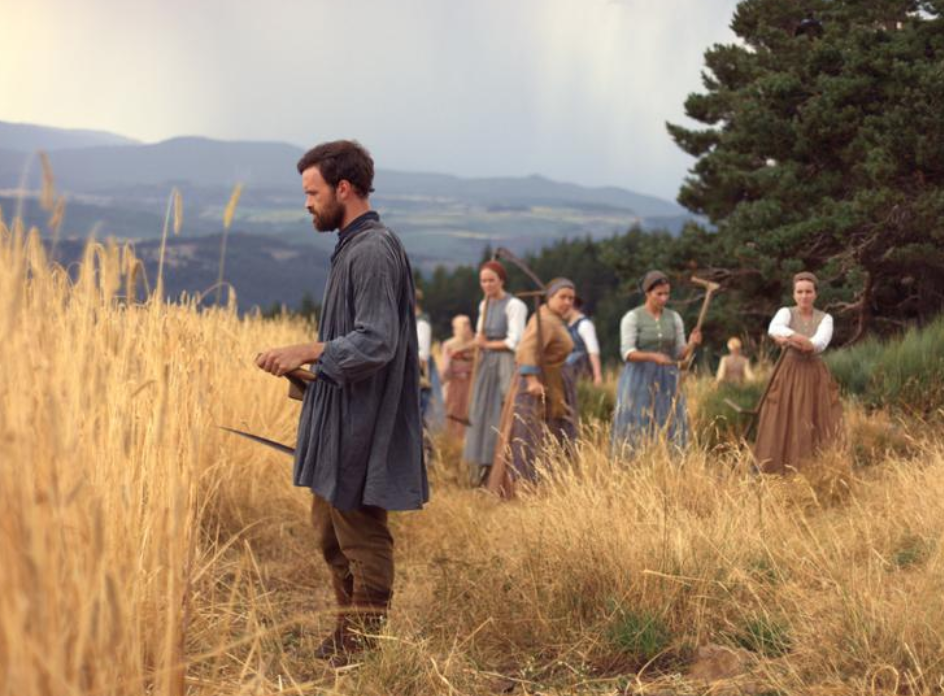
How do women cope in the time of war? In our own history, we know women went to work and managed households until war’s end. In her film The Sower, filmmaker Marine Fransoun marks out the day-to-day activities of women who have to fend for themselves in a remote mountain farming village. The time is 1851. The place, France. A brutal coup d’etat occurs and, on orders by President Louis-Napoléon Bonaparte, all men either are arrested and/or or killed. The women and children assume the responsibility of managing life as a result of this violent state of affairs.

Screen Shot 2019-08-06 at 12.43.36 AM.png

The Sower is Marie Fransoun’s directorial debut she has based on the novel by Violette Ailhoud, written in 1919 at 84 years of age. Rather than using the original title L’homme Semence translated as The Man Semen, Fransoun entitles the film from the same name of the painting by Jean Francois Millet. She deftly handles every scene; Alain Duplantier’s extreme long shots of the landscape invoke visions of The Gleaners in the art of Jean Millet or The Sweatgrass Carriers in the art of South Carolina artist, Jonathan Green.

Screen Shot 2019-08-06 at 12.36.47 AM.png

Jean and the women

Bereft and traumatized, the women band together to farm, harvest crops, and tend to the children. Some women are mothers; some have experienced intimacy. Others find themselves with no prospects for either venture. So, they make a vow: If a man comes to the village, each of them will share him as their lover. There’s just one thing, though. No one asks the question, what shall we do if I fall in love with him and he with me? Jean, the man, (played with delicate sensuality by Alban Lenoir) arrives in the village, and he is fine-looking and he is mysterious and he is young. The women remark, “If he was the only one left, you wouldn’t make a fuss” and “You’d be happy to wrap your legs around him” or “I think he fancies you; he’s so handsome.”

There is an interesting twist to the story. Pauline Burley plays Violette, the young woman who spies Jean ambling along on the hilltop, and their interaction threatens to upend the overall peace in the village. Each actress communicates character reaction to Jean’s arrival with exceptional range. Feelings are revealed via side glances as she harvests. Their hearts beat intense desire wrapped in anxiety and sexual frustration.


Screen Shot 2019-08-06 at 12.42.13 AM.png

One of the women reminds Juliette of the bargain

Alain Duplantier’s cinematography interposes scenic space between dialogue and action to prevent emotions running high throughout the village from overwhelming the narrative; Fransoun’s direction allows the story to breathe in and to breathe out but keeping in focus the simmering conflicts. Alban Lenoir interprets Jean well as a stranger among women caught up in their sexual politics. “You’re all mad—stark mad” he retorts. Remarkable to the story, Fransoun agrees with Jean, and relieves the character of his anxiety in a very practical way.

The Sower plays through April 4 at the Ross Media Arts Center. English Subtitles.

screen-shot-2017-01-11-at-3-39-49-pm

Watch for in-depth Film • Television • & More Reviews & Commentary.

In the meantime,

Catch a film! Share the Popcorn! Feed Your Soul!

On R. Kelly On Gayle King

Screen Shot 2019-03-06 at 9.00.16 PM.png
I’ll never forget Noah Cross’s (John Huston) comment to J. J. Gittes (Jack Nicholson) when he discerns Gittes knows he raped his own daughter Evelyn (Faye Dunaway) in the classic film Chinatown. I paraphrase: “When you have money, you believe you can do ANYTHING.” I’ll add, “when you have celebrity and a charmed fan base as does Kelly, you believe you can do anything.”
R. Kelly’s “performance” on Gayle King was a desperate attempt to save himself with the only tools he has left: anxiety, anger, and fear all wrapped up in tears–neither over which he has any control. To add to another person’s Facebook post I have read, Kelly charmed his way out of and beat his last case; his emotional behavior on Gayle King suggests his realization that he will not beat this case especially given the heart-rending stories of survival witnessed in the production Surviving R. Kelly.
R. Kelly on Gayle King was a piteous sight to behold. It was. Some have commented, “well, he should have thought of that before he …” or “he should have known better …” Well, he didn’t and he didn’t have to. Our celebrity culture allows for this !@#$ Riches and wealth allow for it as Noah Cross schools J. J. Gittes. When an entertainer generates the capital to fill the pockets of executives and miscellaneous crew members, some members of the group will go to lengths to ensure his desires are satisfied–no matter how prurient–to keep the money flowing (though at present the flow of money has stopped). It’s just that cut and dry. One thing is for sure, though: Whatever R. Kelly did not know and did not think of beforehand, on Gayle King he had his ‘Ah Ha’ moment.