Blue Caprice ~ A Review

Screen Shot 2015-12-08 at 10.42.20 PM

Alexandre Moors’S Blue Caprice is a chilling film. This first time writer/director’s film imagines the backstory to the 23 days of terror in the Washington Metropolitan area instigated in October 2002 by John Allen Muhammad and Lee Boyd Malvo, better known as the D.C. Snipers. This film is haunting, and right from its opening, you know Moors has created a dramatization of events that will leave you feeling depressed, and he doesn’t let up. The atmosphere is cold, distant, and dreadful. Moors’s exploration of revenge, for example, uncovers how deep it cuts into the spirit and what revenge manifests in the human psyche once it is enacted.

Muhammad (Isaiah Washington) and Malvo (Tequan Richmond)

Muhammad (Isaiah Washington) and Malvo (Tequan Richmond)

What is alarming about this film is the danger many of our teenagers encounter when the usual suspects of societal systems are breached, and therefore leaves them open for anyone to facilitate their coming of age. I’m talking about family, church, and/or community. Without these systems and healthy guardianship, the intense need to belong makes them susceptible to forces that will destroy them. Isaiah Washington gives a superb performance as Muhammad, and he makes seamless his character’s transition from concerned surrogate father to seasoned sociopath. Tequan Richmond as Malvo illicits some sympathy because all the while you are thinking his parental abandonment at the age of 15 made him vulnerable to Muhammad’s abuse and manipulation.

Watch for in-depth Film • Television • & More reviews & commentary.

In the meantime, Catch a film. Share the popcorn. Watch television. Feed Your Soul!

In A World @ The Ross

Carol Solomon (Lake Bell)

Carol Solomon (Lake Bell)

I really did not like this movie. Here is a so-so review of Lake Bell’s In a World, and … well … whatever. I can appreciate Bell’s homage to the late – and might I add – the great Don LaFontaine, the vocal talent nicknamed “the voice of God” who introduced with his thunderous voice many a movie trailer and advertisement with these three words: “In a World”. When he died in 2008, there was a scramble among voice actors to take his spot—most of them men.

Framed within satire undergirded with screwball comedy, Bell’s film critiques this male-dominated world through her character Carol Solomon whose father Sam Soto (played by Fred Melamad) is the very non-supportive jealous father of his daughter’s desire to break into that world. You will appreciate the value of the voice and its sound, and I must admit, Bell shines in her dramatization of this aspect of the film. You also will appreciate Bell’s feminist message, and that is women have voices in the world of voiceover talent, and these voices deserve to be heard. Carol’s own voice message mimics Don LaFontaine’s thunder, “Greetings Americans. Leave a message after the beep but not if you are going to mumble because a voice is not just a blessing; it is also a choice.”

Don LaFontaine, 'the Voice of God'

Don LaFontaine, ‘the Voice of God’

Indeed she makes known that how one speaks, the timbre and pitch of the voice can influence the way people treat you; can be the deal breaker in a job interview. In her voice coach classes, she tells one female attorney who sounds like a “sexy baby” that may be great for the bedroom but am I really going to hire a ‘sexy baby’ to represent me in a patent infringement lawsuit … because women should sound like women!”

So why didn’t I like this movie? The costumes, the lighting, the set design, andeven the casting—all of it felt like a Woody Allen reject. Well, there you have it, but remember don’t mumble; speak clearly …

In a World Plays opens October 25 and plays through October 31.

The Ross logo

Watch for in-depth Film • Television • & More reviews & commentary.
In the meantime …
Catch a film!
Share the Popcorn!
Feed Your Soul!

The Patience Stone @ The Ross

'The Woman' (Golshifteh Farahani) on her way to see her Aunt

‘The Woman’ (Golshifteh Farahani) on her way to see her Aunt

What does it take to get your partner to listen to you? To hear, I mean, to really hear your cares, your needs; your joy and happiness? Especially when you live and exist in a culture that demands your silence to privilege the male in the household? Well Atiq Rahimi brilliantly explores these questions in his richly textured film The Patience Stone.

Set in war torn Afghanistan, an unnamed married couple of two girls are challenged furiously by the incapacitation of the husband. He cannot speak; he cannot move; he does not blink one eyelid. He is on his back 24/7 and is kept alive only by a tube carrying salt and water through his body and the daily nursing of his wife. His immobilization begs her question to him: “Can you hear me?” His silence also brings about her act of storytelling–really ‘Confessions of an Afghan Wife.’ He is the “patience stone” or the stone that you pour out your inner most secrets; and it bears all of them until it disintegrates under the pressure of carrying your burdens. Then the storyteller is free from the past.

The Woman 'confesses' to The Man (Hamid Djavadan)

The Woman ‘confesses’ to The Man (Hamid Djavadan)

In the beginning, her stories are not of any importance. She tells the story about her father and how his overzealous love for his pheasants motivates her to set his prize pheasant free for the neighborhood cat to devour; or the story of her marriage to her husband his absence is quite amusing; and the husband breathes through these stories without any indication that he has heard a word. It is when this Afghan wife confesses to the strategies she deploys for motherhood and family that the husband’s eyes begin to blink.

Iranian actress Golshifteh Farahani and Hamidrez Javdan are fabulous in their roles as the unnamed husband and wife. Javdan deserves an honorable mention for his ability to stare without blinking for the majority of the film.

The Patience Stone plays through October 24 at the Ross Media Arts Center in Lincoln.

The Ross logo

Watch for in-depth Film • Television • & More reviews & commentary.

In the meantime …
Catch a film!
Share the Popcorn!
Feed Your Soul!

The Butler – A Review

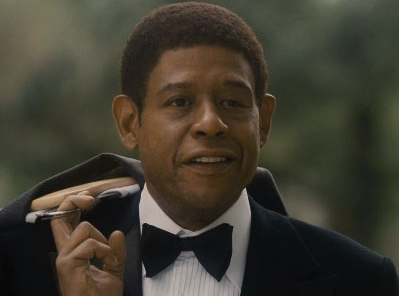
Cecil Gaines (Forest Whitaker)

Cecil Gaines (Forest Whitaker)

I, Too, Sing America
I am the darker brother.
They send me to eat in the kitchen

Tomorrow, I’ll be at the table

They’ll see how beautiful I am
And be ashamed—

I, too, am America.
–Langston Hughes

The “darker brothers “and sisters have burst out of the kitchen, and they have arrived strong and beautiful on the doorstep of The White House in Lee Daniels’ impressive film The Butler. The film calls up a history that can be traced back to the time when the prevailing plantation system meant that the enslaved cut and hauled each stone to build that house; that George Washington would bring his enslaved servants, Ona “Oney” Maria Judge and Hercules to it (both eventually escaped); that Paul Jennings, President James Madison’s servant/slave would come; that Elizabeth Keckley would be modiste to First Lady Mary Todd Lincoln and William Slade, President Lincoln’s butler; and, finally, that Eugene Allen, the butler on whose life the film is based, would join them in a history proving that the African American has had and continues to have an intimate relationship with The White House, our national home.

Elizabeth Keckley

Elizabeth Keckley

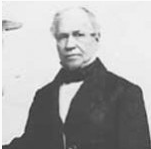
William Slade

William Slade

Paul Jennings

Paul Jennings

Daniels firmly holds on to his dramatization of the socio-cultural and racial dynamics as he moves the butler, Cecil Gaines (Forest Whitaker), through his thirty-four years in the White House. Who would have predicted, however, that the elegance of domestic science would sashay out and rise as the star of the film! The conventions of manners, grace, and poise within the national home reign supreme, and they are invigorating. As the tea cups, water glasses, dinner plates, silverware and cloth napkins are set and folded respectfully by the hand of each butler, one cannot help but think of Booker Taliaferro Washington, who also thrust a long arm into the presidential suite throughout his career. Say what you will about Washington’s philosophy on and his praise of industrial education, the former slave-turned-consummate educator and founder of the esteemed Tuskegee Institute (1881) understood all too well the attractive art of domestic science and its “neatness and system”. In Working with the Hands, the sequel to his autobiography Up From Slavery, for instance, Washington discovers that seeing the artistry in the product of his manual labor cultivates a positive sense of self. After surveying the results of his handiwork in grounds-keeping while in the service of Mrs. Viola Ruffner, his most exacting white employer, Washington proclaims,

when I saw and realised that all this was a creation of my own hands, my whole nature began to change. I felt a self-respect, an encouragement, and a satisfaction I had never before enjoyed or thought possible. Above all else, I had acquired a new confidence in my ability actually to do things and to do them well. (9).

Booker T. Washington

Booker T. Washington

The Hampton Normal and Agricultural School in Virginia (later Hampton Institute) nourished Washington’s self-respect as the school attended his book-learning with its practical industrial education curriculum. At Hampton, Washington learned grounds-keeping, iron and woodwork, cooking, agriculture, personal cleanliness and protocols in behavior. The industrial arts , later to be called Shop Class and Home Economics, then enjoyed an easy collaboration with liberal arts education–that is until, I would surmise, the national effort to integrate public schools in the 1970s. There was a push to focus college/university degrees in the liberal arts, or what Washington labeled “mental and religious education”. This change, unfortunately, shoved to the side the industrial arts such as cabinetmaking and carpentry; mechanical drawing and brickmasonry; dressmaking and tailoring; and welding and mechanic. Almost overnight, “satisfaction inspired by the sight of a perfectly made bed,” and “pillows placed […] at the right angle, and edges of the sheets turned over” became, it seems, anathema to Black progress. (11). Shop Class and Home Economics, then, began their slow but sure decline.

Eugene Allen serves President Gerald Ford and guests at The White House

Eugene Allen serves President Gerald Ford and guests at The White House

Fortunately, The Butler remembers, with deference, the craftsman who works with his hands, and he stands proud along with the iconic Pullman Porter and Chauffeur. Central to The Butler is the acknowledgement of three fundamental components essential for the success of a craftsman’s training: First, expertise for the butler, acquiring an appreciation for etiquette; second, apprenticeship, to hone the craftsman’s skills; and, finally, teachers with an ardent investment in student learning. The African American male and the white mistress, notably, tutor Gaines, and their tutelage produces The Butler, a precise craftsman bearing grace and confidence.

We have watched African American women pass down this legacy in Jonathan Demme’s Beloved and, more recently, Tate Taylor’s The Help. We have heard Oprah Winfrey testify to Diane Sawyer on ABCNews.com’s Person of the Week, “I am the daughter of a maid; my mother was a maid; my grandmother was a maid” to draw attention to the women in her family who worked with their hands in white households. The Butler puts front and center this same legacy in the African American male and his apprenticeship in domestic science.

The scenes between 10-year-old Cecil (Isaac White) and his father Earl (David Banner) in the cotton fields; 15-year-old Cecil (Aml Ameen) and the aged plantation mistress Annabeth Westfall (Vanessa Redgrave); and Cecil and Maynard, the dessert shop servant, (Clarence Williams III) are stirring illustrations of mentorship across lines of gender and race.

Mistress Wentworth (Vanessa Redgrave) and the making of The Butler

Mistress Wentworth (Vanessa Redgrave) and the making of The Butler

Let us move to a Georgia cotton field. Earl teaches Cecil how to pick the best cotton, using his hands to demonstrate the details of that labor. It is a lesson wrapped in humor: “Now you know the cotton is ready when the bud splits and the bowl is star shaped, like a big old star in the sky–like your big ol’ head!” After a traumatic event in the cotton field, Mistress Annabeth “promotes” Cecil to the big house. There, she instructs him on the rules of perfect service, which, for certain, would cause Ralph Ellison’s Invisible Man to holler from the underground when he hears her first rule, “[Be] quiet when you’re serving,” and go on to say, “I don’t even want to hear you breathe. The room should feel empty when you enter it.”

Maynard (Clarence Williams III) coaches Cecil

Maynard (Clarence Williams III) coaches Cecil

Upon his “graduation” from the plantation to the city, Maynard tutors Gaines on how to serve white patrons: “Slow down; better to look at their eyes—see what it is they want; see what it is they need. Anticipate.” From the cotton fields to the big house to high society, Cecil’s discipline and pride in his work stand him ready to enter into his national home. Because we have seen him in these contexts, we feel such pride when Gaines announces himself at the White House gate, “I’m Cecil Gaines; I’m the new butler.”

The job is prestigious, but the national, political and the personal domestic spheres inevitably clash. The negotiations Gloria (Oprah Winfrey) and Gaines have to make to maintain their marriage, home, and parenthood are engrossing to watch. Secrecy and curiosity, no doubt, infiltrate their household. Gaines has access to the most highly classified information in the world: that requires the confidence to practice discretion. Gloria polishes her respect for this aspect of her husband’s job yet, understandably, yearns to see inside of the White House. This exclusion eventually takes its toll on Gloria. On notification of the Kennedy assassination from her husband, she retorts, “I’m really sorry about the President, I really am. But you and that White House can kiss my ass!”
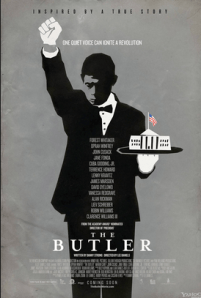
Poster

Lee Daniels marks how an ordinary man who is educated on a Georgia plantation navigates the verbal and emotional restrictions required by his extraordinary job. This kind of control takes reserve; and, more important, respect for the gravity of one’s place. In all, The Butler pays homage to African American males in domestic service and to those who teach them. In the process, the filmmaker bestows honor on the hands that cleaned the china and polished the silver; that ironed the sheets to make the beds; and that prepared meals and served every one of them with dignity and style. The greater tribute, though, extends to the hands of every enslaved African American who hoisted the stones to build the house that President Barack Obama and family now live in. They, too, are singing America!

A special ‘thank you’ to Professor Emeritus Robert Haller (UNL) for lending his expertise in syntax.

Watch for in-depth Film • Television • & More reviews & commentary.
In the meantime, Catch a film … Share the Popcorn … Feed Your Soul!


The Act of Killing @ The Ross

Poster

“It is forbidden to kill and therefore all murderers are punished. Unless they kill in large numbers and to the sound of trumpets.” I would like to add to Voltaire’s quote, “and to get away with murder and live to tell it regardless of circumstance surely will kill any and all feelings of remorse.” The Act of Killing, Joshua Oppenheimer’s arresting documentary features members of a killing machine in 1968 Indonesia, when its government was overthrown. The threat of communism followed, and executioners Anwar Congo–the dashing star of this cinematic jaunt–Herman Koto and their comrades killed more than 1,000 Chinese suspected of communism. In The Act of Killing, Oppenheimer appeals to Anwar Congo’s love of action film stars such as John Wayne and James Bond to recreate on camera those very acts of killing. The behind-the-scenes collaborations and discussions and the casting call are distressful; even more wearing on the spirit is the joie-de-vivre the executioners demonstrate as they talk about why each carried out the murders and reproduce with abandon how they did them. They are national heroes. Their communities welcome them and celebrate their pasts. They carry on the ordinary of everyday. They shop with their families. They dance. They sing. They tell bawdy jokes. More troubling, they smile and they smile and they smile. For the full 159 minutes, the camera, along with the audience, searches for grand gestures of sorrow or guilt. Even Anwar Congo hunts among his friends for a way to handle his sleepless nights that are filled with nightmares. Yet, all the camera can marshal is a glimmer of regret from him, but it is too little too late.

To Paula Patton, Robin Thicke and Gloria Loring

The Family

The Family

Dear Paula Patton and Robin Thicke, parents of a 3-year-old son, and Gloria Loring, grand/mother:

Here’s the chase:

The sun set on my anger Sunday, August 25, but days later I woke up in a clear contemplative mood. After careful review of comments made by all of you in myriad media outlets over the Thicke/Cyrus MTV-Video Music Awards performance on that Sunday, I am ready to read more of the signs from that night, and, if I may, I begin with a statement:

It is about time all of you admit Robin’s complicity in this mess, not to mention Paula’s prior knowledge of the risqué nature of the show. It is about time. Yes, it is.

Paula, if the reports from sources on tmz.com are true on your response to your husband’s performance at the MTV VMA with Cyrus, and I quote, “we’re told Paula knew the performance wasn’t gonna be G-Rated because there were ‘tons of rehearsals’ before the show”, then you cannot wash your hands of the responsibility for that visual debacle.

Robin, if the reports from sources on perezhilton.com as to your response to your ‘duet’ with Miley Cyrus are true, and I quote, “Robin thought it would be fun to include Miley, but he didn’t realize how much she would overshadow him”, then you are more than responsible; you are the culprit.

During ‘tons and tons of rehearsals’, you let Miley Cyrus, a 20-year-year-old lick and bump and grind YOU, a 36-year-old husband and father, tons of times as you sang, “you know I want it! so c-c-c-come on!” from your newest release Blurred Lines. And, more glaring, in the end, your only worries are that you did not win Video of the Year and were upstaged by Miley both on and offstage.

In your appointed ’15-minutes’ onstage, you expected to (re)introduce your hot new single as a young hot(?) ‘kitten’ purred to your blurred lines, but you failed to anticipate a backlash from the public or that we would even care or notice. We did, though! The backlash, Miley Cyrus, along with the performance, and the blogs and scholarship on same, will attend your newest hit–always! There’s the gotcha!

To Robin’s mother, Ms. Loring, in your exclusive interviews with Yahoo! and OMG!, you lamented,

I just keep thinking of her mother and father watching this. Oh, Lord, have mercy. … I was not expecting her to be putting her butt that close to my son. The problem is now I can never ‘unsee’ it. Him? Loved it. I love that suit, the black and white suit. I don’t understand what Miley Cyrus is trying to do. I just don’t understand. I think she’s misbegotten in this attempt of hers. And I think it was not beneficial.’

Ms. Loring, recognize your son’s collaboration in that performance, then maybe some understanding of a grown man taking advantage of a young woman’s sexuality to advance his own artistic endeavor will come to you. THAT is misbegotten.

As for Paula and Robin, you are hereby added to the list of guilty parties for the infamous Thicke/Cyrus spectacle. As you are more than aware by now, the public noticed:

Paula Patton, actress; Robin Thicke, entertainer; Jesse Ignjatovic, Executive Producer; Amy Doyle, Garrett English and Dave Sirulnick, Executive Producers. Joanna Bomberg, Jen Jones and Lee Lodge, co-Executive Producers. Hamish Hamilton, Director.

There.

Watch for in-depth Film • Television • & More reviews & commentary.

In the meantime, Catch a film … Share the Popcorn … Feed Your Soul!

On Miley Cyrus

Jesse Ignjatovic, Executive Producer, 2013 MTV Video Music Awards

Jesse Ignjatovic, Executive Producer, 2013 MTV Video Music Awards

This ain’t nuthin’ but the devil! Here I am making headway on my review of Lee Daniels’s The Butler, and now I have to take time out to comment on this swill from Miley Cyrus. I will be brief. Cyrus did not just drop down onstage on a whim at the MTV Video Music Awards last Sunday night to perform the most bush league of choreography I have seen—evah! Pull back the curtain and see the wizards for who they are! Someone came up with that idea! Someone directed that choreography! Someone gave Cyrus the Green Light! Cyrus’s ‘trick’ had to be practiced to perfection(?) under the eye of a director before the award show even went on the air! Plus, costume designers put together each costume for Cyrus and the dancers, and you know there were fittings.

What is worse, Justin Timberlake gets handed the Michael Jackson Video Vanguard Award—this after he abandoned Jackson’s sister Janet at the Super Bowl (No! I will not get over that!)

I get it, I really do. Pop Culture is trendy and is subject to the whims of the public. As products for consumption, entertainers are fawned over one day, and the next day we’re channel surfing or streaming for that next ‘thing’ that pops. Remember the ending of The Truman Show? With that written, I understand the difficulty for artists to ‘keep it fresh’ so the public can stay interested in them. ‘Keeping it fresh’ is especially challenging for child stars; so it stands to reason that Cyrus desires to crossover from Hannah Montana to … well after Sunday’s performance … I don’t know to what- or to wherever. It just was a very loutish performance.

Hamish Hamilton, Director, MTV Video Music Awards 2013

Hamish Hamilton, Director, MTV Video Music Awards 2013

My question: Who let that ghastly cat out of the bag? Here are the answers: Jesse Ignjatovic, Executive Producer; Amy Doyle, Garrett English and Dave Sirulnick, Executive Producers. Joanna Bomberg, Jen Jones and Lee Lodge, co-Executive Producers. Hamish Hamilton, Director. There.

Blue Jasmine @ The Ross

Cate Blanchett as Jasmine

Cate Blanchett as Jasmine

Woody Allen has hit a nerve in his film Blue Jasmine, and that nerve is in the vein of Tennessee Williams’s story A Street Car Named Desire. Jennifer oh, er, excuse me, Jasmine (played by Cate Blanchett) arrives in San Francisco on the doorstep of her sister, Ginger (played by Sally Hawkins) in an attempt to put her life back together (or what’s left of it) after her husband Hal’s (Alec Baldwin) suicide in jail. Jasmine and Hal were the elite of New York socialites only to find their world torn apart by divorce, infidelity, and the discovery of a Madoff-like Ponzi scheme ran by Hal.

Jasmine and Hal (Alec Baldwin) in New York

Jasmine and Hal (Alec Baldwin) in New York

As does Tennessee Williams, Allen explores what happens to a person’s psyche once she has been excommunicated from the very entities and people that made her the ‘who’ of who she is. Yes … sigh Jasmine has had a great fall, and all of Hermes, Chanel, Louis Vuitton, Fendi, Carolina Herrera cannot put her back together again. It is interesting that Allen moves out of his beloved New York and settles Jasmine in San Francisco, the leading financial and cultural center of northern California, for her to attempt to put together her emotional and psychological pieces. Allen’s lighting choices of highly saturated primary colors and complementary colors underline the pathos of Blue Jasmine in cool San Francisco. Allen, however, contrasts the experience with soft hues when he cuts to New York to show Jasmine and Hal at the top of their high society game. The flashbacks make for a very razor sharp viewing experience.

Jasmine arrives in San Francisco

Jasmine arrives in San Francisco

Blanchett’s performance is as a marionette lacking some of its strings and controlled by an inebriated manipulator or puppeteer. It’s a bothersome psychological dance, and Blanchett would have done well to consider a crescendo rather than a knee-jerk move into her psychosis. Kudos to Andrew Dice Clay, who plays Ginger’s ex-husband Augie. Clay’s Augie carries a controlled but haunting financial defeat after taking investment advice from Jasmine and Hal.

The Ross logo

Blue Jasmine plays through September 13 at The Ross in Lincoln.

Watch for in-depth Film • Television • & More reviews & commentary.
In the meantime, Catch a film … Share the Popcorn … Feed Your Soul!

On Russell Simmons and Harriet Tubman (after the apology)

Harriet Tubman

I haven’t yet expressed my outrage on the smut accorded Academy Award Nominee for Best Actress Quvenzhané Wallis by The Onion. As she sat in her seat at the Oscars, a grown man from that social network looked on this nine-year-old and tweeted: “Everyone else seems afraid to say it, but that Quvenzhané Wallis is kind of a c–t, right?”

Nor have I expressed my outrage on Justin Timberlake and his blatant demonstration of cowardice at Superbowl XXXVIII. He left—no he ABANDONED Janet Jackson on stage. Standing. By herself.

Nor have I expressed my outrage over Chris Rock’s signification on Janet’s breast and holding her totally responsible for the mishap during his HBO stand-up comedy special Never Scared.

Nor have I expressed my outrage over Li’l Wayne’s lyrical dare to compare his alleged sexual prowess to that of Emmett Till’s lynching. I won’t even mention R. Kelly.

These posts still are to come, but I do believe I curry a hesitancy that stems from trying to find the words to engrave the depth of my anger.

Russell Simmons

Russell Simmons

Now, this draff from Russell Simmons.

Yes, Simmons,

the Hip Hop magnate whose HBO Series Def Poetry attracted master wordsmiths such as Nikki Giovanni, Amiri Baraka, Sonia Sanchez, and Nuyorican Poets Café founder Bob Holman,

who mined the field for a whole new generation to appreciate the elegance and power of words, and

whose pioneering efforts honed the comedic talents of Ced, the Entertainer and D. L. Hughley.

Yes, THAT Russell Simmons who produced all of that artistic hauteur has thrown to us some of his prurient imaginings. What’s worse, THAT Russell Simmons expected us to LIKE them. After the apology, I wonder if he will reflect on his pop culture gesture, and what it will mean for him, a father of two young women. He obviously knows his history, and I’d like to know what was it about this particular moment in African American history that compelled him to make that video? What did he expect to accomplish? Why that particular storyline? Why Harriet Tubman? The Harriet Tubman Sextape is a blatant disrespect of African American history; more specific, his visual product is an attempt to devalue the vital role African American women have played in history.

I just have one last statement as I close out because I have to prepare to do what is necessary to keep my day job:

Russell Wendell Simmons, we are moving still through our grief over Trayvon Martin; some of us are shoring up the strength to see Fruitvale Station in honor of Oscar Grant; and, some of us are doing all that is necessary to free Marissa Alexander from that 20-year sentence down in Florida. We are in mourning; yet, the Harriet Tubman Sex Tape produced by you is what you hand to us to look on as we journey towards healing?

The Bluest Note ~ A Review

The blues notes no longer play for Tony Mann (Len Xiang)

The blues notes no longer play for Tony Mann (Len Xiang)

Marques Green (Que Films) is in good company with Harlem Renaissance poet Langston Hughes because this independent filmmaker understands fully the ‘tune o’ those weary blues’ surveyed in his film short, The Bluest Note (2012). Penned by Oliver Webb, Jr., The Bluest Note is a brooding film that never releases the audience from its descent, even though we are hopeful until the very end. Hope indeed is the bluest note.

Len Xiang is Tony Mann, a once successful R&B / Jazz stylist whose own instrument—his voice–has betrayed him after having carried him through the hallowed halls of fame. The ‘blue notes’ elude him, and with every screech and scrag, Mann elicits from the audience a fervent plea to his vocal chords to serve the artist just one more time. Please? We learn later that a ruthless siren, Niva, has placed us under a spell. Played with uncompromising desire by model Jaynelle Clarke, Niva lures Mann to sing despite the vocal letdown. Mann’s wife, Christine (Stacey Lewis) relentlessly pushes her husband to see that Tony is “not that person anymore”, but she is no match for Niva. We, too, want Christine to stay out of our business!

Lewis inhabits Christine’s hope, taking care to throw into sharp relief the despair over what marriage itself cannot save. Both Tony and Christine yearn for a revival of sorts. Mann craves what he once was in the public spotlight; Christine collects pieces from their marital past with the hope Tony will see the value in a life the two of them created in private before the intrusion of fame. Of her character, Lewis explains,

Stacey Lewis (Christine)

Stacey Lewis (Christine)

Tony and Christine genuinely loved each other and were committed to their marriage. I believe, however, it was nearly impossible for her to accept and to understand that she and the life they had before the fame were not enough for him to stop seeking validation from the public. I think Christine’s anger, sadness, and jealousy stemmed from the fact she was no longer Tony’s muse and was not a strong enough deterrent to keep him from self-destructing.

The seduction and taunt of celebrity culture without question have caused Christine’s ‘weary blues’, and Lewis notes, “once celebrity is achieved by someone that person will move heaven and earth to maintain it, even to their own detriment and to the detriment of their loved ones. It’s as if the idea of being regulated back to ‘normal’ is emotionally, mentally, and physically painful.”

We feel the pain. Mann strives for his voice to recognize that they once were a team, and to remember the vibrancy of their performances. He actually could sing again. All he has to do is take better care of his instrument, practice, and schmooze among his fellow artists. After all, people remember him … but only ‘when’. It is an agony born out of loss and desperation, and Green dramatizes without restraint the emotional cost of a gift that has vanished only to return in disrepair:

I think the loss of one’s gift is a very challenging thing and can cause people to react in all sorts of ways. With The Bluest Note our intention was to explore this loss. […] This particular case is extreme, but I do feel that many can relate to losing something that is very important to them.

Xiang, who in real-life performs on trains in New York (called a ‘Buster’), appreciates Green’s exploration of ‘finding your way back’ after disappointment and failure in The Bluest Note. He believes this particular journey receives short shrift by mainstream Hollywood when telling the Black artist’s story:

I am so honored to be a part of this film. Eminem’s 8 Mile, 50 Cent’s Get Rich or Die Tryin’, Carey’s Glitter and others … they show the rise to the top; Hollywood perpetuates this image of us loving the struggle because we were slaves and this is where we come from. I’m over that! There is so much info and research that goes into our lineage as Black people. Why not the story of somebody who has made it to the top then falls down? What choices do they make?

With piercing heaviness, Xiang bears Mann’s burden of choices as he makes a ‘come back’ but only to a place that has no role for him to play anymore. Personally for Xiang, he is all too aware of an artist’s everyday hustle to ‘make it’ in a highly competitive market and what is necessary to sustain his status once success actually is achieved. His character’s journey, he reveals, touches close to his heart.

Really, there is no character there, that’s all me! The music, the songs, too. Tony’s struggle is a struggle I am going through right now, so it was an honor to be that brutally honest in that film. Artists have to figure out how to continue to be artists if they fall. What are those ways? Right now, I’m pushing my way into an industry that is no longer how it used to be. It used to be you signed with a label, and there it was. Now all of that is out of the door. YOU are your own label; your own brand.

The Siren, Niva (Jaynelle Clarke) returns for Tony

The Siren, Niva (Jaynelle Clarke) returns for Tony

In Green’s project, Xiang seamlessly interfolds his own story but still defers to Tony Mann and all of the identity politics that come with him. The Bluest Note glimpses, through Mann, the transition of an artist’s identity from a ‘you’ that embraces you then casts you out into the land of ordinary or onto the strip of normal. Clarke exploits the camera’s power and grants Niva full range to mock Mann with her wisps of possibility. Her skill on the runway, moreover, bolsters her threat not only to Mann’s marriage but to his psychological well-being as well. More striking, cinematographer Giacomo Belletti films Mann’s loss and Niva’s seduction in alluring shades of dark chocolate, maroon, and blue/grey mist; then, he shifts to hues of apricot, rose and ivory to frame Mann’s once sung happiness.

Green rightly acknowledges, with clarity and coherence, the peculiar nature of talent; how it can lose its flexibility and ease of production at any given moment; and, how it will refuse to stand and deliver no matter the force … no matter the prayer. What happens, then, to the ‘you’ left standing? Langston Hughes well may have replied “You move on, man, you move on.” In The Bluest Note, however, where you move can mean a matter of life or death.

Marques Green, Director (Moses Djeli Photography)

Marques Green, Director (Moses Djeli Photography)

The Bluest Note will be screened at the California African American Museum in Los Angeles on August 10; it screened at the The BlackStar Film Festival Saturday, August 3 in Philadelphia, Pennsylvania, and won the Jury Prize for Best Short. In February, The Bluest Note won the Outstanding Independent Short by The Black Reel Awards: Saluting African Americans in Film.

For more information on The Bluest Note, ‘Like’ on Facebook. Visit http://www.quefilms.com for more information on filmmaker Marques Green.

The Bluest Note made its debut at the UrbanWorld Film Festival 2012 in New York.

Watch for in-depth Film • Television • & More reviews & commentary.
In the meantime, Catch a film … Share the Popcorn … Feed Your Soul!