Inequality for All @ The Ross

Robert Reich

Robert Reich

You remember when on that elementary school playground or in that high school hallway someone picked on you just because you were breathing! You longed for that bodyguard who would take up for you when that bully came around the corner for its next punch or mean word. Who knew that we, as consumers, would need someone to protect us from inequality economics? Who would have thought?

Independent director Jacob Kornbluth did think it. His documentary Inequality for All is a heartfelt and very insightful commentary on the economic inequalities experienced by the majority of Americans. Kornbluth places at its core a concern for the American people; specifically, the film focuses on the widening gap between the rich and the poor and exposes extreme income inequality that eventually will marginalize the middle class.

Income Inequality Graph

Income Inequality Graph

The film’s anchor is Robert Reich, political economist who served as Secretary of Labor under President Bill Clinton and is now the Chancellor’s Professor of Public Policy at the Goldman School of Public Policy at the University of California, Berkeley. His Wealth and Poverty class facilitates Reich’s concise but thorough lessons in economic theory. Reich is an effective, engaging, and passionate instructor, and you will enjoy each power point presentation as well as his detailed graphs. These classroom props certainly keep the attention of his students and the audience, and his approaches to teaching are accessible to any person coming to understand income inequality for the first time. These aspects are the film’s appeal. Reich’s bottom line is simple: a healthy middle class makes for a healthy economy. After all, the U.S. is a consumer-based economy. When the middle class has disposable income, Reich points out that the economy flourishes, jobs are created, homeowners increase as well as other growth incentives. He then supports this economic principle with a timeline to demonstrate when the U.S. economy was vigorous, and what historical events compromised the nation’s health.

Based on Reich’s book Aftershock: The Next Economy and America’s Future, Kornbluth utilizes all of Reich’s expertise and charisma. The UC Berkeley instructor does not disappoint, as he mixes comedy, autobiography, history, politics, and some drama to highly the dire consequences of inequality for all.

Inequality for All plays through January 30 at the Ross Media Arts Center in Lincoln.

The Ross logo

Watch for film, television, & more!
In the meantime, catch a film!
Share the popcorn!
Feed your soul!

The Week’s End

As we move into the week’s end, think on this:

Pottery

Honor the labor that you put into realizing any desired product. If the end result is not to your liking, don’t abandon it. Give it a proper ‘burial’. A negative assessment or a dismissal of your work could turn Frankensteinian. In creating her story, perhaps this is Mary Shelly’s warning to her readers, even to her world. You know the story: A scientist named Dr. Frankenstein devotes his time to study how to create life; then, he gives over every hour, every stream of energy, and all of his mental capacities to realize his dream. The experiment works, but he casts aside his creation as you would a Dixie cup at a frat party. What is worst, he calls it a monster. Well, that monster not only lives but it wreaks havoc on the community through murder. It stalks his ‘father’ until the very end. It’s just a thought, but had he stopped to call his labors ‘good’ and put away his product nicely, there might have been a different outcome.

So, honor your labors. They come from you. Why disrespect them? That you even have the wherewithal to labor is a gift from the Universe.

“And God saw that it was good!”
~ Genesis 1:10

Happy Week’s End ~ to all of you!

The Week’s End

As we move into the week’s end, think on this:

Be thankful for needful things–‘things’ being the operative word here. We are spiritual beings having a human experience, and while here on this earth, we have need for things. That car you are driving carried you to work because as of now, we have yet to manipulate our bodies to travel through time or to take wings to fly. Planes, trains, and automobiles enable us to do that! The kitchen ware made possible the preparation of meals for your family. The shelter you are in right now is protecting you from the elements. That cell phone, tablet, and/or laptop make possible communication with each other–even the world! Before Jesus performed his very first miracle, his mother Mary knew that he would need things, so she pointed Him to the empty 20-gallon earthenware jars at that wedding in Cana, Galilee. Such was the taste of the wine that the host remarked, “Everyone brings out the choice wine first and then the cheaper wine after the guests have had too much to drink; but you have saved the best till now.” (John 2:10). Let us give thanks for needful things–those things that are necessary for our spirits to see and use the world!

Happy Week’s End ~ to all of you!

~ K Lynn

The Week’s End

As we move into the week’s end, think on this:

Practice in earnest your very best self.
Reach for the Joy that is within you.
Luv heartily; cook boldly; prepare your table with beauty, then eat well!
Hold someone’s hand ~ smile at them …
Lean deeply into the crevice of your lover’s arm;
Embrace that lean and anoint it with a promise, ‘I am here. I protect you.’

Happy Week’s End ~ to all of you!

Mother of George @ The Ross

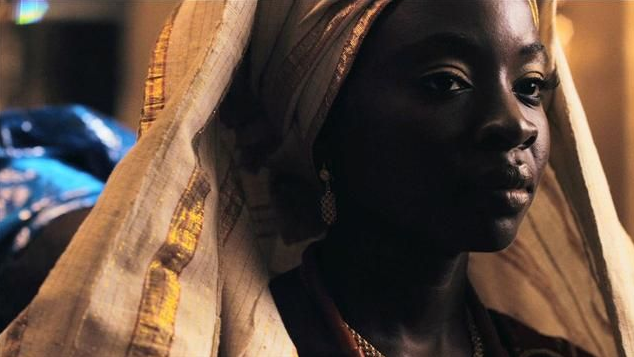
Adenike (Danai Gurira), Mother of George

Adenike (Danai Gurira), Mother of George

Sometimes it is not good to listen to your mother-in-law, especially when you, as a couple, have made peace with those things that are not working in your relationship. In the film Mother of George, directed by Nigerian filmmaker Andrew Dosunmu, Adenike and Ayodele are proud newlyweds who are satisfied with their marriage even though they have not been able to bear children. It has been 18 months. All is well. Adenike takes a homemade lunch to Ayodele at his job; he appreciates it. They enjoy each other’s company at the dinner table and during intimate moments. Mother-in-law Ma Ayo Balogun (played by Bukky Ajayi) dangles in front of the couple the old world tradition of “keeping the blood in the family” since her daughter-in-law has not borne her son, who shall be named George. Her interference runs counter to Adenike’s and Ayodele’s marital comfort, and Adenike is coerced to make a decision that will either destroy or strengthen her family.

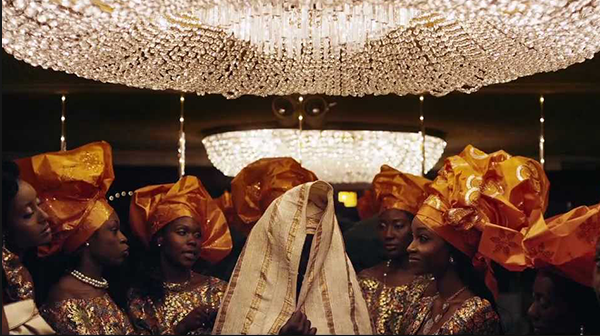
Adenike's Wedding

Adenike’s Wedding

Set in Brooklyn, New York, ‘Mother of George’ is a richly textured film—to call it beautiful cannot begin to describe its wonder. From its opening sequence to the very end, Dosunmu splashes the screen with broad strokes of brilliant colors and splendiforous fabric that stir the senses. Bradford Young, who treats audiences with his brilliant cinematography in Ain’t Them Bodies Saints, again weaves his magic as he enfolds each character in layers of brown, blues, golds, lime greens, and white. These are necessary since at times Mother of George is overwhelmed by brooding and silence. Danai Gurira and Isaach de Bankole are to be commended for their portrayals of Adenike and Ayodele respectively, bringing to their characters an innocence that has been compromised by tradition.

The Ross logo

Mother of George plays through December 19 at The Ross.

Listen to the Review on Friday Live! @ 34:20

http://netnebraska.org/interactive-multimedia/none/friday-live-abendmusik-first-plymouth

Watch for in-depth Film • Television • & More reviews & commentary.
In the meantime, Catch a film … Share the Popcorn … Feed Your Soul!

The Armstrong Lie @ The Ross

Capture

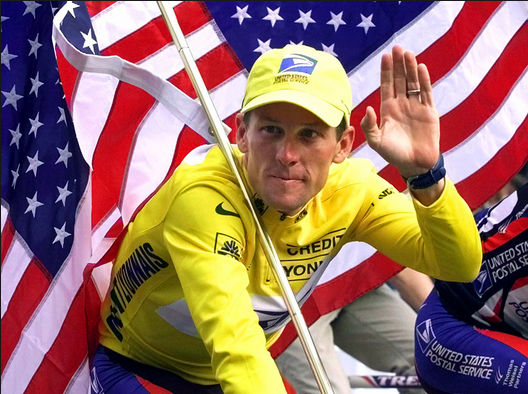
Lance Armstrong. That unstoppable bicyclist who excited his fans in seven Tour de France competitions. Lance Armstrong. That talented athlete who made us believe in the strength of the body and its ability to take us to the finish line if we practice and focus on our goals. The story of Lance Armstrong is one about triumph. It is about reaching for the American Dream and catching it. That is until your story turns rotten, and you have to bow your head to return the proverbial laurel wreath and, while you‘re at it, the keys to the city. Oh, and don’t forget those seven Tour de France titles you apparently ’earned’ bicycling around the bend, up the hill, and down the slope. Enter documentary filmmaker Alex Gibney who takes us into the world of the Tour de France and the darling of the sport Lance Armstrong in his documentary The Armstrong Lie. We know the story: Armstrong, vehemently denied taking performance enhancing drugs, then finally confessed to Oprah Winfrey in January of this year that he had lied about it. We invested in his truth … we could not help it … well, the man was diagnosed with testicular cancer and beat it! Yes!

Lance Armstrong confesses to Oprah Winfrey

Lance Armstrong confesses to Oprah Winfrey

Gibney documents well each and every event, taking care to give the audience only a glimpse into Armstrong’s life growing up. The panoramic views of the European countryside are spectacular, but border on distraction from the story. Of particular interest are the parts of the Tour de France, the grueling tour created in 1903 and organized by Henri Desgrange. The routes, the stages, team assembly, riders, and of course the rabid fans along each trail all converge to bring to relief the Armstrong lie and the sheer confidence he projects when denying each and every accusation; yet, the Lance Armstrong who emerges after-confession is vexing. He is too poised; too confident–almost proud. When all is revealed, you cannot help but believe–really believe–that he lied and got away with everything by telling the truth … eventually.

The Ross logo

The Armstrong Lie plays through December 19 at the Ross in Lincoln.

Listen to the Review on Friday Live! @ 31:26

http://netnebraska.org/interactive-multimedia/none/friday-live-abendmusik-first-plymouth

Watch for in-depth Film • Television • & More reviews & commentary.
In the meantime, Catch a film … Share the Popcorn … Feed Your Soul!

Kill Your Darlings @ The Ross

Allan Ginsburg (Daniel Radcliffe)

Allan Ginsburg (Daniel Radcliffe)

I am not going to talk about how an ivy league education is wasted on a bunch of privileged boys who are so bored out of their minds that their only recourse is tearing up a library of classics. Nor am I going to salivate over this group who is considered to have ushered in a most celebrated time in literary history: The Beat Poets. In John Krokidas’s film Kill Your Darlings, they are not literary rebels; rather, they are reckless, if not, wayward hollow wannabees who are angst ridden over their sexuality, momma and poppa, and their wealth. They’re just … there.

I will ask a question, however: Just where is the beat in Kill Your Darlings?

Set in 1944 and moving between Paterson, New Jersey, Harlem, and Manhattan, Krokidas closes in on the early life of men who defined the Beat generation: Lucien Carr (played by Dane DeHaan), Allan Ginsberg (played by Daniel Radcliffe), William Burroughs (Ben Foster), and Jack Kerouac (Jack Huston). They are not very interesting young men, and you wonder how they could carry on a conversation; rather, Krokidas dramatizes them as students in search of some kind of purpose while others are fighting for equality in America and are across the pond fighting for democracy.

Ginsberg and Kerouac (Jack Huston) in New York

Ginsberg and Kerouac (Jack Huston) in New York

Ginsberg lives in Paterson, New Jersey with his mentally unstable mother and his father Louis Ginsberg, a published poet. He leaves for Columbia University, and there, he meets Carr, Burroughs, Kerouac, and more exposure to anti-semitism. Radcliffe carries well the existential load in this movie, and his Ginsberg is bookish and awkward but a young man who burrows his way through this bohemian world filled with drugs, sex, liquor, and, of course, school suspensions.

Let me answer my own question, Where’s the Beat? The Beat is in the murder of David Kammerer, Lucien Carr’s longtime lover. Michael C. Hall—you remember him from HBO’s Six Feet Under)– wonderfully fleshes out Kammerer, the jilted lover whose desperation for the young Carr leads to a fatal struggle between the two. The Kammerer-Carr affair, murder, and trial are the pulses of film and complement its title: Kammerer indeed is the darling that is killed.

Oh, by the way, Kill the Darlings, a command for writers to do away with ‘extraneous ornament’, is largely attributed to the novelist William Faulkner; but research reveals the command belongs to British Sir Arthur Thomas Quiller-Couch, who, in his 1914 Cambridge lecture “On Style,” said, ‘Whenever you feel an impulse to perpetrate a piece of exceptionally fine writing, obey it—whole-heartedly—and delete it before sending your manuscript to press. Murder your darlings!’

The Ross logo

Listen to the review @ 11:39
http://netnebraska.org/interactive-multimedia/culture/friday-live-lincoln-midwest-ballet-company

Watch for in-depth Film • Television • & More reviews & commentary.

In the meantime
Catch a film …
Share the Popcorn …
Feed Your Soul!

12 Years a Slave @ The Ross

The Look of Freedom Alonzo (Cameron Zeigler), Solomon (Chiwetel Ejiofor),  Margaret (Quvanzhané Wallis), and Anne (Kelsey Scott) Northup in New York

The Look of Freedom
Alonzo (Cameron Zeigler), Solomon (Chiwetel Ejiofor), Margaret (Quvanzhané Wallis), and Anne (Kelsey Scott) Northup in New York

Freedom. It never is given without a fight. Even if you were born as a free person of color moving and having your being in the United States of America, that birthright could be ripped from you at a moment’s notice, and from thenceforth, you had to work to take it back. 12 Years A Slave delves into this very real fact of life during antebellum slavery. Directed by British filmmaker Steve McQueen, 12 Years a Slave is a poignant quest. The film is based on the slave narrative of the same name written by Solomon Northup in 1853.

Bondage

Bondage

Needless to say, the story is brutal as it courses through the vein of the innocuous plantation regime. The film exposes the time wherein people salivated over the ownership of African flesh not only for labor and economic gain; also, McQueen draws out the psychological and emotional pleasure plantation owners enjoyed in having full possession of and the rights and title to the African body. Some easily judge this as insanity; but I strongly maintain that this practice is a part of sanity no human being should ever want to touch […] again.

Chiwetel Ejiofor stars, and his portrayal of Northup marks clearly his burden of representation. Yes, Northup is front-and-center but it is quite obvious in Ejiofor’s furrowed brow that he is telling the story of thousands who labored within that plantation system—some for life.

Patsey (Lupita Nyong'o) pleads with Northup to end her life.

Patsey (Lupita Nyong’o) pleads with Northup to end her life.

All of the usual suspects are dramatized to the fullest extent: capture and kidnap; rape of slave women; slave chains; the slave ship; the auction block; the separation of families; the ubiquitous crack of the overseer’s whip, and death. In each instance, McQueen dares us to look away.

The Ross logo

12 Years a Slave plays through November 28 at the Ross in Lincoln.

Listen to review of 12 Years a Slave on NET’s Friday Live! @ 45:56

http://netnebraska.org/interactive-multimedia/none/friday-live-emery-blagdon-and-his-healing-machine

Watch for in-depth Film • Television • & More reviews & commentary.

In the meantime, Catch a film … Share the Popcorn … Feed Your Soul!

Blue is the Warmest Color @ The Ross

Emma (Lea Seydoux) and Adela (Adela

Emma (Lea Seydoux) and Adèle (Adèle Exarchopoulos) share a tender moment.

Ah! Relationships! They come in all shapes and sizes. Blue is the Warmest Color is a story that will propel you straight into teenaged angst and over into adult love and all of its stirrings and pleasures. Directed by Tunisian-French director Abdellatif Kechiche, Blue is the Warmest Color explores the life of two women who practically devour each other in the name of love and then spit one out after a betrayal.

Adèle (played by the Bridget Bardot-esque Adèle Exarchopoulos) is a 15-year-old coming into her own sexual awakening, and Emma (played by Lea Seydoux) is the self-assured college art student with the hair of blue. The interesting feature of this film is Kechiche’s strong refrain from dramatizing the shortfall of a May-December romance; instead, the director concentrates on the elements of a relationship we all experience—no matter the age. There is the euphoria of love; the excitement of looking for that stranger who caught your eye on an ordinary day in the park; the furtive glances exchanged between parties at the nightclub; the calvacade of sex in the afternoon, and the athleticism it takes to get you to that place of utter depletion thereafter.

Adele and Emma

Adele and Emma

In the process, Kechiche moves us into the worlds of art and education—worlds Adèle and Emma rely on during their times of heartache. Adèle’s elementary school and her students serve as her refuge once her relationship takes a riveting turn. Emma immerses herself into her artwork and manages to strain an exhibit in a coveted art gallery.

Yet for all of his cinematic frolics, Kechiche overwhelms the eye with a nimiety of close-ups; he is entranced especially by lips, closing in on Adèle when she smokes or chomps down food or gobbles up her lover’s lips … feet … hands.

At times during the 3-hour movie, you beg for relief from the human face and body. May I please have a long shot of some trees? A plaza? Architecture?

The Ross logo

Blue is the Warmest Color plays through November 21 at The Ross in Lincoln.

Listen to review of Blue is the Warmest Color
on NET’S Friday Live! @ 43:26

http://netnebraska.org/interactive-multimedia/none/friday-live-emery-blagdon-and-his-healing-machine

Watch for in-depth Film • Television • & More reviews & commentary.

In the meantime, Catch a film … Share the Popcorn … Feed Your Soul!

The Summit @ The Ross

K2, The Summit

K2, The Summit

K2. The Summit. We all know of the majesty of Mount Everest. It is the highest mountain on earth. K2, its sibling is the second highest mountain on earth. It is located in the Baltistan region of Gilgit–Baltistan, Pakistan and the Taxkorgan Tajik Autonomous County of Xinjiang, China. It is a jagged, steep slope with a wall of ice called a serac, that would make you beg for its mercy as you climb. Yes, K2 demands respect, even reverence, but this mountain claims one in four mountain climbers who attempt to scale its walls. On August 1, 2008, K2 claimed the lives of eleven ambitious and experienced mountain climbers when an avalanche up rooted the fixed ropes installed to lead climbers as they descended the summit. Documentary filmmaker Nick Ryan explores the cause of these deaths in The Summit, his documentary about what is called the “deadliest day on the world’s most dangerous mountain.” The Summit is a terrifying reenactment of this expedition.

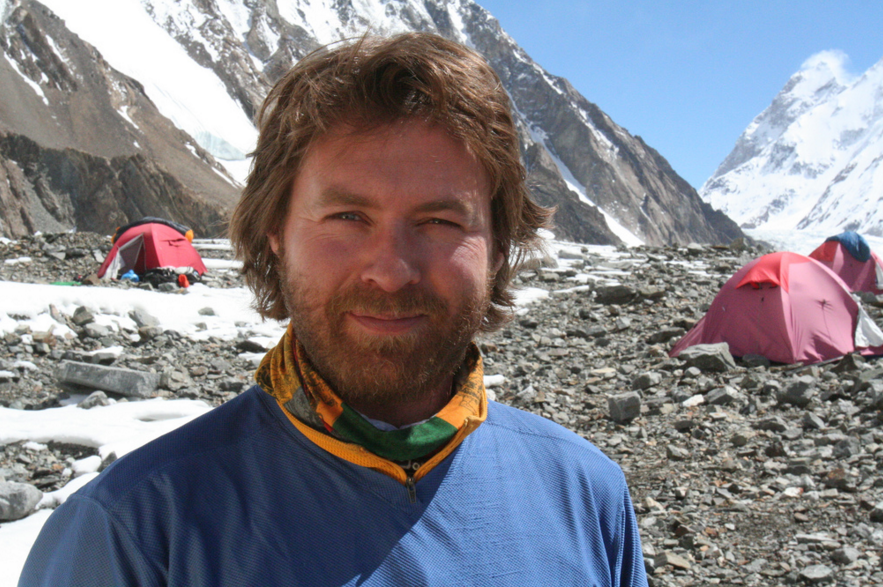
Gerard McDonnell, one of the casualties of The Summit

Gerard McDonnell, one of the casualties of The Summit

Ryan evokes a harrowing vulnerability within a frigid universe that is out there in the white of snow that hugs tightly to black mountains. Mountaineers whose bodies are packed into down parkas and other gear sleep—sleep?–in tents as a snow storm rages against the mountain; and it is night. Someone’s tent and all of his gear have been swept down the slope. He is open to the elements. Who will take him in? The rule is to “walk on by” climbers who are injured or on the brink of death. To help means not only a missed opportunity to reach the summit or the next camp base in time; to reach out and touch anybody on the trek could mean your own death.

The Summit is an excellent re-telling of events, and it is heartbreaking as each bio-sketch unfolds about the 11 courageous men who did not make it.

The Summit plays through November 7 at the Ross Media Arts Center in Lincoln.

The Ross logo

Watch for in-depth Film • Television • & More reviews & commentary.

In the meantime, catch a film. Share the Popcorn. Watch television and feed your soul!